Table of Contents
Introduction
There’s something magical about climbing roses in full bloom. You know that moment when you walk past a trellis covered in cascading flowers and think, “How do they get them to look so incredible?” The secret isn’t some mysterious gardening wizardry—it’s pruning. And here’s the thing: it’s way less intimidating than most people think.
Look, I get it. The idea of taking sharp tools to your beautiful roses can feel scary. But here’s what I’ve learned over the years—roses actually love a good trim. Think of it like getting a haircut. Sure, you’re cutting off length, but you’re setting everything up to grow back healthier and stronger. If you’re just getting started with gardening, these gardening tips for beginners will give you the confidence to tackle soil prep and basic plant care that’ll make your roses happy before you even pick up those pruning shears.
Picture this: you’ve got a climbing rose that’s become this tangled mess of stems. Some are dead, some are weak, and honestly, the whole thing looks like it’s trying to escape its support structure. Without regular pruning, that’s exactly what happens. Your rose puts energy into maintaining old, unproductive wood instead of creating those gorgeous new shoots that’ll give you next season’s flowers. Smart pruning redirects that energy where it matters most.
Now, pruning isn’t just about randomly cutting things back. (Trust me, I learned this the hard way.) You need to know what you’re looking at—which canes are worth keeping and which ones are just taking up space. It’s like editing a piece of writing: you keep the good stuff and cut out what isn’t working. Learning how to propagate plants actually teaches you a lot about how stems work and what makes them thrive, which makes you a smarter pruner in the long run.
But here’s something people often overlook: your soil matters just as much as your pruning technique. After you’ve done all that careful cutting, your roses need nutrient-rich soil to fuel their comeback tour. Bad soil plus good pruning equals disappointing results. Getting your garden soil in top shape sets the stage for those post-pruning growth spurts that’ll make your neighbors jealous.
What You’ll Learn in This Guide
We’re going to walk through everything you need to know to prune your climbing roses like a pro. No intimidating jargon, no complicated theories—just practical advice that actually works.
- Importance of Pruning: Why your roses need this annual “haircut” to stay healthy, get better air circulation, and produce more flowers. We’ll talk about what happens when you skip pruning (spoiler: it’s not pretty).
- Timing Your Pruning: When to grab those pruning shears based on where you live and what type of roses you’re growing. Get the timing right, and your roses will thank you with spectacular blooms.
- Tools and Techniques: The must-have tools that make pruning easier and safer, plus the cutting techniques that help your roses heal quickly. No fancy equipment required—just the right basics.
- Step-by-Step Pruning Guide: A foolproof process for identifying what needs to go, shaping your roses, and avoiding the mistakes that can set your plants back. We’ll keep it simple but thorough.
As we dive deeper, you’ll discover that pruning isn’t just maintenance—it’s actually pretty satisfying work. There’s something therapeutic about transforming a wild, overgrown rose into a well-shaped beauty that’s ready to put on a show. And speaking of shows, once you’ve got your pruning down pat, you might want to check out tips for growing blueberries in containers to expand your gardening skills, or learn some flower arranging tips so you can bring those gorgeous blooms indoors.
Whether you’ve got a single climbing rose on a small arbor or an entire fence covered in varieties, getting your pruning technique right makes all the difference. We’re talking healthier plants, better disease resistance, and those jaw-dropping displays that make people slow down when they walk past your garden. This isn’t about turning you into some sort of rose expert overnight—it’s about giving you the confidence to care for your plants properly.
Ready to transform your climbing roses? Let’s jump in and learn how a few strategic cuts can turn your garden into the kind of place that makes people stop and ask, “How do you get them to look so amazing?” With a little know-how and the right approach, you’ll soon have climbing roses that are the talk of the neighborhood. Time to grab those pruning shears and get started.

Here’s something every gardener learns the hard way: climbing roses need pruning. Not just a little snip here and there—real, purposeful pruning that makes all the difference between a tangled mess and a stunning wall of blooms. When you properly trim and shape your climbing roses, you’re doing way more than just tidying up. You’re removing the deadweight (literally—old, diseased wood has got to go), making room for fresh growth, and creating the kind of structure that lets sunlight and air reach every corner of your rose bush. Think of it like giving your roses a fresh start each year. With the right approach, you can transform even the most unruly climber into something that’ll make your neighbors stop and stare.
Why Pruning Climbing Roses is Important
Let’s talk about why pruning matters so much for climbing roses. Sure, it keeps your plant healthy—but there’s more to it than that. Good pruning actually prevents a lot of headaches down the road. When you improve air circulation around those canes, you’re cutting down on the humid, stagnant conditions that fungal diseases absolutely love. Nobody wants to deal with black spot or powdery mildew if they can help it, right?
But here’s what really gets me excited about pruning: the way it shapes your rose’s growth. You’re essentially teaching those long canes where to go, guiding them along your trellis or fence for maximum impact. And if you’re just starting out with roses, picking up some essential gardening tips for beginners can give you a solid foundation for understanding not just pruning, but the whole world of rose care.
There’s also the practical side of things. Left unpruned, climbing roses can take over everything in sight—your porch, your neighbor’s fence, whatever’s nearby. But when you selectively remove older canes and focus on the healthy new growth? Magic happens. Your rose stops wasting energy on maintaining weak, unproductive wood and instead pours everything into creating those gorgeous blooms you’re after. I’ve seen roses that seemed completely spent come back to life with just one good pruning session. The transformation can be absolutely remarkable.
Key Aspects of Pruning for Healthy Growth
Want to get your pruning right? Here’s what you need to focus on:
- Removal of Old and Dead Wood: This is your starting point—get rid of anything that’s clearly seen better days. Dead, diseased, or really old canes are just taking up space and potentially spreading problems. When you cut them out, you’re freeing up resources for the good stuff.
- Shaping and Support Training: Here’s where the art comes in. You’re directing your rose’s growth along whatever support you’ve got—whether that’s a trellis, fence, or arbor. The trick is training those canes horizontally, which encourages way more blooms than if you just let them shoot straight up.
- Improving Air Circulation: Crowded roses are unhappy roses. When you thin out congested areas, you’re creating better airflow that helps prevent moisture buildup. It’s like opening the windows in a stuffy room—everything just breathes better.
- Encouraging Flower Production: Remove the weak and crossing stems, and you’ll be amazed at how much stronger the remaining canes become. More strength means more blooms, and more blooms means a garden that stops people in their tracks.
Once you’ve got these fundamentals down, pruning becomes less of a chore and more of a creative process. You’re setting the stage for months of beautiful blooms.
Now that you understand the why, let’s get into the when and how—because timing really is everything when it comes to climbing roses.
When and How to Prune Climbing Roses
Timing your pruning right can make or break your rose’s performance for the entire season. Most of us find that late winter or early spring works best—right before those first green buds start swelling. It’s like catching your rose at the perfect moment between sleep and waking up. Your plant heals faster during this time and can immediately channel its energy into producing those new flowering canes you want.
Now, I’ll be honest—your exact timing might need some tweaking based on where you live and what variety you’re growing. Roses can be surprisingly individual in their preferences. If you want to dive deeper into understanding plant care and timing, learning about plant propagation and care techniques can really expand your gardening toolkit beyond just roses.
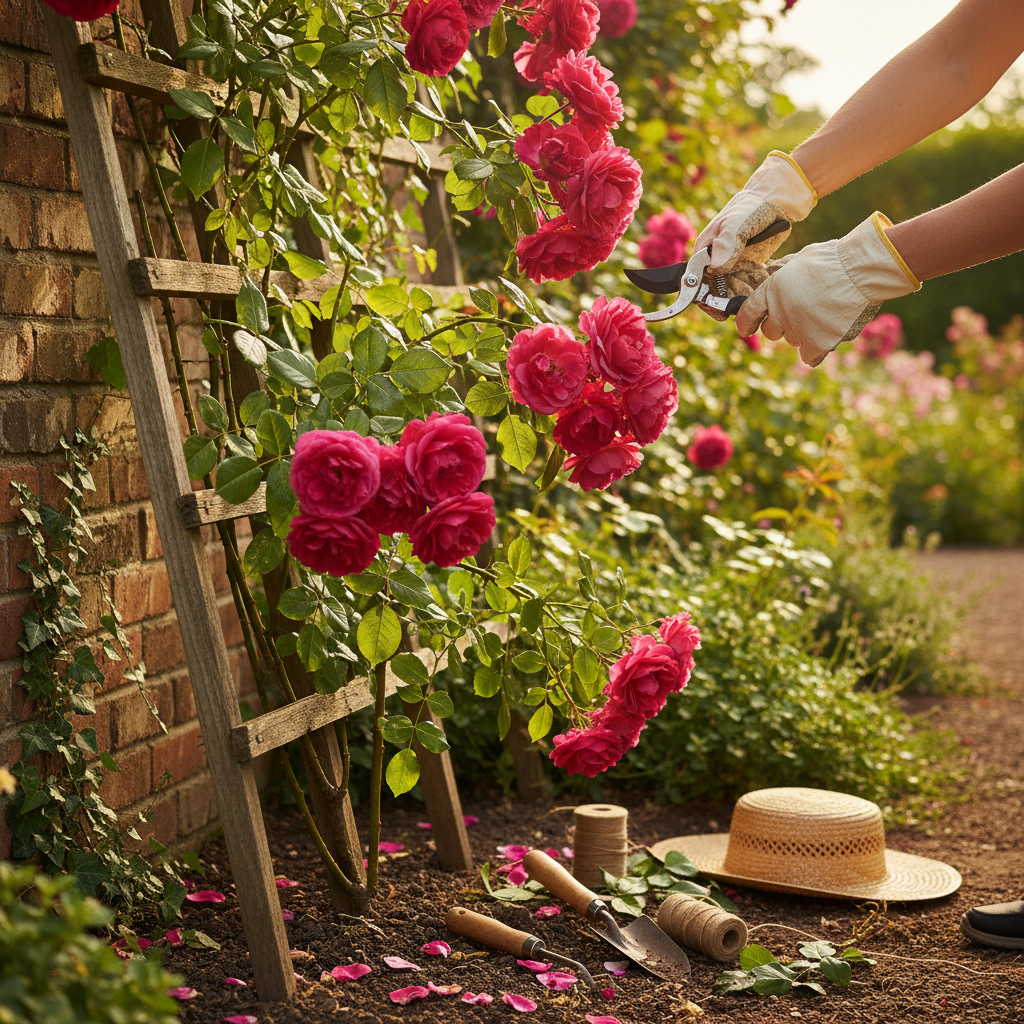
When you’re actually making those cuts, technique matters more than you might think. Cut at a 45-degree angle just above a bud that’s facing outward. Why outward? Because you want new growth heading away from the center of the plant, not creating a tangled mess in the middle. As for tools, invest in sharp pruning shears for the smaller stuff and good loppers for those thick, woody canes that have been around for a few years. And please—wear gloves and long sleeves. Rose thorns don’t care how experienced you are; they’ll get you when you least expect it.
Key Aspects of Effective Pruning Techniques
Ready to put it all into practice? Keep these essential techniques in mind:
- Identify Old vs. New Wood: This is probably the most important skill you can develop. Old, woody canes that have stopped blooming well need to go, while newer wood (usually greener and more flexible) is your treasure. Preserve and encourage that new growth—it’s where your future flowers come from.
- Make Angled Clean Cuts: That 45-degree angle isn’t just for show. It helps water run off instead of pooling on the cut surface, which means faster healing and less chance of rot or disease taking hold.
- Remove Weak or Crossing Stems: Anything spindly, damaged, or growing into other branches is just asking for trouble. When stems rub against each other, they create wounds that invite problems. Better to eliminate the competition early.
- Shape the Plant to Supports: This is where you become a rose trainer. Gently tie those canes horizontally along your support structure—it’s amazing how much more your rose will bloom when trained this way rather than allowed to grow straight up.

Here’s the thing about pruning climbing roses—it’s honestly one of the most satisfying garden tasks you’ll ever do. When you cut away that old, dead wood? You’re basically giving your rose bush permission to put all its energy into gorgeous new growth. Plus, better air circulation means fewer fungal problems (trust me, your roses will thank you). Training those canes along a trellis or fence doesn’t just look amazing—it actually tricks the plant into producing way more blooms. And even if you’re totally new to this, the right timing and a few good tools will have you feeling like a rose whisperer in no time.
Late winter or early spring is your sweet spot for pruning—right before those buds start waking up. Sharp pruning shears are your best friend for smaller stems, while loppers handle the tough stuff. The secret? Clean, angled cuts that heal fast and keep disease at bay. Focus on removing weak or crossing stems, then gently guide those healthy canes where you want them to go. (And seriously, don’t forget the gloves—roses have opinions about being pruned, and they’re not shy about expressing them!)
Ready to put all this into action and transform your garden? If you’re just starting your gardening journey, you’ll want to check out our gardening tips for beginners—it’s packed with everything you need to build confidence. Want to expand your rose collection? Our guide on how to propagate plants will show you how to turn one beautiful rose into many. And since your freshly pruned roses deserve the best foundation, don’t miss our expert advice on how to prepare garden soil. These resources will take you from pruning basics to advanced techniques that’ll have your roses absolutely thriving.
There’s something magical about pruning climbing roses properly. Maybe it’s the way you’re actively partnering with nature, or how you can almost feel the plant’s gratitude as you remove what’s holding it back. Whatever it is, when those abundant blooms start appearing, you’ll know it was all worth it. Your climbing roses are going to grow stronger, bloom like crazy, and turn your outdoor space into something truly special. Think of pruning as your creative collaboration with the garden—you’re not just cutting branches, you’re sculpting beauty. Keep experimenting, keep learning, and get ready to celebrate every single stunning bloom. You’ve absolutely got this!
Frequently Asked Questions
-
Can climbing roses be pruned any time of year?
- Pruning is best done in late winter or early spring before new growth starts.
-
How much should I cut back my climbing roses?
- Focus on removing old wood and thinning out crowded branches while maintaining the plant’s shape.
-
What tools are best for pruning climbing roses?
- Sharp pruning shears, loppers, and protective gloves are recommended.
-
Will pruning climbing roses affect blooming?
- Proper pruning encourages more and healthier blooms.