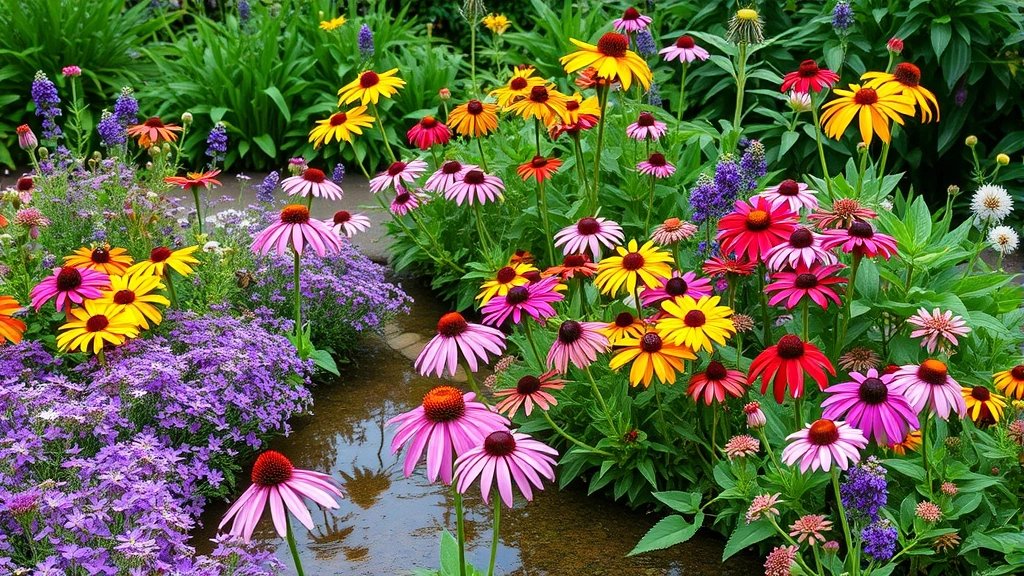
Rain gardens are one of the most effective and beautiful ways to manage stormwater runoff while creating a thriving ecosystem in your yard. These shallow, planted depressions capture rainfall and allow it to slowly infiltrate the soil, reducing flooding and filtering pollutants naturally. Unlike traditional drainage solutions, rain gardens transform a potential problem into an opportunity to grow stunning plants that thrive in wet conditions.
Choosing the right rain garden plants is crucial for success. The best selections are native species that tolerate both temporary flooding and periods of drought, creating a resilient landscape that requires minimal maintenance once established. As a horticulturist, I’ve selected plants that not only survive in these challenging conditions but actually flourish, providing year-round interest, wildlife habitat, and environmental benefits.

Understanding Rain Garden Conditions
Before selecting plants, it’s essential to understand the unique environment of a rain garden. These gardens experience cycles of saturation and drying that most standard landscape plants cannot tolerate. The soil stays wet for 24 to 48 hours after heavy rainfall, then dries out during dry periods. This fluctuation requires plants with specialized adaptations.
Rain gardens typically receive full sun to partial shade, depending on their location and surrounding structures. The soil composition matters significantly—most rain gardens benefit from amended soil with improved drainage characteristics, though plants should still tolerate temporary waterlogging. Understanding your local climate and USDA rain garden guidelines helps ensure you select appropriate species for your region.
Native plants are particularly valuable in rain gardens because they’ve evolved to handle your local precipitation patterns and soil conditions. They also support native insects, birds, and other wildlife that depend on these plants for food and habitat. This creates a self-sustaining garden ecosystem that requires less fertilizer, pesticides, and supplemental watering over time.
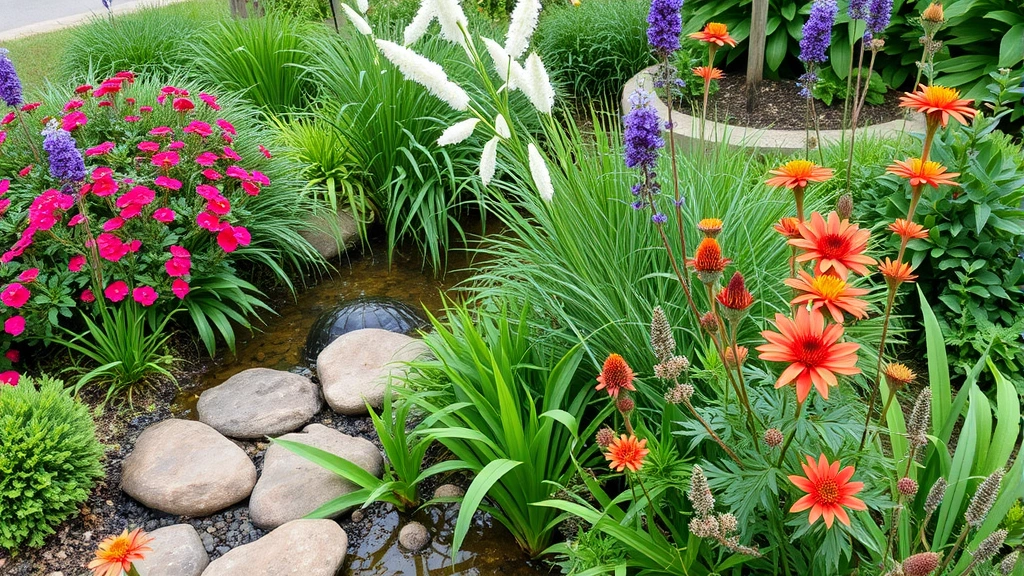
Best Perennial Plants for Rain Gardens
Black-eyed Susans (Rudbeckia) are exceptional choices for rain gardens, offering cheerful yellow blooms from mid-summer through fall. These hardy perennials tolerate both wet and dry conditions, making them perfect for the fluctuating moisture levels in rain gardens. They’re also excellent for attracting pollinators and providing late-season color when many other plants are fading.
Joe-Pye Weed (Eutrochium) is a tall, dramatic plant that reaches 4 to 6 feet and produces clusters of dusty pink flowers. Despite its name, it’s not actually a weed—it’s a valuable native perennial that thrives in consistently moist to wet soil. This plant is particularly attractive to butterflies and provides excellent structural interest in the back of rain gardens.
Coneflowers (Echinacea) are versatile perennials available in purple, pink, white, and orange varieties. While they prefer well-drained soil, many cultivars tolerate the wet-then-dry cycles of rain gardens, especially if you amend the soil properly. They bloom for months, attract beneficial insects, and provide food for goldfinches in winter.
Blazing Star or Liatris is a native perennial with distinctive purple or white spiky flowers that bloom from bottom to top. This plant handles moisture well and provides vertical interest that contrasts beautifully with broader-leaved plants. Butterflies and hummingbirds love these flowers throughout the summer and early fall.
Bergamot (Monarda) produces vibrant red, pink, purple, or white flowers that attract hummingbirds and butterflies. This aromatic perennial tolerates wet conditions and spreads gradually to fill space. The foliage has a pleasant minty scent, and you can even harvest leaves for tea.
Ironweed (Vernonia) is an underutilized native perennial with deep purple flowers that bloom in late summer and fall. It tolerates wet soil beautifully and grows 3 to 6 feet tall, providing structure and late-season color. This plant is particularly valuable for supporting migrating monarch butterflies.
For areas that stay consistently wet, consider Swamp Milkweed (Asclepias incarnata), which is essential for monarch butterfly caterpillars. This native perennial reaches 2 to 4 feet and produces delicate pink or white flowers. It actually prefers wet conditions and will thrive in the deepest parts of your rain garden where water lingers longest.
Native Shrubs for Structure and Stability
Shrubs provide essential structure and year-round interest in rain gardens while their root systems help stabilize soil and filter water more effectively. Winterberry Holly (Ilex verticillata) is a deciduous native shrub that produces brilliant red berries persisting into winter after the leaves drop. Female plants require a male pollinator nearby, but the wildlife value is tremendous—birds feast on berries throughout cold months.
When learning how to prune hydrangea bushes, many gardeners don’t realize that certain hydrangea species thrive in rain gardens. Oakleaf Hydrangea (Hydrangea quercifolia) naturally tolerates moist soil and produces elegant white flower panicles along deeply lobed foliage. This native shrub offers four-season interest with attractive peeling bark and reliable performance in rain gardens.
Buttonbush (Cephalanthus occidentalis) is a native shrub with unusual round, spiky white flower clusters that appear mid-to-late summer. It tolerates both wet and dry periods and reaches 6 to 8 feet. Butterflies and bees are particularly attracted to these unique flowers.
Spicebush (Lindera benzoin) is a native shrub that produces fragrant yellow flowers in early spring before leaves emerge. It tolerates moist soil and provides food for native butterflies. The foliage turns golden yellow in fall, and females produce bright red berries that birds love.
Elderberry (Sambucus) species are vigorous native shrubs that produce fragrant white flower clusters followed by dark purple berries. These berries attract birds and can be used for jams and syrups. Elderberries tolerate wet conditions well and reach 8 to 12 feet at maturity.
Groundcovers and Low-Growing Options
For the edges and foreground of rain gardens, low-growing plants create visual continuity and fill space efficiently. Sedges (Carex species) are grass-like plants that tolerate wet soil exceptionally well. Many native sedges reach only 12 to 18 inches and provide fine texture that contrasts beautifully with broader-leaved plants. They’re evergreen in many regions, offering winter interest.
Foamflower (Tiarella) is a low-growing groundcover reaching 6 to 12 inches with delicate white or pink flowers. This shade-tolerant plant spreads gradually and tolerates moist soil. The foliage often develops attractive bronze tones in cool weather.
Jewelweed (Impatiens capensis) is a native annual or short-lived perennial that thrives in wet, shaded rain gardens. It produces cheerful orange or yellow flowers and self-seeds readily. This plant is particularly valuable because it naturally indicates wet areas and attracts hummingbirds.
Creeping Jenny (Lysichiton americanus) produces bright yellow flowers and spreads as a groundcover in very wet areas. However, ensure you choose native varieties appropriate for your region, as some cultivars can become invasive. This plant adds cheerful color to the wettest sections of rain gardens.
Seasonal Planting Considerations
The best time to plant rain gardens is during the dormant season—late fall through early spring—when plants are less stressed by transplanting. Spring planting is ideal in most regions because it gives plants the entire growing season to establish before winter. Fall planting works well in areas with mild winters, allowing plants to develop root systems while soil stays consistently moist.
When establishing new rain gardens, plant shrubs and larger perennials first, spacing them according to mature size. Add smaller perennials and groundcovers afterward, filling gaps with mulch. This layered approach creates a more natural appearance and allows plants room to mature without competition.
Avoid planting during periods of extreme heat or drought stress, as transplants require consistent moisture to establish. If you must plant during summer, water more frequently during the establishment period. Most rain garden plants need supplemental watering for the first growing season, even though they’ll eventually tolerate the natural moisture cycles.
Spring brings an opportunity to cut back dead stems from previous years’ growth, revealing new shoots and improving appearance. Summer requires minimal maintenance beyond occasional deadheading if you want to extend blooms. Fall is perfect for planting new additions and dividing established perennials that have outgrown their space.
Maintenance and Care Tips
Rain gardens require less maintenance than traditional landscape beds once plants are established. However, initial care is crucial for success. Apply 2 to 3 inches of mulch around plants, keeping it several inches away from stems to prevent rot. This conserves moisture during dry periods and suppresses weeds during establishment.
Water newly planted specimens regularly during their first growing season, aiming for consistent moisture without waterlogging. After establishment, rain gardens should receive adequate moisture from natural rainfall. During extended dry periods, supplemental watering helps prevent stress, but most rain garden plants are selected specifically to handle occasional drought.
Remove dead or diseased stems promptly to maintain plant health and appearance. Many rain garden plants benefit from cutting back in late winter or early spring, removing dead growth and encouraging vigorous new shoots. This also prevents the garden from becoming overgrown and tangled.
Fertilizer is rarely necessary in rain gardens because organic matter from fallen leaves provides natural nutrients. In fact, excessive fertilizer can promote overgrowth and reduce the aesthetic appeal of the garden. If soil tests show nutrient deficiencies, apply balanced fertilizer sparingly in spring.
Monitor for invasive species and remove them promptly before they establish. Watch for signs of pest problems—most native plants resist local pests effectively, but introducing plants from other regions may lack natural pest resistance. Native plants typically require far fewer pesticide applications than non-native alternatives.
Divide perennials every 3 to 5 years if they become overcrowded or decline in vigor. Spring is the ideal time for division, allowing new pieces to establish during the growing season. Dividing plants rejuvenates older clumps and provides propagation material for expanding the garden.
If you’re interested in expanding your gardening skills, consider learning how to make a raised garden bed to incorporate rain garden principles into other areas. Understanding proper soil preparation for growing peas also teaches valuable lessons about drainage and moisture management that apply to rain gardens.
FAQ
What is the ideal size for a rain garden?
Rain gardens typically range from 100 to 300 square feet, though size depends on your roof area and local rainfall. A general rule is to make the rain garden 5 to 10 percent of your roof area. Larger gardens aren’t necessarily better—proper plant selection matters more than size for ensuring success and managing water effectively.
Can I plant rain gardens in shade?
Yes, many excellent rain garden plants tolerate partial to full shade. Native sedges, foamflower, jewelweed, and shade-tolerant hydrangeas thrive in shaded rain gardens. However, flowering plants generally produce more blooms in areas receiving at least 3 to 4 hours of direct sun daily. Choose plants appropriate for your specific light conditions.
How long does it take for rain gardens to become established?
Most rain garden plants require one full growing season to establish adequate root systems. During this period, provide supplemental watering during dry spells. After the first year, well-selected plants should thrive with natural rainfall and minimal intervention, though you may need to water during extended droughts.
Are rain garden plants poisonous to pets or children?
Most native rain garden plants are non-toxic, but some have mild irritants. Research specific plants if you have concerns. Generally, native plants have been growing alongside wildlife for millennia, and most animals avoid eating them. If you have specific concerns about young children or pets, consult with a local extension service for safety guidance.
What should I do if my rain garden becomes mosquito breeding ground?
Proper rain garden design prevents mosquito problems because water should drain within 24 to 48 hours. If water persists longer, improve drainage by adjusting grade or amending soil. Adding native fish-eating species or maintaining standing water with moving water features also prevents mosquito breeding. Contact your local mosquito control district for additional guidance.
Can I use rain garden plants in other landscape applications?
Absolutely. Many rain garden plants are beautiful in borders, meadows, and native plant gardens. Rain garden plants like black-eyed Susans, coneflowers, and bergamot work wonderfully in traditional perennial borders, though they’ll require less water than in rain garden settings. Using these plants throughout your landscape supports biodiversity and reduces overall landscape water needs.
How do I prevent rain gardens from becoming weedy?
Proper mulching during establishment is crucial—apply 2 to 3 inches of organic mulch to suppress weeds. Dense plantings also crowd out weeds naturally. Hand-pull any weeds that emerge, especially before they flower and set seed. Once plants mature and fill available space, weeds have difficulty establishing because plants monopolize resources.


