

Creating a Cactus Garden? Expert Tips Inside
A cactus garden brings desert elegance, low maintenance, and striking visual appeal to any outdoor space. Whether you’re a seasoned gardener or a complete beginner, cacti offer an accessible entry point into plant cultivation. These remarkable succulents thrive on neglect, require minimal water, and provide year-round interest with their unique shapes, sizes, and occasional blooms. From sprawling landscape designs to intimate container arrangements, cactus gardens transform spaces into stunning focal points while demanding surprisingly little effort.
The beauty of creating a cactus garden lies in its flexibility and resilience. Unlike traditional gardens requiring constant watering and seasonal maintenance, a well-designed cactus garden practically maintains itself. You’ll discover that building this type of garden involves understanding soil requirements, selecting compatible species, and mastering basic care techniques. This comprehensive guide walks you through every step of establishing your own thriving cactus garden, from site selection to seasonal adjustments.

Choosing the Perfect Location
Location determines your cactus garden’s success more than any other factor. Cacti are sun-worshippers that typically require six to eight hours of direct sunlight daily. South-facing or west-facing areas provide optimal light exposure in most climates. If you live in extremely hot regions, afternoon shade during peak summer heat prevents scorching on sensitive species. Observe your yard throughout the day, noting which areas receive consistent, unobstructed sunlight.
Drainage is equally critical when selecting your site. Cacti absolutely cannot tolerate standing water or poorly draining soil. Choose areas where water naturally flows away after rain, never pooling around plants. Avoid low-lying spots that collect moisture during wet seasons. If your yard naturally drains poorly, consider raised bed gardening options to elevate your cacti above problem areas. Raised beds provide superior drainage control and allow you to customize soil composition precisely.
Wind exposure matters for cactus gardens, though cacti handle wind better than many plants. Strong winds can topple tall specimens or damage delicate spines, so moderate wind protection from structures or strategic plantings helps. Conversely, good air circulation prevents fungal issues and pest infestations. Avoid planting directly against hot walls that reflect intense heat, as this can cause temperature stress even for heat-loving cacti.
Selecting Cactus Varieties
Your climate zone dramatically influences which cactus varieties thrive in your garden. Hardy cacti like Opuntia (prickly pear) and Echinocereus (hedgehog cactus) survive freezing winters in northern regions. Tender tropical species like Selenicereus (night-blooming cereus) require frost protection or container cultivation in cold climates. Check your USDA hardiness zone and research species accordingly. The USDA provides detailed plant hardiness information for most cactus varieties.
Consider mature sizes when planning your layout. Tiny nursery specimens grow substantially over years. Saguaro cacti reach 40 feet tall, while some Echinocereus varieties stay under one foot. Mixing sizes creates visual interest and prevents overcrowding. Include tall columnar types like Cereus for vertical interest, mounding forms like Mammillaria for texture, and low-spreading varieties like Delosperma for ground coverage. This diversity creates a dynamic, professional-looking garden.
Bloom time and flower color add seasonal interest. Many gardeners focus solely on dramatic spines and forms, overlooking the spectacular flowers cacti produce. Prickly pears offer vibrant magenta, yellow, or orange blooms. Echinocereus varieties produce stunning red, pink, or yellow flowers. Night-blooming cereus offers fragrant white flowers under moonlight. Planning for succession blooms throughout seasons extends your garden’s visual appeal.
When acquiring plants, source them responsibly. Purchase from reputable nurseries rather than collecting wild specimens, which damages natural ecosystems and may be illegal. Nursery-grown cacti adapt better to cultivation and eliminate ethical concerns. Check plants for signs of disease, pest damage, or root rot before purchasing.
Soil Preparation and Drainage
Standard garden soil kills cacti through excess moisture retention. Cacti evolved in arid environments with sandy, gritty soil that drains rapidly. You must prepare garden soil specifically for these succulents by creating a specialized growing medium.
The ideal cactus soil recipe combines three components: quality potting soil or compost (40%), coarse sand or perlite (30%), and additional drainage material like pumice, lava rock, or gravel (30%). This blend provides minimal water retention while maintaining enough structure for root anchoring. Never use fine sand, which compacts and inhibits drainage. Coarse sand or builders’ sand works much better.
For in-ground gardens, amend native soil heavily. Dig planting holes twice as wide as root balls and equally deep. Break up compacted subsoil to at least 12 inches depth. Mix your custom soil blend thoroughly into native soil at a 50-50 ratio minimum. In heavy clay areas, you may need 75% amendment to achieve proper drainage. Create slight mounds around plants to further promote water runoff.
Container gardens offer easier drainage control. Use pots with drainage holes—never seal drainage holes with rocks or pottery shards. Fill containers with your cactus soil blend, leaving one inch of space below the rim for watering. Terracotta pots provide superior drainage compared to plastic, though they dry faster and require more frequent watering.
Planting Your Cacti
Spring represents the optimal planting season when cacti begin active growth. Avoid fall or winter planting when growth slows and plants struggle to establish roots. Handle cacti carefully using thick gloves or folded newspaper to protect against spines. Gently remove plants from nursery pots and loosen root balls by hand—avoid aggressive root manipulation that damages delicate root hairs.
Plant cacti at the same depth they occupied in nursery containers. Planting too deep encourages rot at the base; too shallow leaves roots exposed. Position plants so the soil line matches the original planting depth. Backfill with your amended soil, gently firming to eliminate air pockets without compacting excessively. Water lightly after planting to settle soil, then wait several days before resuming normal watering to allow any root damage to heal.
Spacing depends on mature sizes and desired density. Small varieties need 12-18 inches between plants, while large columnar types require 3-4 feet. Closer spacing creates a more dramatic, mature appearance quickly but may require future thinning. Looser spacing allows easier maintenance and reduces competition for resources.
If you’re interested in expanding your collection affordably, learn about how to propagate plants from existing specimens. Many cacti propagate easily from cuttings or offsets, allowing you to create new plants from mature specimens in your garden.
Watering and Nutrition
Overwatering kills more cacti than any other factor. These plants store water in tissues, requiring infrequent watering even during active growth. During growing season (spring and summer), water thoroughly but infrequently—typically every two to three weeks depending on temperatures and rainfall. Check soil moisture before watering; it should be completely dry at least one inch deep.
The “soak and dry” method works best: water thoroughly until it drains from the bottom, then don’t water again until soil is completely dry. This mimics desert rainfall patterns where plants receive occasional heavy rain followed by long dry periods. Shallow, frequent watering encourages shallow root systems and promotes rot.
Winter watering requires dramatic reduction. From November through February, most cacti enter dormancy and need minimal water—perhaps once monthly or not at all if temperatures stay cool. This dormant period actually triggers flowering in many species, so respecting this rest period improves bloom production. Tropical varieties may need slightly more frequent winter watering but still far less than summer amounts.
Nutrition needs are minimal. Cacti evolved in nutrient-poor soils and don’t require heavy fertilization. During growing season, apply diluted fertilizer monthly—use a balanced formula (10-10-10) or specialized cactus fertilizer at quarter strength. Stop fertilizing entirely from October through February. Overfertilizing causes excessive soft growth that’s susceptible to pests and disease.
Rainfall affects watering schedules significantly. If your area receives regular precipitation, you may not need supplemental watering except during extended dry periods. Monitor soil moisture rather than following rigid schedules. Container plants dry faster than in-ground cacti and need more frequent watering, sometimes weekly during peak summer heat.
Seasonal Care Guide
Spring (March-May): As temperatures warm and daylight increases, cacti emerge from dormancy and begin active growth. Increase watering frequency gradually, moving from winter’s minimal schedule to regular deep watering every two to three weeks. Begin monthly fertilizing. Watch for new growth and emerging flower buds. Check plants for overwintering pests and address any issues immediately. This is the ideal time for repotting, propagation, and major pruning.
Summer (June-August): Peak growing season brings maximum water and nutrient needs. Water every two weeks or when soil is completely dry, whichever comes first. In extreme heat above 95°F, some tender species may need afternoon shade protection. Monitor for heat stress, pest infestations, and disease. Deadhead spent flowers to encourage continued blooming. Ensure air circulation prevents fungal issues. Container plants may need weekly watering in intense heat.
Fall (September-November): As temperatures cool, gradually reduce watering frequency. By November, shift to winter dormancy schedule. Cease fertilizing in September. This period prepares plants for winter and often triggers flowering. Avoid major pruning or disturbance. Check plants for pests before bringing container specimens indoors if needed. Ensure drainage systems function properly as fall rains arrive.
Winter (December-February): Minimize watering dramatically—most cacti need little to no water. Protect tender species from frost with row covers, blankets, or relocation to protected areas. Ensure excellent drainage prevents water-logging during wet weather. Container plants can be moved to sheltered locations. This dormant period is essential for health and flowering. Resist the urge to water; dormant plants don’t need moisture.
Pest and Disease Management
Cacti face surprisingly few pest problems compared to other plants, but several issues occasionally arise. Mealybugs and scale insects hide in spine clusters and at plant bases, sucking sap and weakening plants. Check regularly for white cottony masses or brown bumps. Spray affected areas with insecticidal soap or neem oil, repeating every two weeks until pests disappear. Isolate infested plants to prevent spread.
Root rot represents the primary disease threat, caused by excessive moisture and poor drainage. Symptoms include soft, mushy bases and foul odors. Prevention through excellent drainage and proper watering prevents most cases. If rot develops, remove the plant, cut away affected tissue with a sterile knife, and repot in fresh, dry soil. Don’t water for several weeks to allow the plant to recover.
Fungal issues occasionally appear in humid conditions with poor air circulation. Powdery mildew creates white coating on stems; anthracnose causes dark sunken spots. Improve air circulation, reduce humidity through spacing, and avoid overhead watering. Fungicide sprays address severe cases, but prevention through cultural practices works best.
Pest management aligns with gardening with native plants principles—encourage natural predators like ladybugs and lacewings that control pests organically. Avoid broad-spectrum insecticides that harm beneficial insects.
Design Ideas for Impact
Monochromatic green cactus gardens create sophisticated, cohesive looks emphasizing form and texture. Mix columnar, mounding, and creeping varieties for visual interest without relying on flower color. Add focal points with particularly striking specimens like blue Pilosocereus or golden barrel cacti. This minimalist approach appeals to modern design aesthetics.
Colorful gardens combine flowering cacti with complementary plants. Pair vibrant magenta prickly pears with silvery-foliaged plants like artemisia or dusty miller. Orange-blooming Echinocereus looks stunning with purple-leafed Tradescantia pallida. Yellow-flowering varieties complement blue-leafed agave or echeveria. Consider bloom times to ensure succession color throughout seasons.
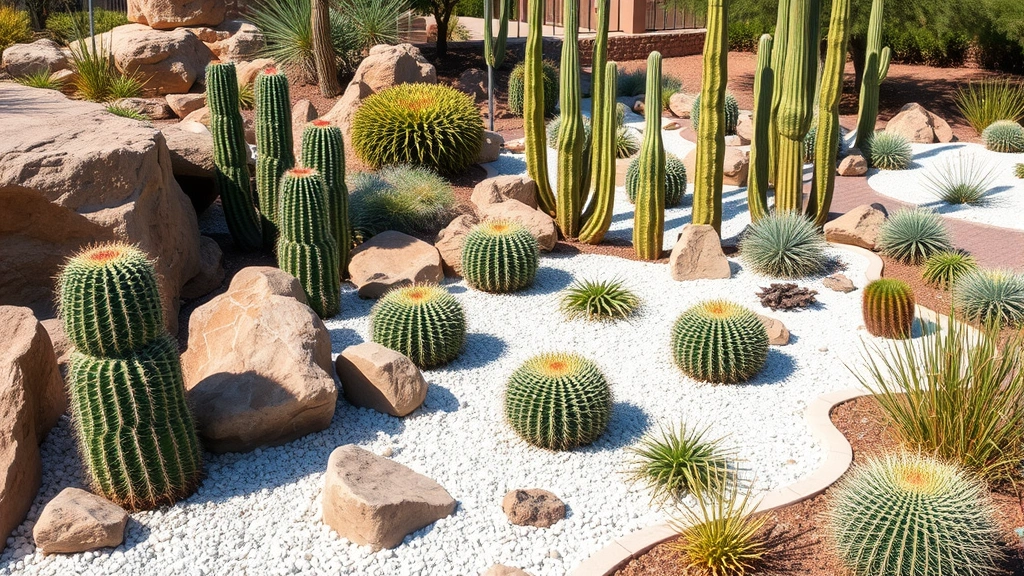
Rock gardens feature cacti interspersed with boulders, gravel, and drought-tolerant groundcovers. This design mimics natural desert landscapes and provides excellent drainage. Use decorative stone mulch in complementary colors—white quartz highlights green cacti, red lava rock creates drama, tan gravel provides neutral elegance. Layer stones at varying heights for dimension.
Container gardens offer flexibility for renters or those with poor soil. Group containers of varying heights on patios, porches, or entryways. Mix cacti with succulents like echeveria, jade plants, and aloe for textural variety. Seasonal rearrangement keeps designs fresh. Container gardens work beautifully in climates requiring winter protection—simply move tender specimens indoors.
Mixed borders integrate cacti with perennials and shrubs in traditional gardens. Pair tall columnar cacti with ornamental grasses for movement and texture contrast. Use low-growing cacti as edging plants along pathways. This approach softens the stark appearance of cactus-only gardens while maintaining their low-maintenance benefits. Ensure companion plants have similar water and drainage needs.
FAQ
How often should I water my cactus garden?
During growing season (spring and summer), water thoroughly every two to three weeks when soil is completely dry. Winter dormancy requires minimal water—perhaps once monthly or not at all. Always check soil moisture before watering rather than following rigid schedules. Rainfall, temperature, and container size all affect watering frequency.
Can I grow cacti in cold climates?
Yes! Hardy cacti like Opuntia, Echinocereus, and Escobaria survive freezing winters in USDA zones 4-6. Tender tropical species require frost protection or container cultivation in cold areas. Research hardiness ratings for your zone and choose appropriate varieties. Container specimens can be moved indoors during winter.
What’s the best soil for cacti?
Cacti need fast-draining soil: combine potting soil (40%), coarse sand (30%), and perlite or pumice (30%). This blend prevents moisture retention that causes rot. Never use standard garden soil or fine sand, which compacts and retains too much water.
How do I know if my cactus has root rot?
Signs include soft, mushy base tissue, foul odors, and overall plant decline. If suspected, remove the plant, cut away affected tissue with a sterile knife, and repot in fresh, dry soil. Don’t water for several weeks to allow recovery. Improve drainage to prevent recurrence.
When should I fertilize my cactus garden?
Apply diluted fertilizer monthly during growing season (March-September). Use balanced formula (10-10-10) or specialized cactus fertilizer at quarter strength. Stop fertilizing completely from October through February during dormancy. Overfertilizing causes excessive soft growth prone to pest and disease problems.
Can I propagate cacti from cuttings?
Many cacti propagate easily from cuttings or offsets. Remove segments with a clean knife, allow cuts to dry for several days, then plant in well-draining soil. Water sparingly until roots establish (4-6 weeks). This allows you to expand your collection affordably—learn more about propagating plants for detailed instructions.
How do I protect cacti from frost?
Cover tender varieties with frost cloth or blankets before freezing temperatures arrive. Ensure plants are dry before covering to prevent ice formation. Container specimens can be moved to protected locations like garages or covered patios. Hardy varieties typically need no protection in appropriate hardiness zones.
What companion plants work well with cacti?
Choose drought-tolerant plants with similar water needs: ornamental grasses, sedums, echeveria, agave, artemisia, and lavender. Avoid moisture-loving plants that require frequent watering. Ensure adequate spacing for air circulation. Mixed borders create visual interest while maintaining low-maintenance benefits of cactus gardens.