Growing Rhubarb? Pro Gardener’s Advice
Rhubarb is one of the most rewarding perennial crops you can grow in a home garden. With its striking crimson stalks and large, textured leaves, this hardy plant delivers both aesthetic appeal and culinary value year after year. Whether you’re a seasoned gardener or just starting out, learning how to cultivate garden rhubarb successfully will transform your growing experience and provide fresh, tart stalks for pies, jams, and sauces throughout the season.
Many gardeners hesitate to plant rhubarb because they believe it requires special skills or complicated care routines. The truth is quite different. Rhubarb thrives on neglect compared to most vegetables, requiring minimal intervention once established. However, understanding the fundamentals of planting, feeding, and harvesting will ensure you get the most impressive yields and healthiest plants. This comprehensive guide covers everything you need to know about growing rhubarb like a professional gardener.
Understanding Rhubarb Basics
Rhubarb (Rheum rhabarbarum) is a perennial plant that produces edible leaf stalks, not a fruit, though it’s commonly used in sweet preparations. The plant emerges from a thick rhizome system that stores energy and enables year-after-year regrowth. Once established, a single rhubarb plant can produce for 10-15 years or longer, making it one of the most economical crops for home gardeners.
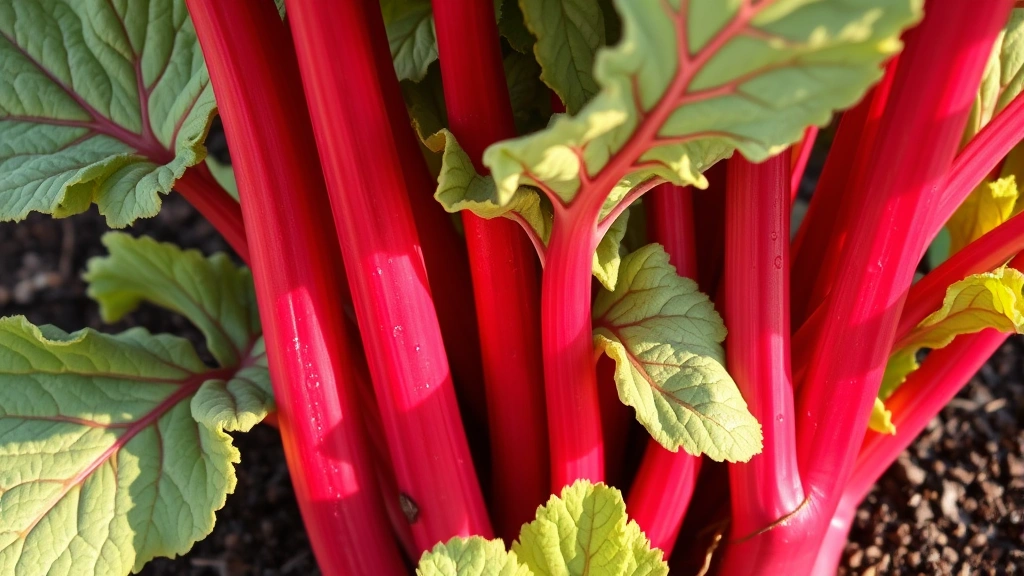
The growing season typically begins in early spring when soil temperatures warm. You’ll notice distinctive red shoots pushing through the soil, gradually unfurling into large, crinkled leaves. The stalks you harvest are the petioles—the leaf stems—which contain the tart, acidic flavor prized in cooking. The leaves themselves are toxic due to high oxalic acid content and should never be consumed, though the stalks are perfectly safe.
Understanding rhubarb’s growth cycle helps you plan your garden layout effectively. Since rhubarb plants occupy the same space for many years, position them where they won’t be disturbed by annual tilling or replanting. Many gardeners integrate rhubarb into permanent garden beds alongside perennial herbs or establish dedicated rhubarb patches.
Choosing Your Rhubarb Variety
Selecting the right variety dramatically influences your success with garden rhubarb. Different cultivars offer varying characteristics regarding stalk color, flavor intensity, and regional adaptation. The most commonly grown varieties include ‘Victoria,’ ‘Crimson Red,’ ‘Canada Red,’ and ‘Glaskins Perpetual.’
Victoria is perhaps the most traditional variety, featuring green stalks with red coloring. It’s reliable across most climate zones and produces consistently. Crimson Red delivers deep red stalks throughout the season and offers excellent flavor for cooking applications. Canada Red excels in cold climates and produces tender, flavorful stalks with minimal stringiness.
Glaskins Perpetual is unique because it can produce multiple harvests throughout the year if grown in mild climates, though it’s typically treated as a standard spring-harvesting variety in colder regions. Timperley Early is prized by gardeners who want to harvest earlier in the season, sometimes producing harvestable stalks by mid-spring.
Consider your climate zone when selecting varieties. Cold-hardy types perform better in northern regions, while some cultivars tolerate partial shade better than others. Check with your local cooperative extension service or master gardener program to identify varieties that thrive in your specific growing zone.
Site Selection and Soil Preparation
Rhubarb demands full sun—ideally six to eight hours of direct sunlight daily—for optimal stalk production and quality. While the plant tolerates partial shade, productivity decreases noticeably in shadier locations. Choose a spot in your garden that receives consistent morning sun and afternoon light.
Soil preparation is absolutely critical for rhubarb success. This plant prefers well-draining soil rich in organic matter, with a pH between 6.0 and 6.8. Before planting, amend your soil generously with compost, aged manure, or other organic materials. Rhubarb develops a deep root system, so prepare soil to a depth of at least 12-18 inches.
If you’re working with heavy clay soil, incorporate 3-4 inches of compost and consider creating a slightly raised bed to improve drainage. Poor drainage causes root rot and crown diseases that devastate rhubarb plants. Sandy soils benefit from additional organic matter to improve water retention. Test your soil pH and adjust if necessary using sulfur (to lower) or lime (to raise) several weeks before planting.
Ensure adequate spacing when positioning your rhubarb plants. Each plant eventually spreads 3-4 feet wide, so space crowns at least 3-4 feet apart. This spacing prevents overcrowding, allows air circulation, and makes harvesting easier as plants mature.
Planting Your Rhubarb
You can start rhubarb from seeds, but most home gardeners prefer purchasing dormant crowns or divisions from nurseries. Seeds take longer to produce harvestable plants and may not produce true-to-type offspring. Dormant crowns, typically available in early spring or fall, establish quickly and produce harvestable stalks within two years.
Plant rhubarb crowns in early spring as soon as soil is workable, or in fall in mild climates. Dig a planting hole slightly wider than the crown, positioning it so the top of the crown sits just at soil level—not buried deeper. Planting too deep invites crown rot, while planting too shallow exposes the crown to drying.
Backfill with amended soil and water thoroughly to eliminate air pockets. Apply 2-3 inches of mulch around the plant, keeping it several inches away from the crown itself to prevent moisture accumulation and fungal problems. This initial mulch layer helps retain moisture and moderates soil temperature during establishment.
If you’re dividing established plants to create new ones, do this work in early spring or fall. Dig up the entire plant carefully, then use a sharp spade to cut the crown into sections, ensuring each division has at least one strong bud or growth point. Replant divisions immediately in prepared soil.
Watering and Irrigation
Proper watering establishes strong rhubarb plants capable of years of production. During the first growing season, water regularly to keep soil consistently moist but not waterlogged. Established plants are quite drought-tolerant but produce better quality stalks with adequate moisture during the growing season.
Implementing a garden irrigation system ensures consistent moisture delivery and reduces labor. Drip irrigation or soaker hoses work excellently for rhubarb, delivering water directly to the root zone while keeping foliage dry. Avoid overhead watering, which promotes fungal diseases.
Water deeply but less frequently rather than shallow, frequent watering. This encourages deep root development and improves drought tolerance. During active growing season (spring through early summer), aim for about one inch of water weekly from rainfall or irrigation combined. Reduce watering frequency in late summer and fall as plants enter dormancy.
In arid climates or during dry spells, monitor soil moisture carefully. Rhubarb planted in sandy soil requires more frequent watering than plants in clay or loam. Apply mulch to conserve soil moisture and regulate temperature.
Feeding and Fertilizing
Rhubarb is a heavy feeder, demanding rich soil to produce vigorous growth and high-quality stalks. Begin fertilizing in early spring as new growth emerges. Apply a balanced, slow-release fertilizer or work compost into the top few inches of soil around each plant.
For organic gardeners, side-dress plants with aged compost or well-rotted manure each spring. This annual feeding maintains soil fertility and provides the nutrients rhubarb needs for robust production. Apply fertilizer in a circle around the plant, keeping it several inches away from the crown.
Throughout the growing season, you can apply additional fertilizer if plants appear to be underperforming. However, avoid over-fertilizing with nitrogen, which promotes excessive leaf growth at the expense of stalk development. Maintain a balanced nutrient profile with adequate phosphorus and potassium.
Some gardeners apply a light fertilizer feeding in midsummer to support continued stalk production. Cease fertilizing by late July or August to allow plants to harden off and prepare for dormancy. Excessive late-season feeding can reduce winter hardiness.
Managing Pests and Diseases
Rhubarb is remarkably pest-resistant compared to most garden crops, but a few issues occasionally appear. Japanese beetles sometimes feed on rhubarb leaves, though damage is usually cosmetic and doesn’t significantly impact plant health. Hand-pick beetles early in the morning when they’re sluggish, or use row covers on young plants.
Rhubarb curculios—a type of weevil—occasionally infest plants, but populations rarely reach damaging levels in home gardens. Spider mites may appear during hot, dry weather. Increase humidity and water frequency to deter these pests, or use miticides if infestations become severe.
Disease management focuses primarily on crown rot prevention. This fungal disease thrives in poorly drained soil or when water accumulates around the crown. Ensure excellent drainage, avoid overwatering, and keep mulch away from the crown. If crown rot appears, remove the affected plant and improve soil drainage before replanting in a different location.
Leaf spot diseases occasionally appear as brown spots on foliage. These fungal problems rarely threaten plant survival and can be managed through improved air circulation and reduced overhead watering. Remove severely affected leaves to improve plant appearance.
Harvesting Techniques
Proper harvesting technique ensures plant longevity and continued productivity. Never harvest rhubarb during the first year after planting—allow the plant to establish a strong root system. In the second year, take only a few stalks, leaving most to support plant development.
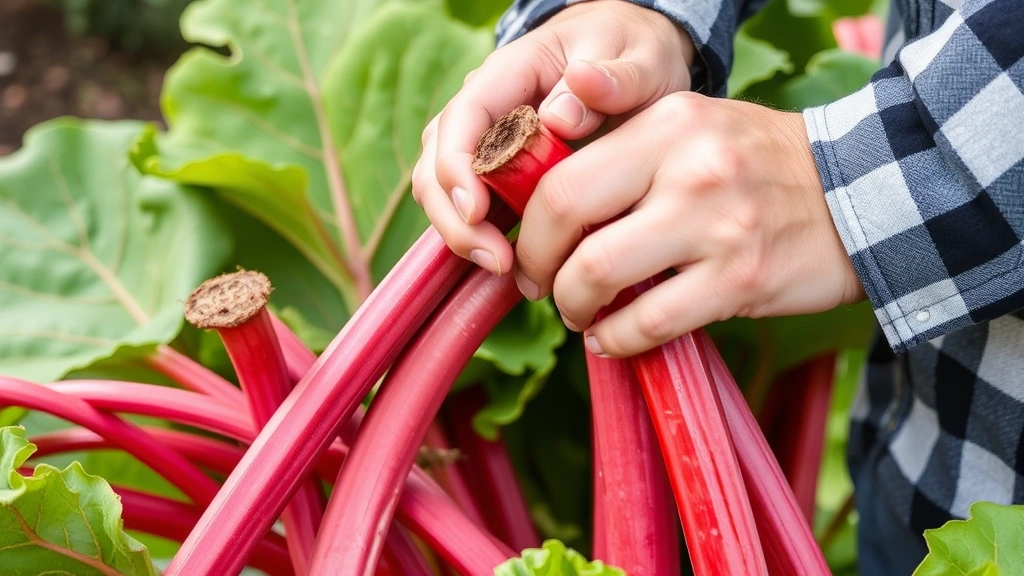
Beginning in the third year, you can harvest more heavily. Harvest stalks when they’re 10-15 inches long and still tender. Grasp stalks near the base and pull with a slight twisting motion, removing them from the crown. Avoid cutting stalks with a knife, as this leaves stubs that may rot.
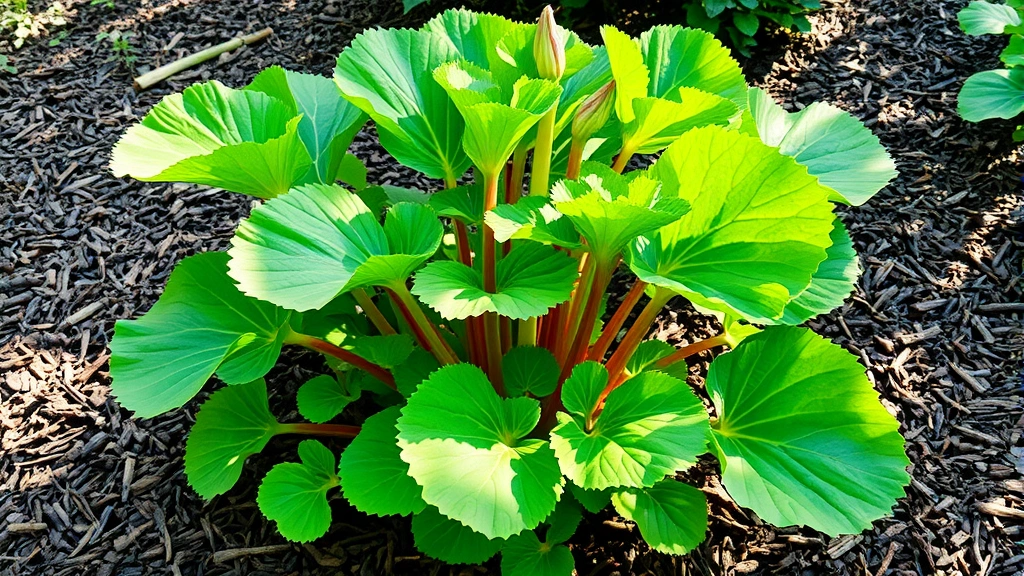
Harvest through late spring and early summer, typically until around July 1st in northern regions. Cease harvesting in late summer to allow plants to accumulate energy for next year’s growth. Removing flower stalks (which appear as thick, flowering shoots) redirects energy to stalk production. Snap off flower stalks at their base.
Remove any dead or damaged leaves throughout the growing season. This improves plant appearance, enhances air circulation, and reduces disease pressure. Dispose of diseased foliage in trash rather than compost to prevent spreading pathogens.
Seasonal Care Calendar
Spring (March-May): As soil warms, remove winter mulch gradually. Apply balanced fertilizer or compost as new growth emerges. Begin harvesting stalks when they reach desired size. Install supports or garden arches if desired to manage sprawling plants. Monitor for emerging pests.
Early Summer (June-July): Continue harvesting through early July. Remove flower stalks promptly. Maintain consistent watering as temperatures rise. Check for pest and disease issues. Mulch around plants to conserve moisture and moderate soil temperature.
Late Summer (August-September): Cease harvesting to allow plants to store energy. Continue watering during dry periods. Remove any diseased foliage. Reduce or eliminate fertilizer applications. Plants enter senescence phase as days shorten.
Fall (October-November): As foliage dies back naturally, allow leaves to remain on plants initially—they continue photosynthesizing and transferring energy to roots. Once completely brown, remove dead foliage. Apply fresh mulch layer (3-4 inches) for winter protection. In northern regions, this mulch insulates crowns from extreme cold.
Winter (December-February): In cold climates, rhubarb enters complete dormancy. In milder regions, some growth may continue slowly. Monitor mulch layer and refresh if it settles. In extremely cold areas, extra mulch provides protection. Plan next season’s garden layout and order new varieties if desired.
Growing rhubarb successfully combines proper site selection, soil preparation, consistent care, and appropriate harvesting. Like growing butternut squash, rhubarb rewards gardeners who invest time in understanding plant needs. Once established, your rhubarb patch will provide reliable harvests for years, making it one of the most satisfying perennial crops in any garden.
Integrate your rhubarb cultivation with other perennial gardening practices. Consider pairing rhubarb with herb garden elements to create a productive edible landscape. Learn companion planting strategies similar to those used when pruning hydrangea bushes and managing other perennials. Explore small evergreen garden plants to create year-round visual interest around your rhubarb patch.
FAQ
When is the best time to plant rhubarb?
Plant rhubarb crowns in early spring as soon as soil is workable, or in fall in mild climates. Spring planting allows plants to establish during the growing season, while fall planting gives them a full dormant period before spring growth begins.
Can I harvest rhubarb the first year?
No, avoid harvesting during the first year. Allow the plant to establish a strong root system and crown. Beginning in year two, harvest lightly, and by year three, you can harvest more heavily through early July.
Why are my rhubarb stalks thin and weak?
Thin stalks typically indicate inadequate nutrition, insufficient light, or overcrowding. Ensure plants receive full sun (6-8 hours daily), apply annual fertilizer or compost, and space plants 3-4 feet apart. Thin overcrowded plants by removing some stalks at ground level.
Is rhubarb toxic?
The stalks are perfectly safe to eat, but rhubarb leaves contain high oxalic acid and are toxic. Never consume the leaves. Always remove and discard them, keeping only the stalks for culinary use.
How long do rhubarb plants live?
Healthy rhubarb plants can produce for 10-15 years or longer with proper care. Eventually, productivity declines and plants should be divided or replaced. The lifespan depends on soil quality, climate, and management practices.
Can rhubarb grow in containers?
While rhubarb prefers in-ground cultivation, dwarf varieties can grow in large containers (20+ gallons) with excellent drainage and consistent feeding. Container plants require more frequent watering and may have shorter productive lifespans than in-ground plants.
What’s the difference between forcing rhubarb and regular harvesting?
Forcing involves covering dormant plants with forcing jars or blanching chambers in early spring to produce tender, pale stalks for early harvest. This technique yields stalks 2-3 weeks earlier but requires specific equipment and weakens plants if done excessively. Most home gardeners practice standard harvesting instead.


