
Best Plants for Garden Grove? Local Favorites Guide
Garden Grove, California, offers a unique Mediterranean climate that makes it an ideal location for growing a diverse range of plants. With mild winters and warm, dry summers, this Orange County gem provides gardeners with extended growing seasons and excellent conditions for both ornamental and edible plants. Understanding what thrives in Garden Grove’s specific climate is essential for creating a beautiful, low-maintenance landscape that flourishes year-round.
The key to successful gardening in Garden Grove lies in selecting plants that naturally adapt to the region’s USDA hardiness zones 9b-10a, characterized by average minimum winter temperatures between 35-40°F. Whether you’re a seasoned gardener or just beginning to explore horticulture, this guide will help you discover the best plants for your Garden Grove garden, considering the local weather patterns, soil conditions, and water availability that define this Southern California community.
Understanding Garden Grove’s Climate and Weather
Garden Grove experiences a Mediterranean climate typical of coastal Orange County, with average temperatures ranging from 50°F in winter to 75°F in summer. The weather in Garden Grove is characterized by mild, wet winters from November through March and warm, dry summers from June through September. Understanding these seasonal patterns is crucial for selecting plants that will thrive without excessive intervention.
Annual rainfall in Garden Grove averages around 12-14 inches, concentrated primarily in winter months. This means most plants must be drought-tolerant or require supplemental irrigation during the long, dry summer season. Spring and fall provide transitional periods with moderate temperatures and occasional rainfall, making these ideal seasons for planting many species. The proximity to the Pacific Ocean moderates temperature extremes, preventing the intense heat spikes found in inland areas while protecting plants from hard freezes.
Soil composition in Garden Grove typically includes sandy loam with varying pH levels. Many properties have clay-heavy soils requiring amendment with organic matter to improve drainage and nutrient retention. Before planting, conduct a soil test through UC Cooperative Extension to determine your specific soil characteristics and nutrient levels. This information will guide your plant selections and help you create optimal growing conditions.
Best Shrubs and Ornamental Plants
Shrubs form the backbone of most landscape designs in Garden Grove, providing structure, privacy, and year-round interest. Pittosporum is an excellent choice, offering dense green foliage and fragrant flowers in spring. These versatile shrubs tolerate poor soil, heat, and drought once established, making them ideal for low-maintenance landscapes. They work beautifully as screens or specimen plants and reach heights of 8-12 feet depending on variety.
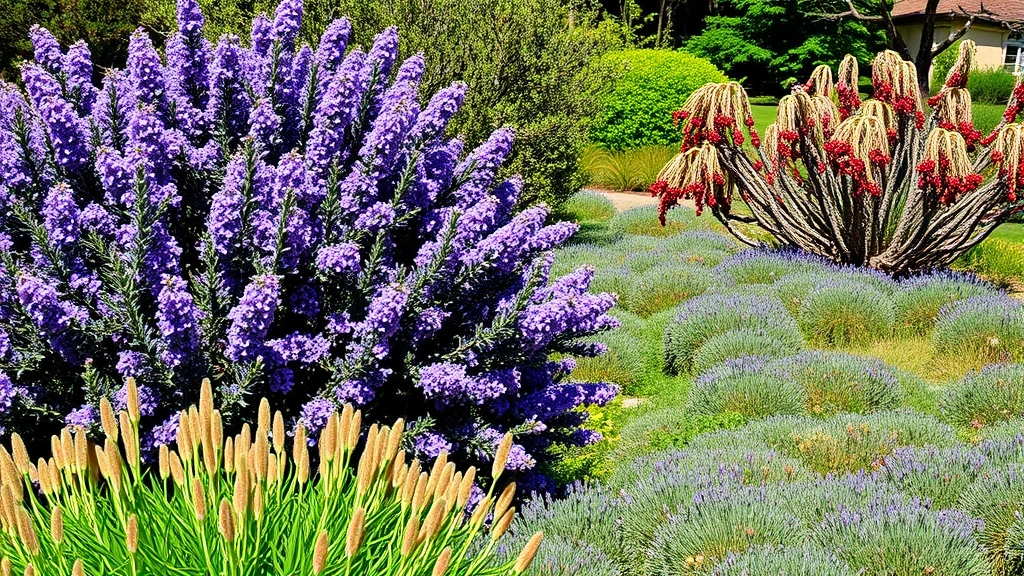
Ceanothus, commonly called California lilac, represents a native shrub perfectly suited to Garden Grove’s conditions. These stunning plants produce masses of blue, purple, or white flowers in spring and require minimal water once established. Choose varieties like ‘Concha’ or ‘Dark Star’ for reliable performance and exceptional blooms. Their deep root systems access moisture unavailable to shallow-rooted plants, making them drought-champions in local gardens.
Myrtle and Texas privet offer evergreen foliage and adaptability to various soil conditions. Myrtle produces delicate white flowers and aromatic foliage, while Texas privet tolerates shade better than many drought-tolerant shrubs. Both respond well to pruning and can be shaped into formal hedges or naturalistic forms. Consider using these plants for edging garden with stones to create defined planting areas and improve visual organization.
Rosemary and other Mediterranean herbs double as ornamental and culinary plants. Varieties like ‘Tuscan Blue’ and ‘Tuscan Prostrate’ offer architectural interest while providing fresh herbs for cooking. These sun-loving plants thrive in poor soil and rarely need supplemental water once established. Their needle-like foliage adds texture to mixed plantings, and their flowers attract beneficial pollinators throughout the year.
Drought-Tolerant Native and Adapted Plants
Native plants have evolved specifically to thrive in Southern California’s climate, requiring minimal water, fertilizer, or pest management once established. Toyon, with its red berries and white spring flowers, provides food and shelter for birds while adding seasonal color to landscapes. This California native reaches 8-10 feet and adapts to various soil types, from sandy to clay-based compositions.
Sage varieties native to California, including California white sage and black sage, represent exceptional choices for dry gardens. These aromatic plants tolerate extreme drought, poor soil, and full sun exposure. Their silvery or deep green foliage contrasts beautifully with other plants, and their purple or blue flowers attract hummingbirds and native bees. Plant them in groups for maximum visual impact and to create wildlife habitat.
Buckwheat (Eriogonum) species offer delicate flowers and fine texture while requiring virtually no supplemental water in Garden Grove. These low-growing natives work perfectly as groundcovers or in rock gardens. Their pink, red, or white flowers bloom prolifically in spring and attract numerous beneficial insects. Consider combining them with other natives to create naturalistic plantings that celebrate California’s botanical heritage.
Manzanita and chamise represent woody shrubs adapted to fire-prone regions, making them exceptionally tough in garden settings. Their attractive bark, delicate flowers, and ability to thrive in poor, well-drained soil make them valuable landscape additions. These plants establish slowly but develop deep roots that sustain them through extended droughts. Patience during establishment pays dividends in low-maintenance, long-lived plantings.
Flowering Plants for Year-Round Color
Achieving continuous color throughout the year requires strategic plant selection across multiple bloom periods. Blanket flower (Gaillardia) produces vibrant red and yellow flowers from spring through fall with minimal care. These heat and drought-tolerant perennials thrive in poor soil and actually perform better when neglected rather than over-watered. Plant them in drifts for maximum visual impact and to support pollinators.
Salvias offer extraordinary diversity, with species blooming in nearly every color imaginable. Autumn sage, Mexican sage, and desert marigold salvia extend the blooming season well into winter in Garden Grove. These plants attract hummingbirds and native bees while requiring minimal supplemental water once established. Their tubular flowers provide essential nectar when other food sources diminish.
Spring bloomers like California poppy, lupine, and tidy tips create spectacular wildflower displays. These annuals and short-lived perennials self-sow readily in Garden Grove’s climate, returning year after year with minimal intervention. Allow them to naturalize in drifts for authentic California landscape aesthetics. Their bright colors and delicate forms celebrate the region’s botanical heritage while supporting early-season pollinators.
Summer-flowering zinnias and cosmos add cottage-garden charm while thriving in heat and poor soil. Direct-sow seeds after the last frost date in March for rapid, reliable blooms. These annuals provide cutting flowers for indoor arrangements and feed butterflies throughout summer and fall. Their easy-to-grow nature makes them perfect for beginning gardeners wanting quick results.
Edible Plants and Fruit Trees
Garden Grove’s mild winters make it exceptional for growing fruit trees and edible plants. Citrus trees, including lemons, oranges, limes, and grapefruits, flourish in the region’s warm days and cool nights. These evergreen trees provide fragrant flowers, glossy foliage, and productive harvests for years. Plant them in full sun with well-draining soil amended with compost, and water regularly during establishment and fruit development.
Avocado trees represent another excellent choice for Garden Grove gardeners, producing creamy fruit in fall and winter. Varieties like ‘Hass’ and ‘Fuerte’ perform well in the area’s climate, though they require consistent watering during fruit development. Their large, tropical-looking leaves add architectural interest while providing abundant shade in summer. Pair them with garden decorations to create inviting outdoor spaces beneath their canopy.
Stone fruits including peaches, nectarines, and plums thrive in Garden Grove’s climate, requiring fewer chilling hours than varieties suited to colder regions. ‘Florida Prince’ peach and ‘Tropic Snow’ nectarine perform exceptionally well, producing abundant fruit with proper care. These deciduous trees provide spring flowers, summer shade, and delicious harvests while supporting local ecosystems.
Herbs like basil, oregano, thyme, and marjoram flourish year-round in Garden Grove. These Mediterranean natives prefer full sun and well-draining soil, thriving with minimal supplemental water once established. Fresh herbs transform recipes grow a garden philosophy into practice, providing culinary ingredients steps from your kitchen. Plant them near patios or kitchen doors for convenient harvesting during meal preparation.
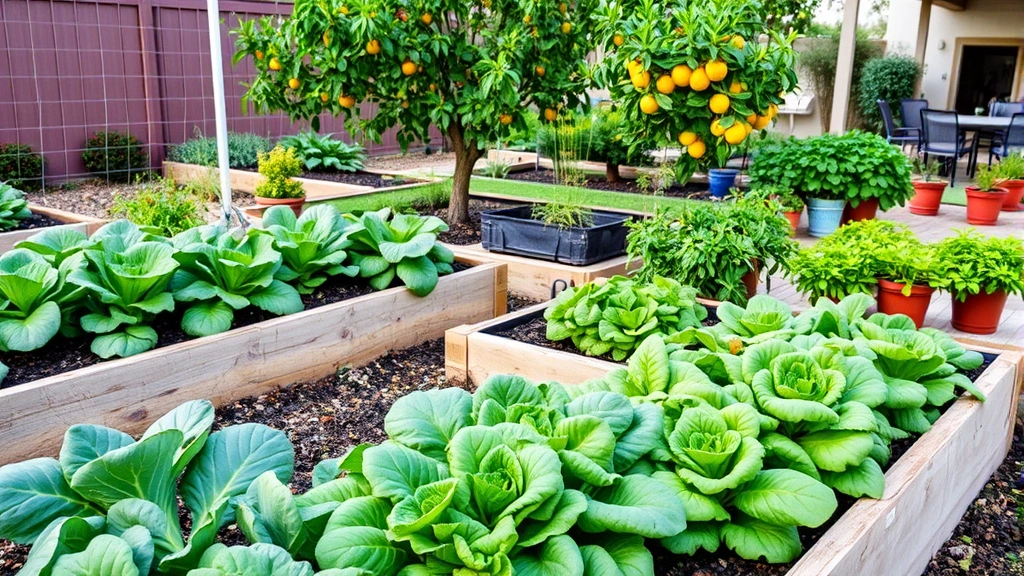
Vegetable gardens produce abundantly in Garden Grove’s extended growing season. Cool-season crops like lettuce, broccoli, and spinach thrive from October through April, while warm-season vegetables including tomatoes, peppers, and squash flourish from March through September. Use raised garden bed clearance options to create organized vegetable growing spaces with excellent drainage and soil control.
Container Gardening Solutions
Container gardening offers flexibility for Garden Grove gardeners, allowing plant movement based on seasonal conditions and providing excellent drainage for plants sensitive to waterlogging. Garden pots and hanging baskets accommodate diverse plant selections while creating visual interest at varying heights. Choose containers with drainage holes and use quality potting soil rather than garden soil to ensure proper moisture and aeration.
Succulents excel in container settings, requiring minimal water and maintenance. Echeveria, jade plants, and aloe varieties tolerate neglect while displaying striking forms and colors. Combine multiple succulents in shallow containers to create living art that thrives in Garden Grove’s sunny conditions. These plants provide year-round interest with minimal intervention, making them perfect for busy gardeners.
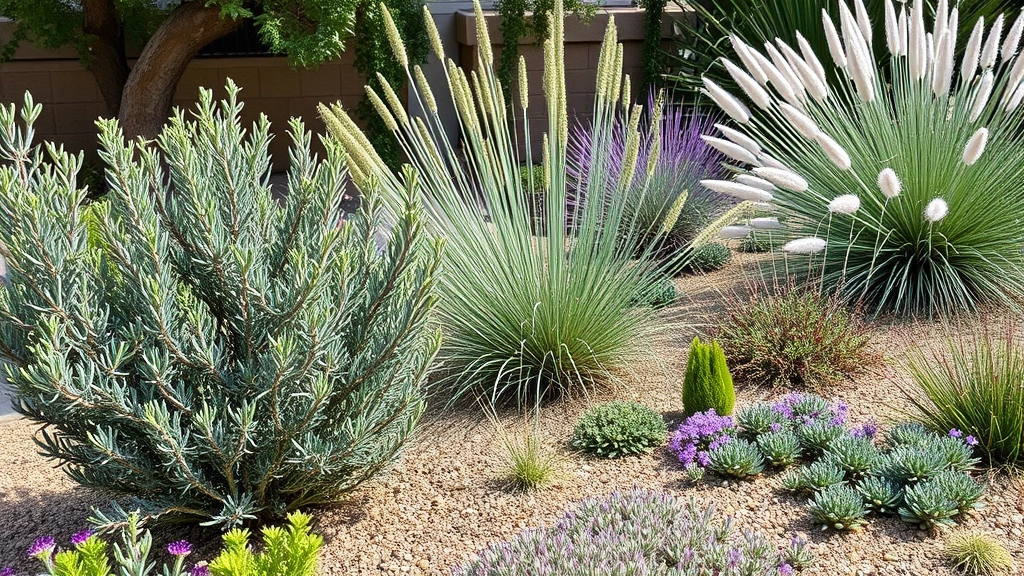
Ornamental grasses in containers add movement and texture to patios and deck spaces. Fountain grass, blue fescue, and black mondo grass create dynamic visual effects, especially when backlit by morning or evening light. Their fine texture contrasts beautifully with broader-leaved plants, creating sophisticated plant combinations. Most grasses tolerate container culture well, requiring only occasional water once established.
Flowering annuals provide seasonal color in container combinations. Combine trailing petunias with upright marigolds and dusty miller foliage to create classic, reliable displays. Switch plantings seasonally—cool-season pansies and violas in winter, warm-season zinnias and salvia in summer—to maintain continuous color throughout the year. Container gardening allows experimentation with plant combinations without permanent landscape commitment.
Seasonal Planting Guide
Spring (March-May): This season marks the beginning of Garden Grove’s primary growing period. Plant warm-season vegetables, tender annuals, and new perennials after the last frost date around mid-March. Citrus and avocado trees establish well when planted in spring, having the entire growing season to develop deep root systems. Divide and transplant established perennials, taking advantage of cool temperatures and adequate soil moisture.
Summer (June-August): Focus on maintaining established plants through heat and drought stress. Water deeply but infrequently to encourage deep root development, and apply organic mulch to conserve soil moisture and moderate soil temperature. Deadhead spent flowers to encourage continued blooming and conserve plant energy. Summer represents the challenging season in Garden Grove, requiring strategic plant selection and irrigation management.
Fall (September-November): This season offers ideal conditions for establishing new plants. Cool temperatures and occasional rainfall support root development without stress from extreme heat. Plant drought-tolerant shrubs, native plants, and perennials to take advantage of fall moisture and mild temperatures. Begin planting cool-season vegetables in late August through September for fall and winter harvests.
Winter (December-February): Garden Grove’s mild winters allow continued growth and blooming for many plants. Prune deciduous trees and shrubs during dormancy, and apply dormant oil sprays to control overwintering pests. Plant bare-root fruit trees and roses in January and February. Cool-season vegetables reach peak productivity, and winter-blooming plants like camellias and winter jasmine provide color when other plants rest.
FAQ
What are the hardiest plants for Garden Grove gardens?
Ceanothus, toyon, manzanita, and native sages represent exceptionally hardy plants for Garden Grove. These California natives thrive with minimal water, fertilizer, or pest management once established. Ornamental grasses and Mediterranean herbs like rosemary also demonstrate outstanding resilience, tolerating poor soil, drought, and heat without special care.
How much water do Garden Grove plants typically need?
Most established drought-tolerant plants require supplemental water only during extended dry periods or fruit production. New plantings need regular watering for 6-12 months until roots establish deeply. Cool-season vegetables and citrus during fruit development require consistent moisture. Adjust irrigation based on rainfall—Garden Grove receives most annual precipitation October through March.
Can I grow tropical plants in Garden Grove?
Some tropical plants succeed in Garden Grove’s frost-free winters, including avocados, bananas, and certain palms. However, cool nights and occasional frost limit tropical plant diversity compared to warmer climates. Plant tropical specimens in protected microclimates against south-facing walls or under tree canopies that provide frost protection during rare cold snaps.
What soil amendments help plants thrive in Garden Grove?
Most Garden Grove soils benefit from 2-3 inches of organic compost worked into the top 6-8 inches before planting. Compost improves drainage in clay-heavy soils while increasing water retention in sandy soils. Aged mulch gradually breaks down, continuously improving soil structure and nutrient content. Avoid heavy fertilization—most drought-tolerant plants actually perform better in lean soils.
How do I attract pollinators to my Garden Grove garden?
Plant native flowers like California poppies, sage species, and buckwheat that evolved with local pollinators. Maintain continuous blooms across seasons by selecting plants with staggered flowering times. Provide water sources like shallow basins with pebbles, and avoid pesticides that harm beneficial insects. Diverse plantings with varied flower colors, shapes, and sizes support different pollinator species.
Are there shade-tolerant plants for Garden Grove?
Yes, though full-shade options are limited. Coral tree, coast live oak, and toyon tolerate part-shade while maintaining attractive forms. Understory plants like California fuchsia, currants, and gooseberries thrive beneath tree canopies. Shade-tolerant perennials including hellebores and coral bells add color and texture in shadier locations.