Designing a Volcano-Themed Garden: Expert Advice for Creating a Dramatic Landscape
A volcano-themed garden transforms your outdoor space into a dramatic geological wonder, combining bold design elements with strategic plant selection to evoke the raw power of volcanic landscapes. Whether you’re inspired by volcanic terrain, dramatic color schemes, or the structural majesty of cone-shaped mountains, this unique garden style offers endless creative possibilities. From fiery red and orange perennials to dark volcanic rock mulch and towering specimen plants, you can craft an outdoor environment that captivates visitors and celebrates nature’s most impressive geological features.
Creating a successful volcano-themed garden requires understanding both aesthetic principles and horticultural practices. The design goes far beyond simply painting rocks black or planting red flowers—it involves thoughtful landscape architecture, color theory, and plant selection that mimics the dynamic energy of volcanic regions. This comprehensive guide walks you through expert strategies for designing, installing, and maintaining a volcano-themed garden that remains visually stunning throughout the growing season.
Understanding Volcanic Landscape Design Principles
Volcanic landscapes possess distinctive visual characteristics that serve as inspiration for garden design. The stark contrast between dark lava rock, vibrant vegetation, and bright sky creates a compelling aesthetic that translates beautifully to residential gardens. Real volcanic regions feature dramatic elevation changes, exposed mineral-rich soil, and hardy plants adapted to extreme conditions—elements you can replicate in miniature form.
The key to authentic volcanic garden design lies in understanding the geological story you’re telling. Volcanic landscapes aren’t random; they follow natural patterns of lava flows, erosion, and plant succession. When designing your garden, consider how elements would naturally arrange themselves. Darker materials should concentrate in certain areas like actual lava flows would, while lighter-colored plants can emerge as if reclaiming disturbed land. This narrative approach creates visual interest and emotional resonance beyond simple color coordination.
Professional landscape designers often recommend starting with a site analysis. Evaluate your garden’s existing topography, sunlight patterns, and soil conditions. A volcano-themed garden works best with some existing elevation change, though you can create artificial mounds and berms if your space is flat. Understanding your how to start a flower garden foundation ensures your themed design builds on solid horticultural principles rather than pure aesthetics.
Selecting the Perfect Color Palette
Color represents the most immediately recognizable element of volcano-themed garden design. The traditional volcanic palette includes deep charcoal blacks, rich burgundies, fiery oranges, brilliant reds, and golden yellows. However, sophisticated designers often incorporate cooler tones like deep purples and smoky grays to add complexity and prevent the garden from becoming visually overwhelming.
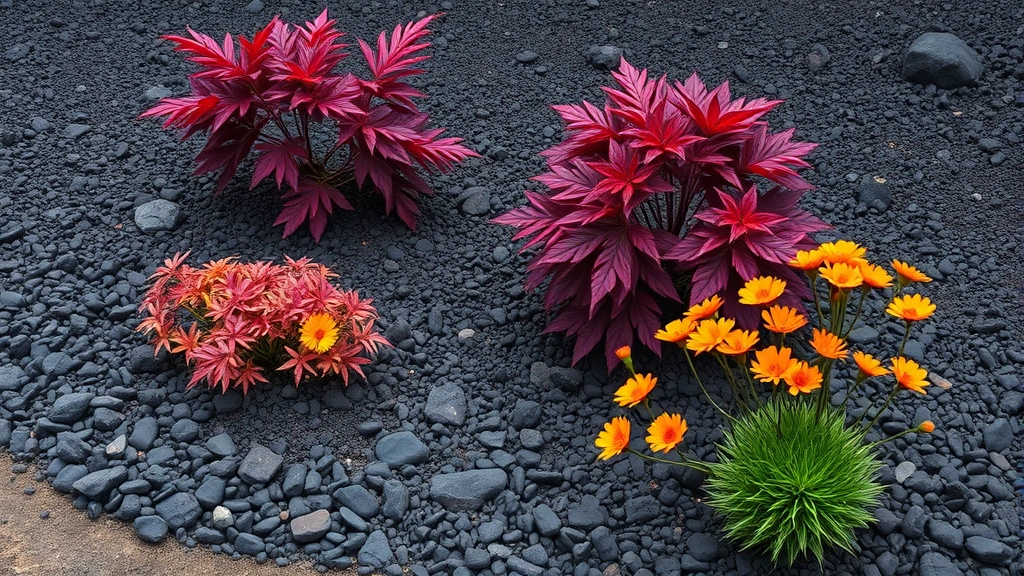
Start by anchoring your palette with dark foliage plants and materials. Black or dark gray mulch, charcoal-colored hardscaping, and deep burgundy foliage plants create the foundation mimicking cooled lava. From this dark base, layer in warm accent colors through flowers and lighter foliage. Red and orange blooms should appear in strategic focal points rather than scattered throughout, creating visual pathways that guide the eye through the garden.
Consider seasonal color transitions carefully. Spring might feature golden-yellow flowering shrubs emerging from dark soil, while summer showcases fiery red perennials and orange daylilies. Fall can incorporate deep burgundy foliage and rust-colored grasses, while winter’s bare branches against dark mulch maintain visual interest. This seasonal approach prevents your volcano garden from feeling monotonous and keeps it engaging year-round.
The 60-30-10 design rule works exceptionally well for volcano-themed gardens: sixty percent dark neutral tones, thirty percent warm accent colors, and ten percent bright highlight colors. This proportion creates drama without sensory overload, allowing each element to shine while maintaining cohesive design.
Structural Elements and Hardscaping
Hardscaping materials form the literal foundation of your volcano-themed garden. Volcanic rock—particularly basalt—serves as the authentic choice, available from most landscape supply companies. Black lava rock mulch creates the appearance of cooled lava flows while providing practical benefits like excellent drainage and temperature regulation for plant roots. Dark slate, charcoal gravel, and black river rock offer alternatives if authentic volcanic material isn’t locally available.
Pathways should reflect volcanic geology through strategic material choices. Consider a main pathway of dark gray or black pavers representing a lava flow, with branching secondary paths of lighter stone suggesting areas where vegetation has reclaimed the landscape. Curved, organic pathways feel more natural than geometric designs, mimicking how water and lava actually flow across terrain.
Water features enhance the volcanic aesthetic dramatically. A dark-bottomed pond surrounded by black rock creates the impression of a crater lake, while a small waterfall or stream flowing over dark stone suggests geothermal activity. The sound and movement of water add sensory dimension to your design beyond visual appeal. If a full water feature isn’t feasible, consider a dark stone basin as a focal point and reflection surface.
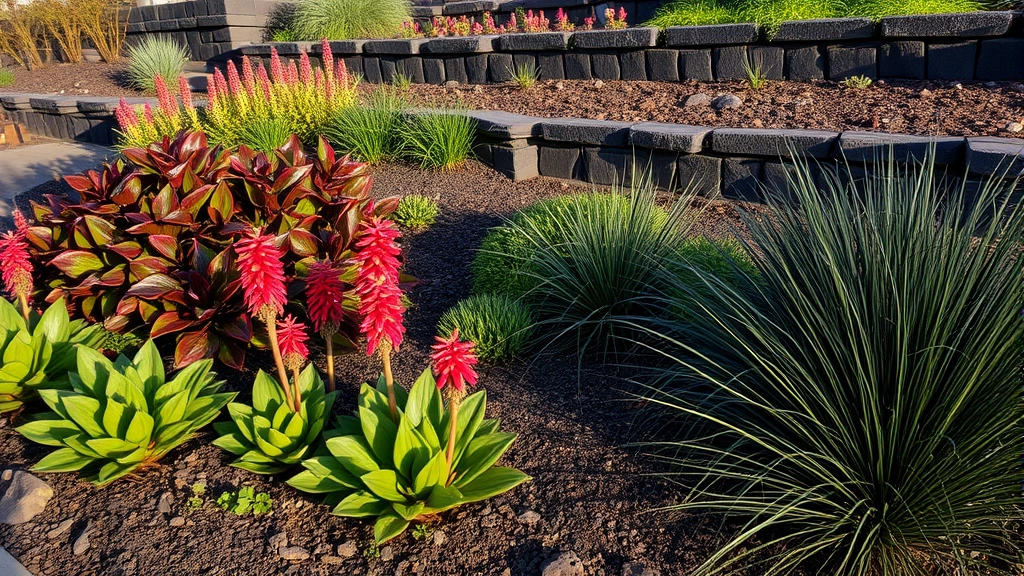
Stone borders and raised beds constructed from stacked slate or dark stone create structural drama while improving drainage and defining planting areas. These architectural elements echo the columnar basalt formations found in real volcanic landscapes, adding authenticity to your design. Raised beds also simplify maintenance and allow better control of soil composition for specific plants.
Plant Selection for Dramatic Impact
Choosing the right plants ensures your volcano garden remains healthy and beautiful while maintaining its dramatic aesthetic. Prioritize plants with dark foliage, bold forms, and warm-colored flowers or foliage. Many excellent options thrive in typical garden conditions while delivering the volcanic visual impact you’re seeking.
Dark Foliage Plants: Japanese maple varieties with deep burgundy or black leaves create stunning focal points. ‘Bloodgood’ Japanese maple features dark red foliage that intensifies in summer, while ‘Atropurpureum’ offers nearly black leaves. Copper beech, with its rich burgundy foliage, provides substantial structure and seasonal color changes. Black mondo grass, black petunias, and dark coleus varieties fill in lower layers with consistent dark tones.
Warm-Colored Flowering Plants: Red and orange perennials anchor the color scheme. Crocosmia ‘Lucifer’ produces brilliant orange-red flowers on arching stems, while red hot poker (Kniphofia) offers tall spikes of fire-colored blooms. Hemerocallis varieties in red and orange shades provide reliable summer color. Dahlias in deep reds and oranges create dramatic focal points, though they require more maintenance than other options.
Architectural Plants: Tall, structural plants create the sense of volcanic peaks and rocky outcrops. Ornamental grasses like Miscanthus or Panicum add movement and height, while their darker varieties enhance the theme. Phormiums (New Zealand flax) with deep burgundy leaves provide dramatic vertical emphasis. Agaves and yuccas create sharp, sculptural forms that echo volcanic rock formations.
When planning your vegetable garden layout alongside ornamental plantings, remember that volcanic-themed spaces can incorporate edibles beautifully. Dark-leafed kale varieties, red cabbage, and burgundy beans integrate seamlessly with the color scheme while providing practical harvests.
Creating Elevation and Topography
Elevation changes define volcanic landscapes and dramatically enhance garden design. If your property lacks natural slopes, creating artificial topography through berms and sunken areas transforms your space. A central mound planted with dark-foliaged specimen plants creates the impression of a volcanic cone, particularly when combined with dark mulch surrounding the base.
Berms—raised mounds of soil—serve both aesthetic and practical purposes. They improve drainage, create visual interest, and allow you to manipulate planting heights for better sight lines. A volcano-themed garden might feature a prominent central berm with a specimen tree or shrub at its peak, surrounded by lower plantings that radiate outward like lava flows.
Sunken areas or depressions can represent crater lakes or geothermal basins. A shallow depression planted with moisture-loving plants and surrounded by dark stone creates visual intrigue and allows you to grow plants with different water requirements. These low areas also serve as natural drainage collection points, improving overall garden health.
Terracing with dark stone retaining walls creates the dramatic elevation changes characteristic of volcanic terrain. Each terrace can feature different plant communities, allowing you to showcase the variety of your volcano-themed design while managing maintenance through distinct zones. Terraced designs also improve water infiltration and reduce erosion on sloped properties.
Lighting and Nighttime Effects
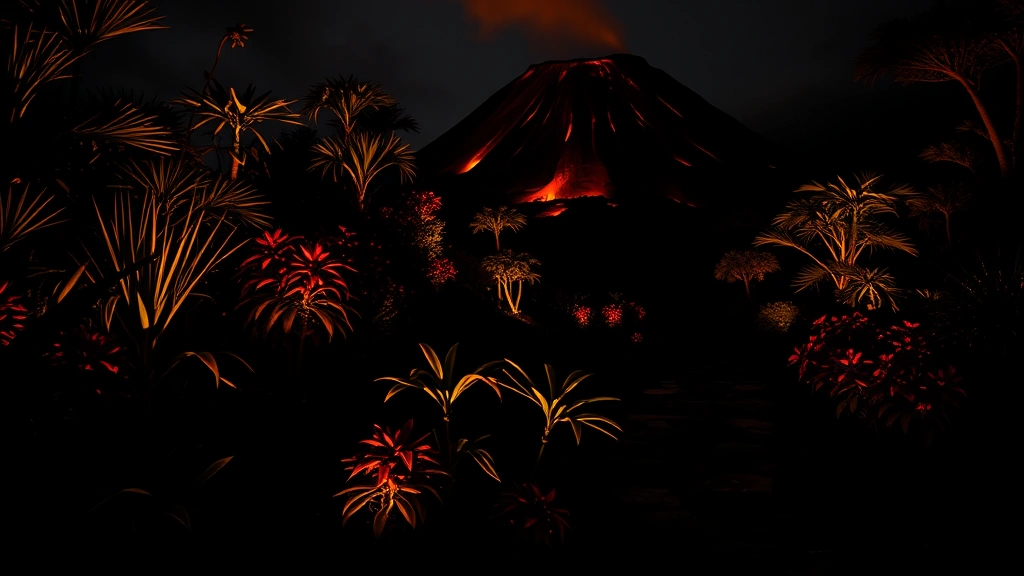
Strategic outdoor lighting transforms your volcano-themed garden into an evening spectacle. Warm-colored uplighting on dark foliage plants creates the impression of volcanic glow, while downlighting through canopy trees casts dramatic shadows that enhance the sense of drama and mystery.
Red and amber-toned landscape lighting intensifies the volcanic aesthetic during evening hours. Uplighting dark stone features and dark-foliaged plants makes them appear to glow from within, creating an almost otherworldly atmosphere. Consider solar-powered accent lights along pathways and focal points for sustainable, low-cost illumination.
Strategically placed spotlights can highlight specimen plants, architectural features, or water elements, drawing attention to your design’s most striking components. Layered lighting—combining ambient, task, and accent lighting—creates depth and allows you to adjust the mood from festive to contemplative depending on the occasion.
Seasonal Maintenance and Care
Maintaining a volcano-themed garden requires consistent attention to keep plants healthy and the design visually cohesive. Spring represents your busiest season, involving deadheading winter-damaged growth, refreshing dark mulch, and preparing plants for active growth.
Summer maintenance focuses on watering, deadheading spent flowers to encourage continued blooming, and managing pest issues. Many warm-colored flowering plants benefit from regular deadheading, extending bloom periods and maintaining the vibrant color palette you’ve established. Monitor dark foliage plants for spider mites and other pests that thrive in hot conditions.
Fall requires preparing perennials for dormancy, cutting back spent growth, and adding compost or aged manure to enrich soil for next season. This timing allows you to assess which plants performed well and plan adjustments for the following year. Refreshing mulch in fall maintains the dark volcanic appearance while providing winter protection for plant roots.
Winter care varies by climate zone. In colder regions, mulch tender plants heavily and consider protecting young specimen trees from snow damage. In milder climates, winter pruning shapes plants for spring growth and removes any cold-damaged branches. Regardless of climate, winter offers the opportunity to plan improvements and order new plants for spring installation.
When maintaining your garden’s appearance, proper garden gloves protect your hands during maintenance tasks, particularly when handling dark mulch and rough stone materials. Invest in quality tools and protective equipment to make seasonal maintenance more enjoyable and safer.
Water management deserves particular attention in volcano-themed gardens. Most dark foliage plants and warm-colored perennials prefer consistent moisture without waterlogging. Install soaker hoses or drip irrigation systems for efficient watering that reduces disease pressure and conserves water. Mulching heavily with dark materials helps retain soil moisture while enhancing the visual theme.
FAQ
What’s the best time to install a volcano-themed garden?
Spring and fall offer ideal conditions for installation. Spring provides the full growing season for plants to establish, while fall allows plants to develop strong root systems before winter. Avoid summer installation when intense heat stresses newly planted specimens, and winter installation is generally impractical in cold climates.
Can I incorporate a volcano-themed garden into a small space?
Absolutely. Container gardening with dark foliage plants and warm-colored flowers works beautifully in limited spaces. A single dark-foliaged specimen tree surrounded by red and orange perennials creates volcanic impact on a modest scale. Focus on vertical elements and strategic placement to maximize visual drama in small areas.
Which plants work best in shaded volcano gardens?
Dark foliage plants like Japanese maple, coral bells (Heuchera), and black mondo grass thrive in partial shade. For flowers, astilbe in red and orange shades, begonias, and fuchsias provide warm colors in shadier conditions. Hellebores with deep burgundy flowers also perform well in shade.
How do I prevent my volcano garden from looking too dark and gloomy?
Balance dark elements with sufficient bright accent colors and strategic lighting. Incorporate lighter-colored foliage plants occasionally, use warm-colored lighting during evening hours, and ensure adequate spacing between dark elements so the garden doesn’t feel crowded or oppressive. The 60-30-10 color rule prevents excessive darkness.
Are volcanic-themed gardens difficult to maintain?
Difficulty depends on your plant choices. Selecting hardy perennials, low-maintenance shrubs, and drought-tolerant specimens reduces maintenance requirements. Dark mulch requires occasional refreshing, and dark foliage plants may need monitoring for pests, but overall, a well-designed volcano garden requires no more maintenance than traditional gardens.
Can I add wildlife features to my volcano garden?
Yes, wildlife-friendly elements integrate beautifully with volcanic themes. Native plants with warm-colored flowers attract hummingbirds and butterflies, while dark stone features provide shelter for beneficial insects and small creatures. A shallow water basin serves both aesthetic and wildlife purposes. Learning how to keep squirrels out of garden helps protect your plantings while maintaining the garden’s beauty.
What’s the best mulch choice for volcano gardens?
Authentic volcanic rock (basalt lava rock) provides the most authentic appearance and excellent drainage. Black mulch alternatives include charcoal-colored wood chips, black river rock, or dark slate. Avoid red mulch, which conflicts with the dark volcanic aesthetic. Refresh mulch annually to maintain visual impact and provide weed suppression.


