Garden Statues: Landscape Architect Insights
Garden statues represent far more than mere decorative elements—they are focal points that define spatial relationships, establish design themes, and create emotional connections within outdoor spaces. Landscape architects have long recognized that a well-placed statue can transform an ordinary garden into a sophisticated outdoor room, guiding the eye, framing views, and providing visual rest in a composition of plants and hardscaping. Whether you’re designing a formal estate garden or enhancing a modest backyard retreat, understanding how professional designers approach statue selection and placement will elevate your landscape significantly.
The strategic use of garden statuary draws from centuries of design tradition, combining classical principles with contemporary aesthetics. From Renaissance villas to modern minimalist gardens, statues have served as anchors that balance the ephemeral nature of plantings with permanent architectural statements. This comprehensive guide explores professional insights into selecting, positioning, and maintaining garden statues that enhance your outdoor environment while reflecting your personal style and garden’s character.
Understanding Statue Placement in Garden Design
Professional landscape architects approach statue placement as a critical design decision, not an afterthought. The location of a garden statue determines sight lines, creates visual hierarchy, and influences how visitors navigate and experience your outdoor space. Before installing any statue, architects recommend conducting a thorough site analysis that includes identifying natural pathways, determining seasonal sun patterns, and understanding how the statue will interact with surrounding elements.
The concept of “destination points” is fundamental to professional garden design. A strategically placed statue serves as a visual destination that draws visitors deeper into the garden, encouraging exploration and creating a sense of discovery. This principle works particularly well at the end of pathways, within garden rooms, or at intersections where multiple sightlines converge. When starting your gardening journey, consider how statuary can anchor your design from the beginning rather than adding it as a final embellishment.
Sight line management is equally important. From your primary viewing areas—such as patios, windows, or seating zones—what statues will be visible? Landscape architects often create cross-axes where statues positioned at opposite ends of a garden create balance and visual tension. This classical approach, derived from Renaissance garden design, remains highly effective in modern applications. The statue of garden design philosophy emphasizes that every element should be visible from at least one significant vantage point and should contribute meaningfully to the overall composition.
Consider the seasonal context when planning placement. Winter reveals the skeleton of your garden design; statues become increasingly important as deciduous plants lose foliage. Professional designers often position statues to provide visual interest during dormant seasons, ensuring your garden maintains structural beauty year-round. In spring and summer, statues may be partially obscured by flowering plants, creating layers of visual depth that reveal themselves as you move through the space.
Selecting the Right Materials for Durability
Material selection dramatically impacts both the aesthetic success and longevity of garden statues. Landscape architects evaluate materials based on climate resilience, maintenance requirements, aging characteristics, and how they interact with surrounding plantings. The choice between stone, metal, ceramic, or reconstituted materials fundamentally shapes your garden’s character and your long-term investment.
Natural stone remains the gold standard for many professional designers. Granite, limestone, marble, and slate each weather differently and develop unique patinas over time. Marble, while classically beautiful, requires regular sealing in harsh climates and susceptibility to acid rain damage. Granite offers superior durability and develops subtle color variations as lichen and moss colonize the surface—a process many architects celebrate as the statue develops character. Limestone weathers gracefully, developing a soft, aged appearance that suits traditional gardens. When starting a flower garden, stone statues provide a permanent architectural element that complements evolving plantings.
Cast stone and reconstituted materials offer excellent value and durability. These engineered products combine crushed stone with resin binders, creating pieces that replicate natural stone appearance while offering improved weather resistance and lighter weight. Modern reconstituted materials have become increasingly sophisticated, with manufacturers developing formulations that weather authentically without the fragility of genuine marble. Landscape architects frequently specify these materials for contemporary gardens where budget constraints exist but quality appearance remains paramount.
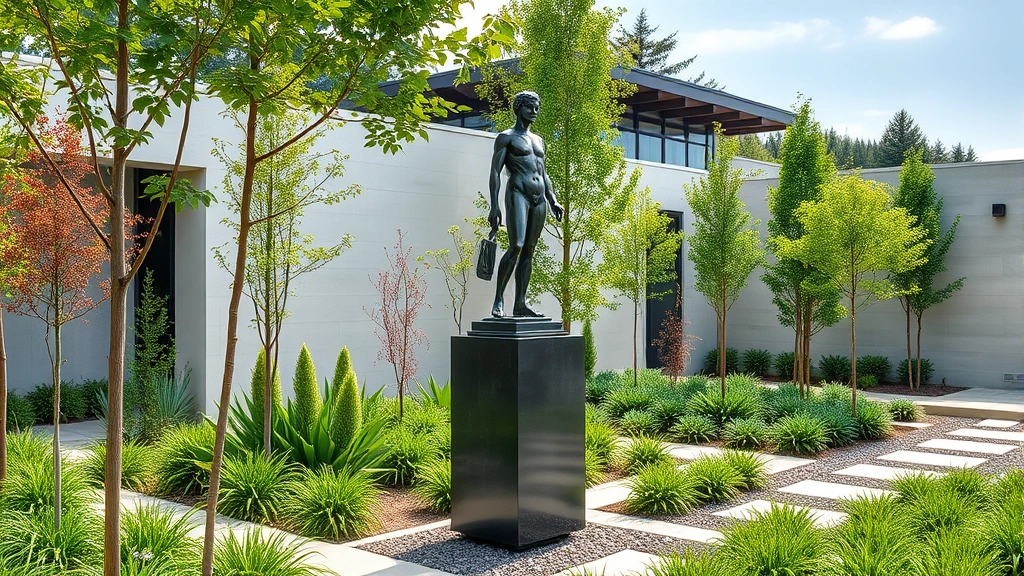
Metal statues—particularly bronze, copper, and iron—bring distinctive character to garden spaces. Bronze develops a rich patina over decades, becoming more beautiful with age. Copper develops a distinctive green patina that appeals to many designers. Cast iron offers affordability but requires regular maintenance to prevent rust. Stainless steel provides modern aesthetic appeal with minimal maintenance. Metal statues work particularly well in contemporary gardens and create striking contrasts against green foliage and architectural plantings.
Ceramic and terracotta statues create warmth and approachability, especially in Mediterranean-style gardens. These materials weather naturally but require careful selection for cold climates where freeze-thaw cycles can damage porous surfaces. High-fired ceramics demonstrate superior durability compared to low-fired terracotta, making them preferred for professional installations in variable climates.
Maintenance requirements vary significantly by material. Before selecting any statue, honestly assess your willingness to perform regular cleaning, sealing, or protective treatments. A beautiful marble statue in a humid climate requires consistent maintenance; neglecting this responsibility results in deterioration and disappointment. Conversely, granite and properly selected reconstituted materials can thrive with minimal intervention, developing natural patinas that enhance rather than diminish their appeal.
Scale, Proportion, and Visual Balance
Scale represents perhaps the most commonly mishandled aspect of statue selection by amateur gardeners. A statue that appears appropriately sized in a garden center or nursery may look absurdly small or overwhelmingly large when installed in your landscape. Professional landscape architects approach scale through systematic analysis of spatial relationships and sight distances.
The fundamental principle is that statues should be visible and impactful from their primary viewing distance. For a statue positioned forty feet away from a patio, a two-foot figure will disappear into the landscape; a four-to-six-foot statue becomes architecturally significant. Conversely, a six-foot statue positioned ten feet from a window creates an overwhelming presence that dominates rather than enhances the view. Landscape architects calculate appropriate scale by considering sight lines, distance, and the relative size of surrounding hardscaping and plants.
Proportion extends beyond the statue itself to encompass its relationship with garden features. A classical urn-shaped statue suits formal gardens with structured plant geometry; abstract modern sculptures demand simpler, more minimalist plant compositions. The statue of garden design wisdom emphasizes that visual weight matters as much as physical size. A delicate, open-work metal piece occupies space without appearing heavy, while a solid stone block of identical dimensions dominates aggressively.
Professional designers often employ the “rule of thirds” adapted for three-dimensional space. Rather than centering statues in garden rooms, positioning them slightly off-center creates more dynamic, sophisticated compositions. This principle applies to both horizontal and vertical positioning—a statue elevated on a pedestal creates different visual impact than one placed directly on ground level.
When integrating statues with raised bed gardening or other hardscaping elements, maintain visual hierarchy by ensuring the statue either dominates (as a primary focal point) or recedes (as a secondary accent). Competing focal points create visual confusion; successful compositions establish clear hierarchies that guide the viewer’s eye deliberately through the space.
Integrating Statues with Plant Design
The most sophisticated gardens treat statues and plants as integrated design elements rather than separate components. Landscape architects consider how plantings will frame, complement, or contrast with statuary throughout seasons. This integration requires thinking beyond simple placement to consider color, texture, height, and seasonal evolution.
Framing with plantings creates visual power. A statue framed by dark green shrub backgrounds becomes a portrait, drawing focused attention. Low plantings around statue bases provide context without obscuring the form. Tall plantings can create surprise reveals—positioning a statue where it’s concealed from one viewpoint but dramatically visible from another creates garden intrigue and encourages exploration.
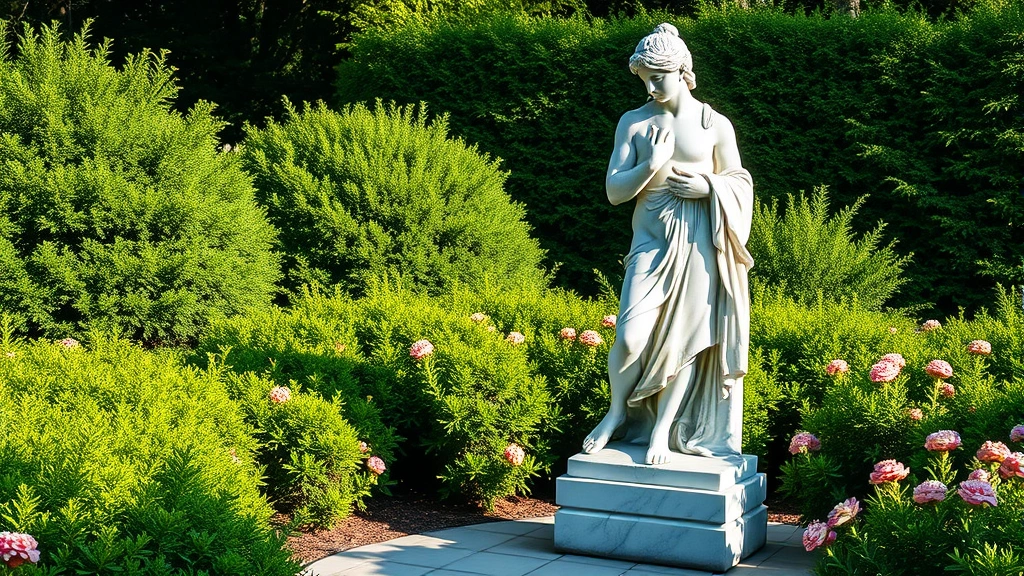
Color relationships between statues and surrounding plants deserve careful consideration. Light-colored stone statues stand out dramatically against dark foliage but may disappear against lighter backgrounds. Professional designers often position pale statues against evergreen shrubs and darker statues against lighter perennial plantings. Seasonal color changes affect these relationships; a statue invisible against spring flowers may become prominent when those flowers fade.
Texture creates sophisticated visual interest. Smooth stone contrasts beautifully with fine-textured foliage or rough bark. Rough-textured statues work well with delicate, feathery plants. These textural relationships operate at multiple scales, from the overall massing of plantings to the fine details of individual leaves and stone surfaces.
Height relationships between statues and surrounding plants require careful management. When growing plants in containers near statues, ensure potted specimens don’t obscure or compete with the statue’s visual presence. Conversely, strategically positioned tall plants can create layered compositions where the statue is revealed gradually as viewers move through the garden.
Professional designers consider how plant development over time will affect statue visibility. A newly installed statue may be prominently visible, but as surrounding plants mature, the relationship shifts. Planning for this evolution prevents future disappointment when a cherished statue becomes hidden behind overgrown shrubs. Alternatively, some designs intentionally create this progression, revealing statues as visitors move deeper into garden spaces.
Seasonal Considerations and Maintenance
Garden statues experience environmental stresses that intensify with seasons and climate extremes. Professional landscape architects design installations that accommodate these natural forces rather than fighting against them. Understanding seasonal impacts helps ensure long-term satisfaction with your statue investment.
Winter challenges vary dramatically by climate. In cold regions, freeze-thaw cycles damage porous materials as water penetrates surfaces, freezes, and expands, cracking stone or ceramic. Landscape architects in these areas specify frost-resistant materials and often recommend protective measures such as covering vulnerable statues or elevating them to enhance drainage. Permeable bases allow water to drain away rather than pooling around statue bases where freezing occurs.
Spring rains accelerate weathering and biological colonization. Moss and algae growth, while creating beautiful aged patinas, can make stone slippery and obscure finer details. Professional maintenance protocols include periodic gentle cleaning to balance aesthetic aging with safety and visibility. Selecting appropriate placement—avoiding areas where water constantly drips from tree canopies—reduces maintenance burden significantly.
Summer heat affects metal statues particularly, as they absorb and radiate heat intensely. Some materials may become uncomfortably hot to touch. Heat also accelerates weathering in some materials and can create differential expansion that stresses joints or bases. Professional installations often incorporate shade from surrounding trees or hardscaping to moderate temperature extremes.
Fall leaf drop creates both challenges and opportunities. Accumulated leaves trap moisture against statue bases, promoting decay and biological growth. However, the sculptural beauty of statues becomes more visible as deciduous plants lose foliage. Professional designers often position statues to maximize winter visibility while planning for fall maintenance routines that keep bases clear.
Maintenance protocols depend entirely on material selection. Natural stone requires periodic inspection for structural integrity and professional cleaning every few years. Metal statues benefit from regular inspection for rust development and application of protective coatings. Reconstituted stone requires minimal maintenance beyond occasional gentle cleaning. Establishing realistic maintenance expectations before installation prevents future regret. When considering plant propagation and garden development, remember that statues require parallel care and attention to remain beautiful.
Professional landscape architects often recommend documenting your statue’s condition through photography, creating a maintenance record that tracks changes over time. This documentation helps identify emerging problems early and provides evidence of proper care should questions arise regarding statue condition or value.
Creating Focal Points and Garden Rooms
Advanced garden design organizes spaces into distinct “rooms,” each with its own character, purpose, and focal point. Statues serve as the architectural anchors that define these spaces and create visual organization within larger landscapes. Understanding how to use statuary to create distinct garden rooms elevates your design from pleasant to sophisticated.
Primary focal points typically feature the largest, most visually prominent statues. These pieces anchor major garden rooms and are visible from significant distances or primary viewing areas. A classical statue positioned at the garden’s heart creates a sense of permanence and intentional design. Professional architects ensure primary focal points are positioned where they’re visible from the home’s primary windows and major outdoor living areas, creating visual connections between interior and exterior spaces.
Secondary focal points occupy lesser garden rooms or areas accessed through primary spaces. These statues may be smaller, more subtle, or positioned at the end of garden paths where they reward exploration. Secondary focal points create narrative progression through the landscape, suggesting that the garden has multiple stories to reveal. This layered approach prevents visual monotony and encourages deeper engagement with the space.
Threshold statues mark transitions between garden rooms or zones. Positioned at path junctions or between different planting areas, these pieces signal spatial and conceptual shifts. A pair of statues flanking a gateway creates a ceremonial quality that elevates the importance of what lies beyond. Professional designers use threshold statues to create anticipation and structure visitor movement through the landscape.
The statue of garden room design philosophy emphasizes that each space should feel intentional and complete. A garden room without a focal point feels purposeless; a room with multiple competing focal points feels chaotic. Professional installations typically feature one primary focal point per room, with secondary elements supporting rather than competing.
Pathways connecting garden rooms benefit from carefully positioned statues that guide movement and create visual interest. A statue positioned at a path’s end draws visitors forward; statues positioned perpendicular to pathways create visual stops that encourage pausing and observation. This choreography of movement and visual experience represents sophisticated landscape architecture applied at the residential scale.
When examining garden decor options, recognize that statues represent the most permanent and architecturally significant choices. Unlike seasonal plantings or temporary furnishings, statues define your garden’s structure and character for decades. This permanence demands thoughtful selection and placement that considers your evolving needs and preferences.
Professional landscape architects often recommend living with your space for a full growing season before committing to permanent statue placement. This observation period allows you to understand sun patterns, identify natural focal points, and determine which areas genuinely benefit from sculptural emphasis. Some gardeners discover that views they initially planned change dramatically once plantings mature and spatial relationships become clear.
FAQ
What size statue works best for a small residential garden?
For modest gardens (under 2,000 square feet), statues between two and four feet tall generally work well. The key is proportion relative to your garden room size and primary viewing distance. A statue visible primarily from a patio ten feet away needs less height than one viewed from a distant window. Professional designers recommend selecting statues that occupy roughly 15-20% of the visual field from your primary viewing angle—large enough to be significant but not overwhelming.
Can I move a statue once installed?
Yes, but carefully. Heavy stone statues require proper equipment and professional moving services; attempting to relocate them yourself risks injury and damage. Lighter reconstituted materials or metal pieces are more manageable. Before moving any statue, photograph its original position and surrounding plantings, allowing you to restore the design if the new location doesn’t satisfy. Many gardeners experiment with temporary placement using lightweight statues before committing to permanent installation of heavier pieces.
How do I protect valuable statues from weather damage?
Material selection is the first line of defense; choosing frost-resistant, weather-appropriate materials eliminates most weather-related damage. For valuable antique or delicate statues, consider protective measures such as creating windbreaks with surrounding plantings, improving drainage around bases, or removing statues to protected storage during harsh seasons. Professional conservators can apply protective coatings to particularly vulnerable pieces, but these treatments require professional expertise and periodic reapplication.
Should statues match my home’s architectural style?
Not necessarily. Intentional contrast often creates more sophisticated results than matching. A classical statue in a contemporary garden or a modern abstract piece in a traditional landscape can work beautifully if the contrast is deliberate rather than accidental. However, the statue should relate conceptually to your garden’s overall design theme. Professional designers ensure that stylistic differences feel intentional and contribute to the garden’s narrative rather than appearing like an afterthought.
What’s the best base or pedestal for garden statues?
Pedestals serve functional and aesthetic purposes. They elevate statues for better visibility, improve drainage around bases, and create visual separation between the sculpture and surrounding plantings. Materials should complement both the statue and garden design. Stone pedestals suit classical gardens; modern materials like concrete or steel work in contemporary spaces. Ensure pedestals are properly secured and that their proportion suits the statue—a delicate figure on an oversized pedestal appears lost, while a substantial statue on a tiny base appears unstable.
How often should I clean garden statues?
Frequency depends on material, climate, and personal preference. Statues in shaded, moist environments accumulate biological growth faster and may benefit from annual cleaning. Those in sunny, dry locations weather more slowly. Many gardeners prefer the aged appearance that develops naturally and clean only when growth significantly obscures details. Professional conservators generally recommend gentle cleaning with soft brushes and water, avoiding pressure washers that can damage softer materials. Chemical cleaners should be avoided unless specifically recommended for your statue’s material.