Grill & Garden: Landscape Design Ideas for the Ultimate Outdoor Space
Creating a functional outdoor living area that combines a garden with a grill requires thoughtful planning and strategic design. Whether you’re a culinary enthusiast or a passionate gardener, integrating these two elements transforms your backyard into a versatile entertainment hub. The key is understanding how to balance aesthetics, functionality, and plant placement to create a cohesive landscape that serves both purposes beautifully.
A garden with grill setup offers unique opportunities to grow fresh herbs and vegetables within arm’s reach of your cooking station. Imagine stepping outside to harvest basil, tomatoes, or peppers moments before grilling your dinner. This proximity not only enhances your culinary experience but also creates an engaging outdoor lifestyle that connects you with your food sources. By carefully designing the layout and selecting appropriate plants, you can achieve a stunning landscape that maximizes both entertainment value and edible production.
Planning Your Grill and Garden Layout
The foundation of any successful grill and garden combination starts with comprehensive planning. Before breaking ground or purchasing materials, spend time evaluating your yard’s existing conditions. Consider sun exposure throughout the day—most vegetables need six to eight hours of direct sunlight, while herbs like mint and parsley tolerate partial shade. Your grill placement should receive adequate ventilation and remain safely distant from structures and overhanging branches that could catch fire.
Measure your available space carefully and create a scaled sketch of your yard. Mark permanent features like trees, fences, and existing structures. Determine traffic patterns and how people naturally move through your outdoor area. A well-designed garden with grill ensures smooth workflow between cooking, dining, and relaxation zones. Think about water access for both irrigation and cleaning purposes. If your grill location is far from a hose connection, you may want to install additional faucets or plan for alternative watering methods.
Wind direction plays a crucial role in grill placement. Position your grill so prevailing winds blow smoke away from seating areas and windows. Similarly, consider how wind affects plant health—tender seedlings and delicate herbs may need windbreaks or strategic placement near protective structures. Sunlight intensity varies significantly based on your geographical location and season, so monitor your space at different times of year to make informed decisions.
Creating Functional Zones
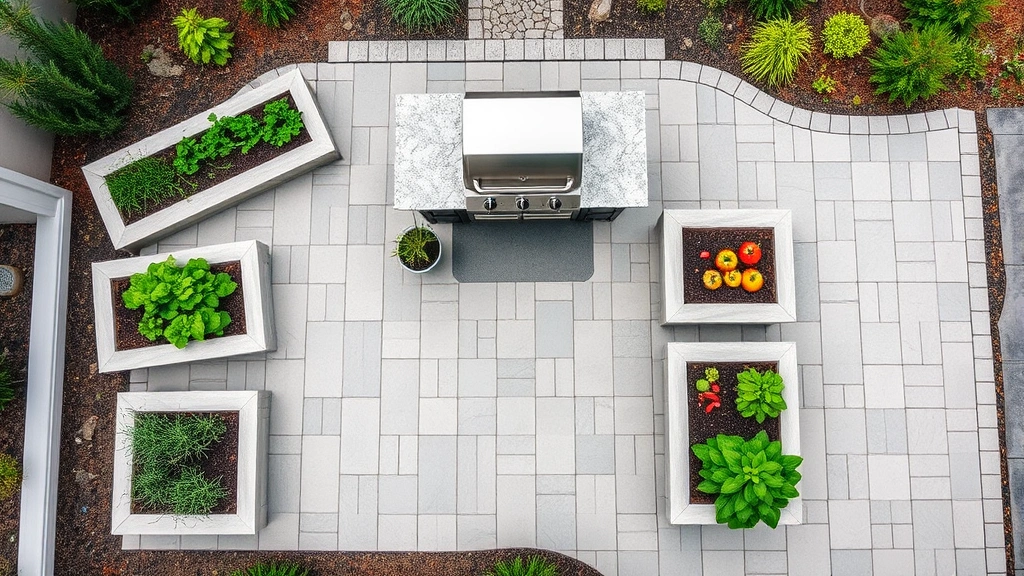
Dividing your outdoor space into distinct functional zones creates organization and improves usability. The most effective designs typically include a cooking zone around the grill, a preparation and serving area, a dining space, and garden beds or containers with edible plants. These zones don’t need rigid boundaries but should flow naturally from one to another.
The Cooking Zone centers on your grill and should include counter space for food preparation and storage. Consider built-in features like side tables, storage cabinets, or a small refrigerator if your budget allows. This area benefits from being slightly elevated or on a hardscape surface to prevent mud and debris issues during wet weather. Keep this zone clear of overhanging vegetation to ensure safety and proper ventilation.
The Preparation Area functions as your transition between the kitchen and grill. This space works well for a raised garden bed or container garden featuring frequently-used cooking herbs. Basil, oregano, thyme, and rosemary thrive in containers and remain accessible during meal preparation. Install a small table or counter here for plating and organizing ingredients.
The Dining Zone should be positioned to capture pleasant views while remaining sheltered from grill smoke. This area typically includes a patio table and chairs, positioned at a comfortable distance from the cooking area. Consider adding shade structures like pergolas or umbrellas for all-day comfort. This zone can be framed by ornamental plantings or garden arch trellis structures that create visual interest without obstructing sightlines.
The Garden Zone encompasses your vegetable beds, herb gardens, and ornamental plantings. Positioning edible plants within view and reasonable distance from the grill creates convenience and visual appeal. Vegetable garden layout principles apply here—arrange taller plants on the north side to avoid shading shorter varieties, and group plants with similar water and nutrient needs together.
Plant Selection for Grilling Gardens
Choosing the right plants for a garden with grill involves selecting varieties that enhance your cooking while thriving in your specific climate. Culinary herbs should top your priority list, as they’re essential for grilling and often grow vigorously in containers or garden beds.
Essential Grilling Herbs: Rosemary is a powerhouse for grilling, adding robust flavor to meats and vegetables. Its evergreen foliage provides year-round beauty, and it thrives in well-draining soil with minimal water once established. Oregano and marjoram complement Mediterranean grilled dishes perfectly and spread readily in sunny locations. Thyme varieties offer delicate flavors and attractive foliage, perfect for edging beds or cascading from containers. Basil, while annual in most climates, grows explosively during warm months and pairs beautifully with grilled tomatoes and vegetables.
Grilling Vegetables: Tomatoes are the quintessential grill-garden plant. Cherry and heirloom varieties produce abundantly and require minimal space. Position tomato plants where they receive full sun and adequate support through stakes or cages. Bell peppers, both sweet and hot varieties, thrive in warm conditions and produce colorful harvests perfect for grilling. Eggplant adds ornamental value with its elegant purple flowers and fruits. Zucchini and summer squash grow prolifically but require significant space, making them better suited for larger gardens.
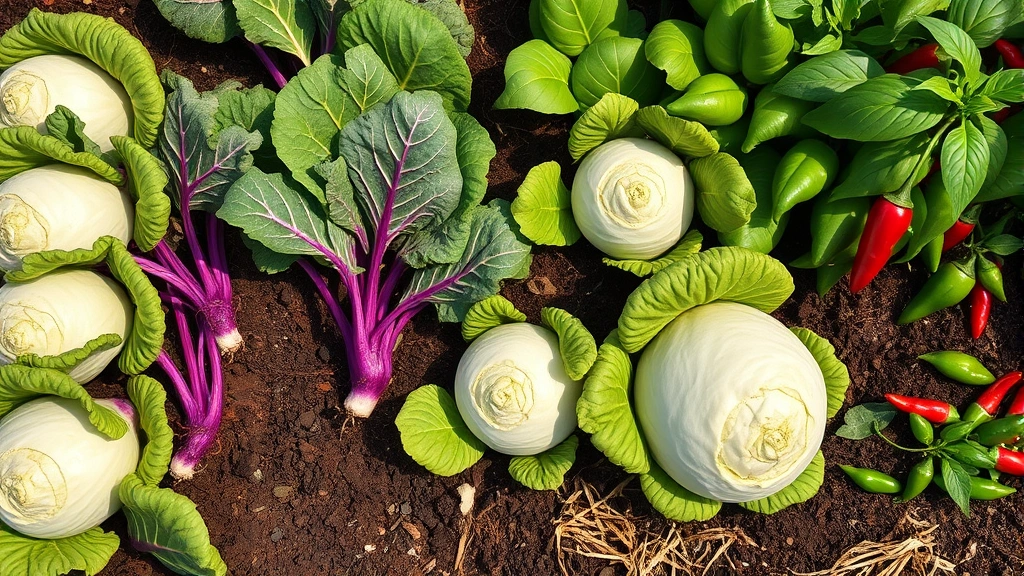
Ornamental Edibles: Don’t overlook plants that serve dual purposes. Lettuce and leafy greens offer beautiful foliage in various colors. Kale varieties provide sculptural interest while producing nutritious harvests. Flowering herbs like chive blossoms and herb flowers add visual appeal and attract pollinators. Consider best soil for a garden bed requirements when selecting varieties—most herbs and vegetables prefer well-draining soil rich in organic matter.
Ornamental Plantings: Frame your grill and garden with decorative plants that complement your design theme. Ornamental grasses add movement and texture, while flowering perennials attract beneficial insects and create seasonal interest. Consider native plants adapted to your region—they require less maintenance and support local ecosystems. Evergreen shrubs provide year-round structure and can screen unsightly views or create windbreaks.
Hardscape Elements and Materials
The non-plant elements of your design—patios, pathways, pergolas, and edging—create the framework for your grill and garden space. Quality hardscape design ensures durability, safety, and aesthetic appeal.
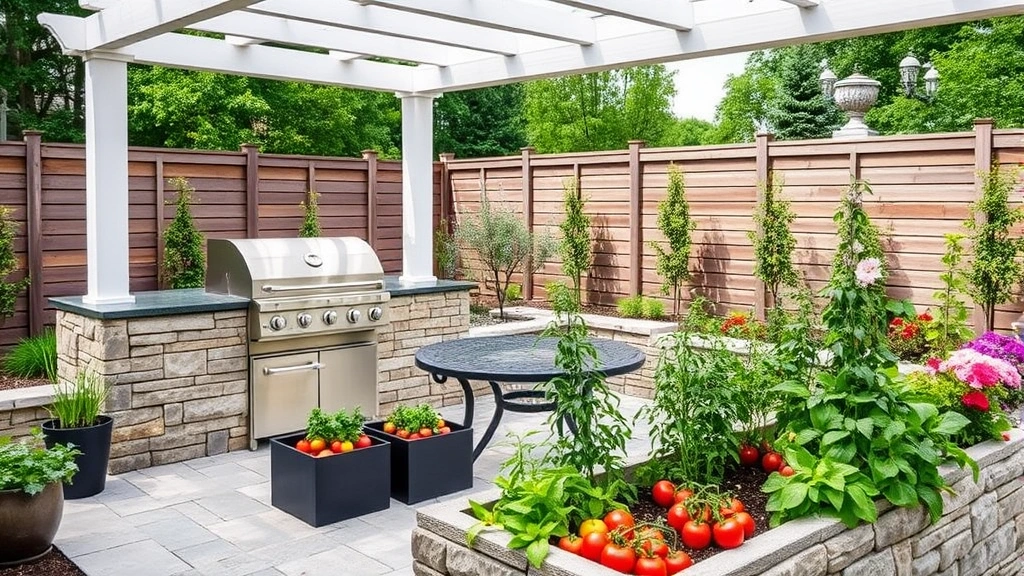
Patio and Flooring: Your grill area requires a stable, level surface that can withstand heat and heavy use. Concrete, pavers, or natural stone all work well. Permeable pavers allow water drainage while maintaining a clean cooking surface. The material you choose should complement your home’s exterior and create visual continuity throughout the space. A well-designed patio extends from the grill through the preparation area and into the dining zone, creating seamless flow.
Pathways: Connect different zones with attractive pathways that guide movement and prevent trampling of plantings. Gravel paths offer informal charm and are budget-friendly, while stepping stones or pavers create more formal appearance. Mulched pathways work beautifully in garden areas and suppress weeds while improving soil health as they decompose.
Vertical Elements: Pergolas, arbors, and trellises add height and visual interest while providing practical benefits. A pergola over your dining area offers filtered shade and can support climbing vines. Garden accessories like trellises support climbing vegetables such as beans and peas, maximizing production in limited space. Tall structures also create privacy screens and windbreaks when strategically positioned.
Edging and Borders: Define garden beds with appropriate edging materials. Metal edging offers clean lines and durability. Wooden borders provide warmth but require maintenance. Stone or brick edging creates formal appearance. Proper edging prevents grass from creeping into beds and simplifies maintenance.
Water Features: A small fountain or birdbath adds ambiance while supporting wildlife. Position these features where they’re visible from seating areas but away from the grill to prevent damage and safety issues. Water features create soothing background sounds that mask street noise and enhance the relaxation factor of your outdoor space.
Maximizing Space in Small Yards
Limited yard space doesn’t preclude creating a functional grill and garden combination. Vertical gardening, container cultivation, and strategic design maximize productivity and beauty in compact areas.
Container Gardening: Containers offer flexibility and control over soil quality and moisture. Herbs thrive in pots positioned near the grill for easy access. Vegetables like tomatoes, peppers, and lettuce produce abundantly in containers when provided adequate soil, water, and sunlight. Group containers together for visual impact and easier watering. Large containers (at least five gallons) retain moisture better and support larger plants. Use quality potting soil, not garden soil, to ensure proper drainage.
Vertical Gardening: Trellises, wall-mounted planters, and hanging baskets increase growing space without consuming ground area. Climbing vegetables like pole beans, cucumbers, and indeterminate tomatoes maximize production while remaining visually compact. Wall-mounted herb gardens create functional art near your cooking area. Hanging baskets showcase trailing herbs and allow air circulation around plants.
Multi-Purpose Elements: Select plants and structures that serve multiple functions. A pergola provides shade while supporting productive climbing plants. Ornamental edibles look beautiful while producing harvests. A bench with storage underneath offers seating and conceals garden tools and cushions.
Compact Grill Selection: Choose a grill size appropriate for your space. Tabletop grills, small barrel smokers, or built-in grill units designed for compact patios maximize cooking capability without overwhelming limited areas. Foldable side tables add preparation space without permanent footprint.
Seasonal Considerations and Maintenance
A well-designed garden with grill requires thoughtful seasonal management to maintain beauty and productivity throughout the year.
Spring Planning: As temperatures warm, prepare beds and refresh mulch. Start seeds indoors for transplanting after frost danger passes. Clean and inspect your grill thoroughly after winter storage. Prune ornamental plants to encourage new growth. Install any new hardscape elements while weather permits.
Summer Management: Peak growing season demands consistent watering, especially for vegetables and newly planted perennials. Mulch garden beds to retain moisture and suppress weeds. Harvest herbs frequently to encourage bushy growth. Monitor for pests and diseases, addressing issues promptly. Your grill sees peak use—keep it clean and well-maintained for food safety and longevity.
Fall Transitions: Plant cool-season crops like lettuce, kale, and spinach. Divide perennials and plant spring bulbs. Collect and compost plant debris. Clean gutters and prepare drainage for heavy rains. Extend your season with row covers or cold frames to protect tender plants from early frosts.
Winter Preparation: In cold climates, protect tender plants with mulch or move containers to sheltered locations. Drain irrigation systems and disconnect hoses. Cover your grill or store it in a protected space. Plan next year’s garden layout and order seeds. Prune dormant trees and shrubs to improve form and health.
Year-Round Maintenance: Deadhead spent flowers to encourage continued blooming. Stake or cage plants as they grow to prevent damage and disease. Fertilize vegetables and herbs regularly for optimal production. Keep pathways clear of debris and weeds. Inspect hardscape elements for damage or settling and make repairs promptly.
Design Inspiration and Styles
Your grill and garden can reflect various design aesthetics, from casual cottage gardens to contemporary minimalism.
Mediterranean Style: This approach emphasizes warmth, abundance, and relaxation. Feature rosemary, oregano, and basil in raised beds or containers. Use terracotta pots, stone pathways, and a pergola draped with grapevines. Incorporate warm-colored pavers and ornamental grasses. Mediterranean gardens thrive in sunny locations and tolerate heat and drought once established.
Contemporary Minimalist: Clean lines, limited plant palette, and geometric hardscape define this style. Use raised beds with steel edging, permeable pavers in neutral tones, and a sleek built-in grill. Select ornamental grasses and architectural plants like ornamental kale. Incorporate water features and modern lighting. This approach works beautifully in smaller spaces.
Cottage Garden: This romantic style embraces abundance and informal planting. Mix vegetables, herbs, and flowering plants in exuberant combinations. Use fairy ideas for the garden like whimsical accessories and curved pathways. Incorporate vintage elements and allow plants to self-seed and intermingle. This approach requires more maintenance but creates charming, personal spaces.
Sustainable/Edible Landscape: Prioritize productive plants, composting, water conservation, and pollinator support. Create diverse plantings that attract beneficial insects. Install rain barrels for irrigation. Use organic soil amendments and integrated pest management. This approach connects outdoor entertaining with environmental stewardship.
Asian-Inspired: Incorporate principles of balance, harmony, and simplicity. Use stone pathways, gravel areas, and carefully placed plants. Include water features and bamboo screening. Select plants with interesting foliage and form. Create designated viewing points and contemplative spaces. This design approach creates peaceful, meditative outdoor environments.
FAQ
What’s the ideal distance between a grill and garden beds?
Position herb and vegetable gardens at least 10 feet from your grill to minimize smoke exposure. Tender plants like basil and lettuce are particularly sensitive to smoke. However, some distance is beneficial—it prevents heat stress and allows air circulation. If space is limited, position hardy herbs like rosemary and oregano closer, and keep tender plants farther away.
Can I grow vegetables in containers near my grill?
Yes, containers work excellently near grills. Use large pots (at least five gallons) filled with quality potting soil. Position them where they receive adequate sunlight and can be easily watered. Containers allow you to move plants away from excessive heat or smoke if needed. This setup also simplifies harvesting during meal preparation.
What herbs are best for grilling?
Rosemary, oregano, thyme, basil, and marjoram are ideal grilling herbs. They enhance meats, vegetables, and breads with robust flavors. Most thrive in sunny locations with well-draining soil. Growing them nearby means fresh harvests moments before cooking. Tender herbs like basil grow best in warm months, while hardy herbs like rosemary produce year-round in most climates.
How do I prevent smoke from damaging plants?
Position smoke-sensitive plants at least 10 feet from the grill. Consider wind direction when planning your layout. Create windbreaks using fences, pergolas, or shrubs to redirect smoke away from garden areas. Hardy plants like rosemary and oregano tolerate some smoke exposure better than delicate varieties. Monitor plants for stress and relocate containers if necessary.
What’s the best surface for a grill area?
Concrete, pavers, or natural stone all work well. Choose materials that complement your home’s exterior. Permeable pavers offer environmental benefits and easier drainage. Ensure the surface is level and stable to prevent grill tipping. Avoid wood decking directly under the grill due to fire hazard. A minimum 10-foot clearance from structures is recommended.
Can I grill and garden in a small space?
Absolutely. Use vertical gardening, containers, and compact grill models. Choose a small patio area for the grill and surround it with container plantings. Wall-mounted herb gardens and hanging baskets maximize growing space. A tabletop grill or small built-in unit works perfectly in limited areas. Strategic placement and multi-functional elements create functional grill and garden combinations even in modest yards.
How often should I maintain my grill and garden?
Weekly tasks include watering during dry periods, harvesting herbs and vegetables, and cleaning grill grates. Monthly maintenance includes weeding, deadheading flowers, and checking for pests. Seasonal tasks involve soil amendment, pruning, and planning. Your grill requires regular cleaning for food safety and longevity. Consistent maintenance prevents problems and keeps your space attractive and productive.