Garden Street Design Ideas: Landscape Architect Tips for Stunning Curb Appeal
Creating a beautiful garden street presence transforms your home’s exterior into a welcoming showcase that enhances neighborhood aesthetics and increases property value. Whether you’re designing a front yard garden, establishing a charming entryway, or reimagining your entire streetside landscape, thoughtful planning and strategic plant selection make all the difference. A well-designed garden street combines hardscaping elements, seasonal plantings, and focal points that guide visitors from the sidewalk to your front door.
Professional landscape architects approach garden street design with specific principles: establishing clear sight lines, creating visual hierarchy, selecting plants appropriate for your climate zone, and ensuring year-round interest. This comprehensive guide shares expert tips for designing a garden street that reflects your personal style while maintaining curb appeal throughout every season. From selecting the right plants to understanding traffic flow and sightlines, you’ll discover actionable strategies to transform your streetside landscape into a neighborhood focal point.
Understanding Garden Street Design Principles
Landscape architects follow fundamental design principles when creating garden street installations that maximize curb appeal. The first principle involves understanding sight lines—how your garden appears from the street, sidewalk, and approaching vehicles. A successful garden street design considers multiple viewing angles, ensuring the landscape looks intentional and balanced from every perspective.
Visual hierarchy guides viewers’ eyes through your landscape toward focal points. This might be a striking specimen tree, an ornamental gate, or your home’s entrance. By creating layers of varying heights and colors, you establish depth that makes even modest front yards appear larger and more sophisticated. Landscape architects recommend placing taller plants toward the back or sides, medium-height specimens in the middle ground, and low-growing plants along edges.
Color theory plays an essential role in garden street design. Cool colors like blues and purples recede visually, making spaces feel larger, while warm colors like reds and oranges advance forward, creating intimacy. Professional designers often employ a cohesive color palette—typically 2-3 dominant colors with accent plantings—to create unity rather than visual chaos.
Proportion and scale matter significantly when designing for streetside visibility. Plants should relate appropriately to your home’s size and architectural style. A cottage-style bungalow benefits from abundant, informal plantings, while modern minimalist homes suit clean lines and sculptural plant forms. The flower garden foundation you establish now determines whether your design reads as intentional and harmonious.
Planning Your Landscape Layout
Before selecting a single plant, sketch your garden street layout to scale. Measure your front yard width, depth, and home frontage. Note existing trees, utility lines, hardscape features, and sun exposure patterns throughout the day. Understanding whether your street-facing garden receives full sun, partial shade, or full shade dramatically impacts plant selection and arrangement.
Create zones within your garden street design. The entry zone nearest your front door should feature welcoming plantings that frame the entrance. The intermediate zone—between the entry and street—provides opportunities for statement plantings and focal points. The street zone, closest to the sidewalk, typically features lower-growing plants that maintain sight lines and don’t obstruct traffic visibility.
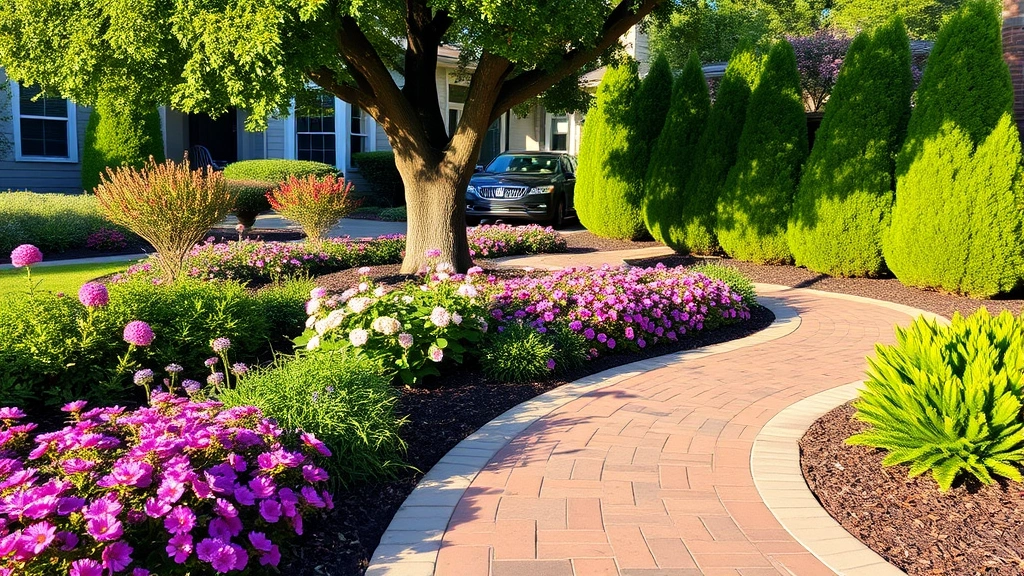
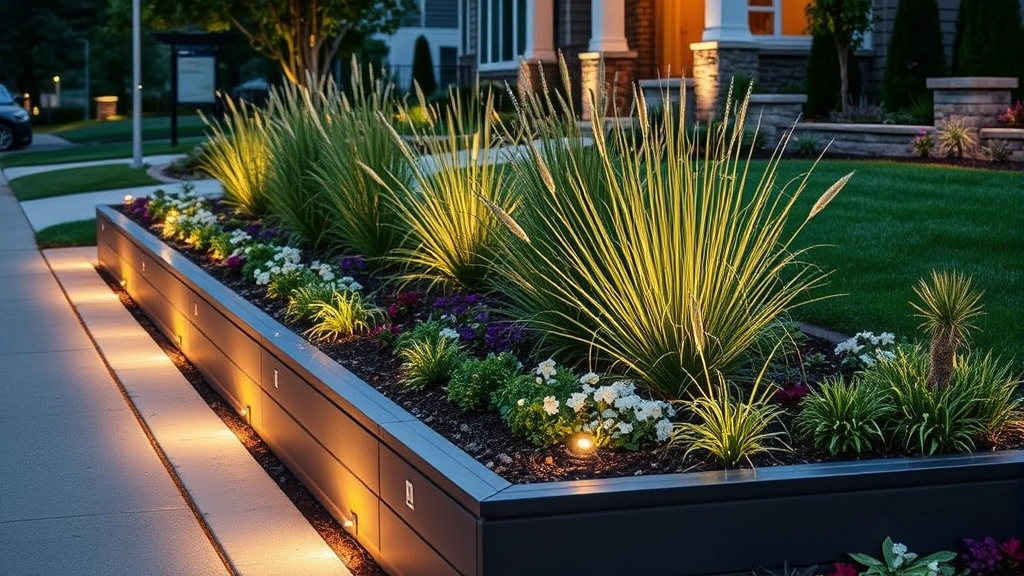
Establish clear pathways and circulation patterns. A curved walkway from the street to your front door feels more inviting than straight lines, and it makes small spaces appear larger. Consider installing a raised garden bed along pathways to add dimension and define planting areas. Raised beds also improve drainage and make gardening more accessible.
Professional landscape architects incorporate negative space—areas without plantings—to prevent overwhelming viewers and to balance densely planted sections. This breathing room enhances the overall composition and allows focal points to shine. Approximately 40-50% of your garden street should feature open space, mulch, or hardscaping rather than dense plantings.
Consider your home’s architectural style when planning layout. Colonial and traditional homes suit symmetrical designs with paired plantings flanking the entrance. Modern and contemporary homes benefit from asymmetrical arrangements with clean lines. Cottage and farmhouse styles embrace abundant, layered plantings with a charming, slightly informal appearance.
Selecting Plants for Visual Impact
Plant selection determines whether your garden street achieves year-round visual interest or appears sparse during dormant seasons. Start by identifying plants native to your region, as these typically thrive with minimal supplemental watering and maintenance. Check your USDA hardiness zone using the USDA Plant Hardiness Zone Map to ensure plant selections survive winter temperatures in your area.
Incorporate evergreen shrubs as the backbone of your garden street design. These plants maintain structure and visual interest throughout winter when deciduous plants are bare. Boxwoods, hollies, junipers, and dwarf conifers provide reliable year-round form. Layer evergreens with deciduous shrubs and perennials that offer seasonal flowers, foliage color, and textural variety.
Select specimen plants—showstopper trees or shrubs—to serve as focal points in your garden street. A flowering crabapple, Japanese maple, or ornamental cherry creates a striking centerpiece visible from the street. These plants should offer multiple seasons of interest: spring flowers, summer foliage, fall color, and winter structure.
Perennials and annuals add color and seasonal interest to your garden street design. Rather than random placement, group plants in odd numbers (3, 5, or 7) to create visual weight and impact. This approach, called mass planting, creates stronger visual statements than scattered individual plantings. Consider growing sage and other attractive herbs near your entry for both beauty and functionality.
Think vertically when selecting plants for street-facing gardens. Climbing vines on trellises, wall-mounted planters, and upright shrubs add dimension without consuming valuable ground space. Vertical elements draw viewers’ eyes upward, making modest yards feel taller and more substantial.
Select plants with varied foliage colors and textures to maintain interest when flowers aren’t blooming. Chartreuse, burgundy, and blue-gray foliage creates striking combinations. Fine-textured plants like ornamental grasses contrast beautifully with bold-leaved specimens like hostas or elephant ears, adding visual complexity that engages viewers.
Hardscaping Elements and Pathways
Hardscaping—non-living landscape elements—provides structure and functionality to garden street designs. Quality hardscaping materials define planting beds, create pathways, and establish the visual framework for your plantings. Common hardscaping materials include natural stone, brick, pavers, and gravel, each offering distinct aesthetic qualities.
Pathways should be proportional to your front yard size and home’s architectural style. A narrow 2-foot path suits small cottages, while 3-4 foot paths work better for larger homes. Materials should complement your home’s exterior: brick paths suit traditional homes, while contemporary residences benefit from concrete pavers or natural stone.
Edging defines garden beds and provides clean lines that enhance overall design coherence. Metal edging offers sleek, modern aesthetics, while stone or brick edging suits traditional styles. Proper edging prevents mulch from migrating into turf areas and makes maintenance easier. Consider installing edging before applying fertilizer and amendments to your beds.
Functional hardscaping elements—benches, birdbaths, or small water features—add personality and focal points to garden street designs. These elements should be proportional to your space and positioned where they’re visible from the street. A simple bench beneath a flowering tree creates an inviting vignette that enhances curb appeal.
Mulch application in planting beds completes the hardscape appearance while providing practical benefits. Apply 2-3 inches of quality mulch to suppress weeds, retain moisture, and regulate soil temperature. Organic mulches like shredded bark break down over time, enriching soil structure. Refresh mulch annually for optimal appearance and performance.
Lighting enhances garden street designs while improving nighttime safety and security. Low-voltage landscape lighting highlights specimen plants, illuminates pathways, and creates ambiance. Solar-powered lights offer energy-efficient options, while LED fixtures provide brighter illumination for security purposes. Position lights to graze plant surfaces rather than creating harsh shadows.
Creating Seasonal Interest Year-Round
Professional landscape architects design garden streets that maintain visual appeal throughout all four seasons. This requires strategic plant selection that provides flowers, foliage color, and structural interest across the entire year. Rather than focusing solely on spring bloomers, incorporate plants offering varied seasonal characteristics.
Spring offers opportunities for flowering bulbs, flowering shrubs, and emerging perennials. Plant tulips, daffodils, and crocuses in fall for early spring color. Combine bulbs with flowering shrubs like forsythia, magnolia, and lilac for layered spring interest. These early bloomers energize the landscape and signal seasonal renewal to viewers.
Summer garden streets should feature continuous blooms from perennials and annuals. Coneflowers, black-eyed Susans, zinnias, and marigolds provide reliable color throughout warm months. Incorporate foliage plants with interesting leaf colors—coleus, caladiums, or sweet potato vine—to maintain visual interest even when flowering plants rest.
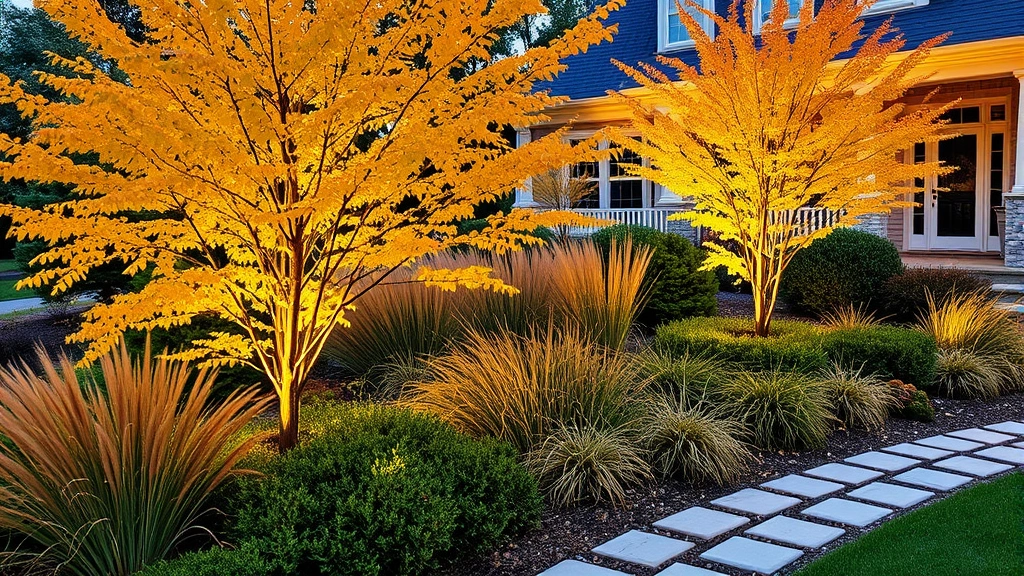
Fall transforms many plants with stunning foliage color. Select trees and shrubs known for reliable fall color: Japanese maples, burning bush, serviceberry, and smokebush. These plants create dramatic seasonal displays that make garden streets memorable. Ornamental grasses also shine in fall with golden or copper tones and graceful movement.
Winter garden streets require careful planning to avoid bare, dormant appearances. Evergreen plants form the winter backbone, but incorporate plants with colorful stems, persistent berries, or architectural form. Red-twig dogwood, winterberry, and ornamental grasses maintain visual interest when deciduous plants are leafless. Structural elements like hardscaping and specimen tree forms become prominent in winter.
Consider growing edible and ornamental plants that extend harvest and visual interest. Pumpkins, ornamental cabbages, and fall mums bridge summer and winter seasons. These plants work particularly well in cottage-style garden streets where edible and ornamental plantings intermingle.
Maintenance Strategies for Long-Term Success
A beautiful garden street requires consistent maintenance to preserve curb appeal. Establish a maintenance schedule addressing watering, fertilizing, pruning, and seasonal tasks. Newly installed plants need regular watering until established, typically requiring 6-12 months depending on plant size and species.
Watering efficiency improves with drip irrigation systems that deliver water directly to plant roots. Using an expandable garden hose allows flexibility for hand-watering smaller beds while conserving water. Morning watering prevents fungal issues and allows foliage to dry before nightfall.
Pruning maintains plant form, promotes healthy growth, and prevents overgrowth that obscures sight lines or overwhelms the space. Prune spring-flowering shrubs immediately after blooming, while summer-flowering plants are pruned in early spring. Remove dead or diseased branches year-round to maintain plant health and appearance.
Deadheading—removing spent flowers—encourages continuous blooming and maintains tidy appearance. Regular deadheading prevents plants from setting seed and redirects energy toward flower production. This simple maintenance task dramatically improves garden street aesthetics throughout the growing season.
Seasonal cleanup prevents disease and pest issues while maintaining a polished appearance. Fall cleanup includes removing fallen leaves, cutting back perennials, and preparing beds for winter. Spring cleanup involves removing winter mulch, pruning winter-damaged branches, and refreshing mulch layers.
Monitor for pests and diseases, addressing problems early before they spread. Regular observation catches issues when they’re easily managed through organic methods. Healthy, well-maintained plants resist pests and diseases more effectively than stressed plants.
FAQ
How much should I budget for professional garden street design?
Professional landscape design consultations typically cost $500-2,000 depending on project scope and designer experience. Many designers offer scaled services: full design packages, consultation-only options, or phased installation plans. Getting multiple quotes helps establish realistic budgets for your specific project.
What’s the best time to start a garden street project?
Spring and fall offer ideal planting windows when temperatures are moderate and natural rainfall supports establishment. Fall planting allows root development during winter dormancy, benefiting spring growth. Spring planting works well for summer-blooming plants. Avoid planting during extreme heat or cold when plants experience stress.
Can I design a garden street on a budget?
Absolutely. Start with hardscaping and structure using economical materials, then add plants gradually over multiple seasons. Purchasing smaller plant sizes and growing them out costs less than mature specimens. Growing annuals and perennials from seed reduces plant costs significantly. Prioritize focal point plants and fill in with budget-friendly options.
How do I choose between formal and informal garden street styles?
Formal styles feature symmetrical arrangements, geometric shapes, and structured plantings—ideal for traditional architecture. Informal styles embrace asymmetry, curved lines, and abundant plantings—perfect for cottage or contemporary homes. Your home’s architectural style should guide this decision, though personal preference ultimately matters most.
What plants work best for shady garden streets?
Shade-tolerant plants include hostas, heuchera, hellebores, ferns, and shade-adapted shrubs like boxwoods and Japanese hollies. Many shade plants offer attractive foliage colors and patterns that provide visual interest without relying on flowers. Variegated foliage plants brighten shaded areas with light-reflecting colors.
How often should I refresh my garden street design?
Well-designed landscapes evolve over time as plants mature. Expect to refresh hardscaping and make adjustments every 5-10 years as plants outgrow spaces or require replacement. Seasonal plantings can be updated annually to keep designs current while maintaining structural elements that provide continuity.
Should I hire a landscape architect or designer?
Landscape architects hold professional licenses and understand engineering, drainage, and complex projects. Landscape designers focus on aesthetics and plant selection. For simple garden street projects, designers often suffice. Complex projects involving hardscaping, drainage, or structural elements benefit from architect expertise. Consider consulting the American Society of Landscape Architects to find professionals in your area.


