How to Create a Fairy Garden: Expert Advice
A fairy garden is a whimsical, miniature landscape that brings magic and imagination to any outdoor or indoor space. These enchanting gardens combine tiny plants, delicate accessories, and creative design to create a world where fairies might live. Whether you’re a seasoned gardener or just starting your green journey, creating a fairy garden is an accessible and rewarding project that sparks joy and creativity.
Fairy gardens have become increasingly popular among gardeners of all ages. They offer a unique blend of horticulture and artistic expression, allowing you to design a miniature ecosystem that reflects your personal style. From selecting the perfect container to choosing shade-loving plants and arranging enchanting accessories, this guide will walk you through every step of creating your own magical fairy garden.
The beauty of fairy gardening lies in its flexibility. You can create a woodland fairy garden, a cottage-style fairy garden, or even a desert-themed miniature landscape. The possibilities are endless, and the investment required is minimal, making it an ideal project for families, beginners, and experienced gardeners alike.
Choosing the Right Container
The foundation of any fairy garden starts with selecting an appropriate container. Your choice sets the stage for the entire project and determines how much space you have to work with. The most popular options include ceramic pots, wooden boxes, terracotta containers, and even repurposed items like old birdcages, watering cans, or vintage boxes.
When selecting a container, consider these important factors: drainage capability, size, depth, and aesthetic appeal. A container with drainage holes is essential for maintaining healthy soil moisture levels and preventing root rot. If you fall in love with a container without drainage, you can create one by carefully drilling small holes in the bottom or using it as a decorative outer pot.
Size matters significantly in fairy gardening. A container measuring 12-18 inches across provides adequate space for multiple plants and accessories while remaining manageable and portable. Shallow containers work well for succulents and moss gardens, while deeper pots accommodate plants with more extensive root systems. If you’re new to gardening, consider starting with raised bed gardening principles scaled down to your fairy garden size.
The container’s color and material should complement your fairy garden’s theme. Weathered wood creates a rustic woodland feel, while painted ceramic pots can evoke a cottage garden aesthetic. Terracotta offers a classic, natural appearance that works with almost any design style. Don’t overlook unconventional options like hollowed logs, slate troughs, or even old sink basins—these unique containers add character and charm to your creation.

Selecting Fairy Garden Plants
The plants you choose are the living heart of your fairy garden. Successful fairy gardens feature slow-growing, miniature, or dwarf varieties that won’t quickly outgrow the small space. The best plants for fairy gardens share several characteristics: compact growth habits, shallow root systems, and tolerance for container living.
Succulents are excellent choices for fairy gardens because they require minimal water and thrive in containers. Popular varieties include jade plants, echeveria, sempervivum, and stonecrop. These drought-tolerant beauties develop slowly and maintain their diminutive proportions for extended periods. Mosses and ground covers like Irish moss, Scotch moss, and creeping thyme create lush carpeting that resembles natural forest floors.
For shade-loving environments, consider ferns, particularly dwarf varieties like the autumn fern or polystichum. Hostas in miniature forms provide elegant foliage with minimal fuss. Sedges, especially Carex oshimensis ‘Evergold,’ add texture and movement. If you’re interested in expanding your plant knowledge, explore how to propagate plants to create multiple specimens from single parent plants.
Flowering plants add color and seasonal interest. Miniature impatiens, violets, and saxifraga produce delicate blooms in fairy garden proportions. Alpine plants like alpine phlox and sempervivum flowers provide authentic mountain landscape aesthetics. Ornamental grasses like blue fescue create architectural interest with their fine, silvery foliage.
When selecting plants, ensure they share similar water and light requirements. Mixing plants with vastly different needs leads to problems—some will thrive while others struggle. Group moisture-loving plants together and place drought-tolerant succulents in separate areas or containers. This strategic approach simplifies maintenance and promotes overall garden health.
IMAGE_2
Preparing Your Soil Foundation
Proper soil preparation is fundamental to fairy garden success, much like the principles outlined in preparing garden soil for a thriving garden. The right soil composition ensures adequate drainage, nutrient availability, and proper root development for your miniature plants.
Start by adding a layer of drainage material at the container’s bottom. Use broken terracotta pieces, small stones, or commercial drainage substrate. This layer, typically one-half to one inch deep, prevents water from pooling around roots. For containers with excellent drainage, this step is less critical but still beneficial.
Layer your soil mixture above the drainage material. A well-balanced fairy garden soil combines equal parts potting soil, perlite, and peat moss or coconut coir. This mixture provides excellent drainage while retaining adequate moisture for plant roots. For succulent-heavy gardens, increase perlite to 40% to create sandier conditions that mimic their natural desert habitats.
Add a thin layer of activated charcoal between drainage and soil layers in enclosed or humid containers. This prevents mold and odor issues that can develop in miniature ecosystems with limited air circulation. Moisten your soil mixture before adding it to the container—dry soil is difficult to work with and may not settle properly around plant roots.
Consider adding organic matter like composted bark or leaf mold to improve soil structure and provide slow-release nutrients. For shade gardens, increase peat moss slightly, as it retains moisture better than perlite-heavy mixes. The goal is creating a balanced growing medium that supports your specific plant selections while maintaining the aesthetic appearance of your miniature landscape.
Designing Your Fairy Garden Layout
Design principles transform a collection of plants and accessories into a cohesive fairy garden that tells a story. Begin by envisioning your garden’s theme and narrative. Are you creating a woodland hideaway, a magical cottage garden, an enchanted forest, or a miniature village? Your theme guides all subsequent decisions regarding plant placement, accessory selection, and overall composition.
Arrange plants using the triangle principle—place taller plants toward the back or center, medium-height plants in the middle ground, and low-growing plants toward the front. This creates visual depth and ensures all plants receive adequate light. Avoid symmetrical arrangements; nature is beautifully asymmetrical, and your fairy garden should reflect this organic quality.
Create focal points using distinctive plants or accessories. A miniature tree, a stone pathway, or a tiny gazebo draws the eye and anchors the design. Focal points prevent the garden from feeling chaotic and provide visual interest from different angles. Plan sight lines—imagine how the garden looks from various viewing perspectives and ensure it’s attractive from all angles.
Leave some open space for movement and exploration. Cramped gardens feel cluttered and overwhelming. Pathways, clearings, and open areas invite imagination and suggest places where fairies might gather or play. Small stones, sand, or moss can delineate pathways that guide the eye through your miniature landscape.
Consider seasonal changes when designing. Select plants that provide year-round interest through foliage color, texture, or form. Evergreen plants maintain structure during dormant seasons, while deciduous plants offer seasonal transformation. If you’re interested in gardening with native plants, incorporate miniature native species that support local ecosystems and thrive in your climate zone.
Adding Fairy Garden Accessories
Accessories bring enchantment and personality to your fairy garden. These miniature elements—houses, furniture, figurines, and decorative objects—create the magical atmosphere that defines fairy gardening. Choose accessories thoughtfully to reinforce your chosen theme and maintain appropriate scale.
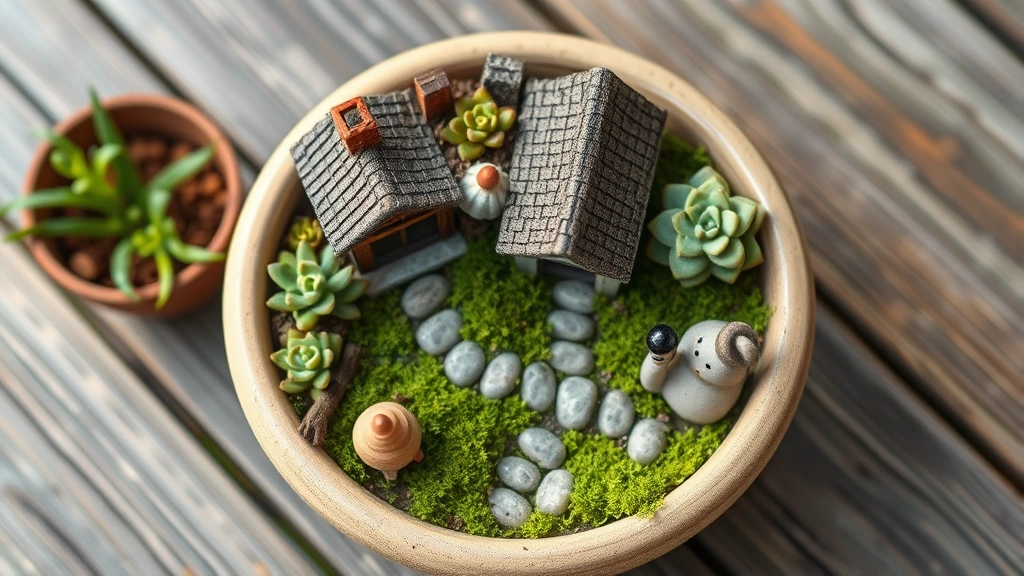
Fairy houses are central to most designs. Options range from commercially produced miniature structures to DIY creations made from branches, stones, or clay. Houses should be proportionate to your container—a house that’s too large overwhelms the space, while one that’s too small becomes invisible. Weathered, rustic houses blend naturally with living plants, while painted or whimsical structures create more fantastical atmospheres.
Pathways guide visitors through your fairy garden and create visual interest. Use small stones, pea gravel, sand, or miniature pavers to create winding paths that suggest exploration and discovery. Pathways also serve practical purposes, preventing soil compaction and directing water flow during watering.
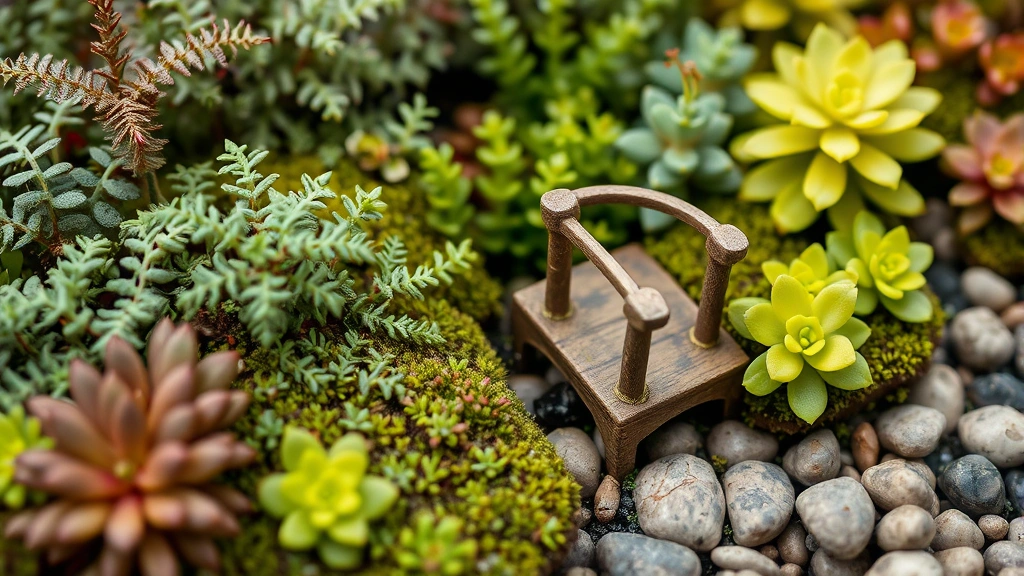
Incorporate functional elements like tiny bridges, benches, wells, and gates. These accessories suggest stories and activities—fairies gathering for tea, traveling to distant lands, or drawing water from enchanted sources. Limit accessories to avoid cluttering; each piece should serve a purpose or contribute meaningfully to your garden’s narrative.
Water features add magic and sensory appeal. Small basins, bird baths, or fountains create focal points and provide moisture for visiting insects. Even a simple shallow dish filled with water and small pebbles creates an inviting pond. Place water features carefully to avoid oversaturating surrounding soil.
IMAGE_3
Maintenance and Care Tips
Fairy gardens require consistent but minimal care. Regular maintenance keeps your miniature landscape thriving and beautiful throughout the seasons. Establish a simple routine that addresses watering, weeding, pruning, and monitoring for pests or disease.
Watering is the most critical maintenance task. Check soil moisture regularly—fairy garden soil should be slightly moist but never waterlogged. Water thoroughly but less frequently, allowing soil to dry slightly between waterings. Watering frequency depends on your climate, container material, plant selection, and season. Succulents need less frequent watering than moss gardens, while outdoor gardens dry faster than indoor displays.
Remove dead leaves and spent flowers promptly. This prevents disease, improves appearance, and directs energy toward healthy growth. Pinch back leggy growth to encourage bushier, more compact forms. For fast-growing plants, periodic pruning maintains scale and prevents one plant from dominating the garden.
Weeds and unwanted plants occasionally appear in fairy gardens. Remove them immediately to prevent competition for resources and nutrients. Hand-pulling works best for small containers where herbicides would be inappropriate and unnecessary.
Monitor for common pests like spider mites, mealybugs, and scale insects. Indoor fairy gardens are less susceptible to pest problems, but outdoor gardens may require intervention. Inspect plants regularly, particularly leaf undersides where pests hide. Organic pest management—insecticidal soap or neem oil—works effectively without harsh chemicals.
Fertilize sparingly. Container plants benefit from diluted liquid fertilizer applied monthly during growing season. Slow-release fertilizers mixed into potting soil provide steady nutrition without over-fertilizing. Succulents and alpines actually prefer lean conditions, so reduce feeding frequency for these plants.
Seasonal Considerations
Fairy gardens evolve through seasons, offering opportunities for refreshing and redesigning. Understanding seasonal plant behavior helps you maintain vibrant gardens year-round and plan strategic updates.
Spring brings renewal and growth. As temperatures warm, established plants leaf out and begin new growth. Spring is ideal for creating new fairy gardens or refreshing existing ones. Plant spring-flowering bulbs in fall for cheerful spring color. Increase watering as plants actively grow and temperatures rise.
Summer presents challenges in hot climates. Outdoor fairy gardens may need afternoon shade protection and more frequent watering. Deadhead fading flowers to encourage continued blooming. Indoor gardens thrive during summer but may need additional humidity in air-conditioned environments. This is an excellent season for propagating plants to expand your collection or share with friends.
Fall offers beautiful foliage color and moderate growing conditions. Plant spring-blooming bulbs and refresh soil with compost or aged bark. Reduce watering as temperatures drop and growth slows. Enjoy the natural color transitions and prepare plants for dormancy. Fall is perfect for planting new perennials and making structural changes to your garden.
Winter requires adjusted care. Outdoor fairy gardens in cold climates need protection—move containers to sheltered locations or insulate them with mulch. Reduce watering significantly as plants enter dormancy and evaporation decreases. Indoor gardens may need supplemental light if natural daylight is limited. Winter is ideal for planning next season’s garden and considering design modifications.
In mild climates, fairy gardens remain active year-round with minimal seasonal adjustment. In cold regions, treat tender plants as annuals or bring containers indoors during harsh weather. Select cold-hardy plants like sedums, evergreen ferns, and alpine varieties for winter interest and outdoor survival.
FAQ
What’s the best location for a fairy garden?
Most fairy gardens thrive in bright, indirect light for 4-6 hours daily. Outdoor locations with dappled shade work beautifully. Indoor gardens near north or east-facing windows provide ideal conditions. Avoid direct afternoon sun in hot climates, which can dry soil excessively and scorch delicate foliage. Sheltered locations protected from strong winds prevent soil drying and plant damage.
Can I create a fairy garden indoors?
Absolutely! Indoor fairy gardens offer year-round enjoyment and require minimal weather protection. Place them near windows receiving bright, indirect light. Maintain consistent temperatures between 60-75°F for best results. Monitor humidity levels—mist occasionally if air is dry. Indoor gardens dry more slowly than outdoor versions, so adjust watering accordingly to prevent overwatering.
How often should I water my fairy garden?
Water when the top half-inch of soil feels dry to the touch. Most fairy gardens need watering every 2-3 days in warm weather, less frequently in cool seasons. Succulent gardens require less water than moss or fern gardens. Always water thoroughly until water drains from the container, ensuring even soil moisture. Check soil before watering to avoid overwatering, which causes root rot.
What plants are safest for fairy gardens with children?
Most fairy garden plants are non-toxic, but avoid plants like foxglove, lily of the valley, and oleander. Safe choices include ferns, hostas, sedums, moss, and miniature impatiens. Research each plant’s toxicity before adding it to family-accessible gardens. Supervise young children around fairy gardens to prevent soil consumption or plant damage.
How do I prevent my fairy garden from becoming overcrowded?
Choose slow-growing plants and resist the urge to add too many specimens initially. Plan spacing based on mature plant sizes, not current dimensions. Prune regularly to maintain compact forms. Remove plants that outgrow their space. Remember that some empty space is essential for visual balance and plant health. It’s easier to add plants than remove established ones.
Can I use regular garden soil in fairy gardens?
Regular garden soil is too heavy and compacts easily in containers, restricting drainage and root growth. Use quality potting soil mixed with perlite and peat moss for better drainage and aeration. This creates an ideal growing medium for container-bound plants. Regular garden soil works only if heavily amended with perlite and organic matter.
What’s the best time to start a fairy garden?
Spring and fall are ideal seasons with moderate temperatures and natural growth cycles. However, fairy gardens can be created anytime. Indoor gardens work year-round. Outdoor gardens in cold climates should be established in spring or early fall to allow plants to establish before extreme weather. Summer creation is possible but requires more frequent watering.