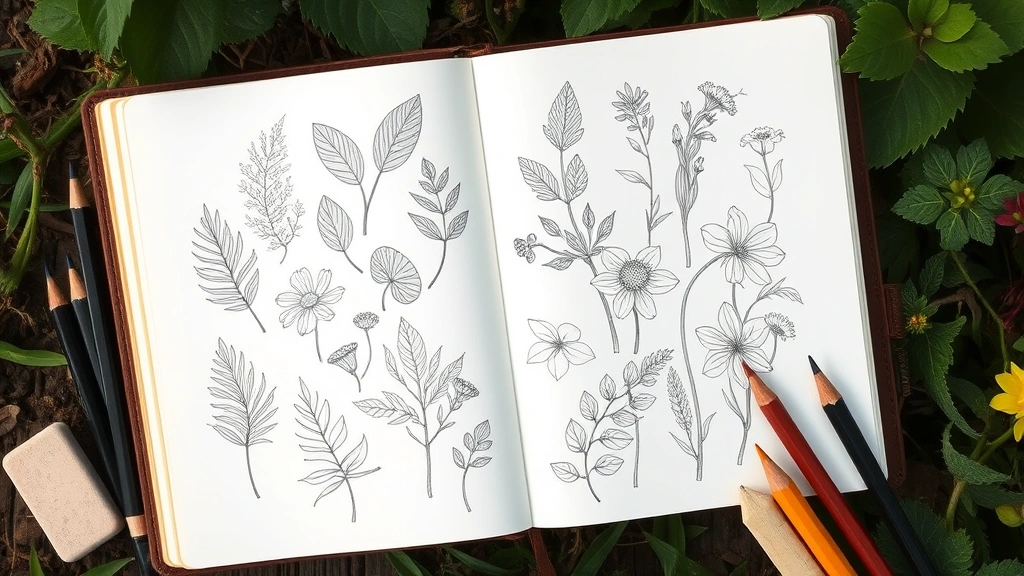
Drawing with garden elements offers a rewarding creative practice that combines botanical observation with artistic expression. Whether you’re sketching plants, designing landscape layouts, or capturing garden scenes, understanding how to translate living subjects onto paper transforms both your gardening and artistic skills. This guide explores practical techniques for garden drawing, from preliminary sketches to detailed botanical illustrations.
Garden drawing serves multiple purposes beyond artistic fulfillment. It helps gardeners visualize design concepts before planting, document seasonal changes, and develop a deeper appreciation for plant structure and form. The intersection of horticulture and fine art creates unique opportunities for creative exploration, making garden drawing an accessible hobby for both experienced artists and beginners.
Essential Materials for Garden Drawing
Selecting appropriate supplies significantly impacts your garden drawing experience and final results. Quality paper forms the foundation of successful artwork, with medium-weight sketch paper (90-140 gsm) providing versatility for both preliminary studies and finished pieces. Cold-pressed watercolor paper works exceptionally well for wet media applications, while smooth hot-pressed paper suits detailed pen work.
Pencils remain the most essential drawing tool, offering variable control through different grades. Begin with HB or 2B pencils for general sketching, then explore harder grades (H, 2H) for fine details and softer grades (4B, 6B) for rich darks and shading. A mechanical pencil with 0.5mm or 0.7mm leads provides consistent line weight for technical garden layouts.
Supplementary materials enhance your drawing toolkit considerably. Erasers—both kneaded and vinyl varieties—allow corrections and highlight creation. Fine-tip pens (0.5mm to 0.8mm) work wonderfully for outlining plants and architectural features like garden arches or retaining walls. Blending stumps smooth graphite transitions, while fixative spray preserves finished pencil drawings.
Consider portable sketching kits for drawing directly in your garden. Lightweight sketchbooks, travel-sized pencil sets, and watercolor palettes enable on-site observation. A small clipboard with attached pencil holder facilitates comfortable outdoor drawing sessions. Bring a water bottle, spray bottle, and natural sponge if using watercolors in the garden environment.
Observational Techniques for Plant Sketching
Successful plant drawing begins with careful observation of natural forms and structures. Spend time studying individual plants before attempting sketches. Notice leaf arrangement patterns (alternate, opposite, whorled), examining how leaves attach to stems and branches. Observe flower structure, including petal count, stamen placement, and overall symmetry. Understanding these botanical characteristics creates more authentic, recognizable drawings.
Begin with light preliminary sketches establishing overall plant proportions and composition. Use simple geometric shapes—circles, ovals, cylinders—to map basic plant structure before adding specific details. This approach prevents overworking initial lines and allows flexibility for corrections. Pay attention to negative space surrounding plants, as this defines plant silhouettes and improves overall composition.
Develop a systematic approach to rendering plant textures and surfaces. Leaves display various characteristics: smooth versus wrinkled surfaces, waxy coatings, fuzzy or hairy textures, and distinctive venation patterns. Use varied pencil strokes to suggest these qualities—directional hatching for textured surfaces, curved lines following leaf veins, and stippling for fuzzy growth. The key involves letting mark-making technique communicate surface properties.
Study light and shadow patterns across plants, as these three-dimensional forms require careful tonal rendering. Observe how light strikes foliage, creating highlights on upper leaf surfaces and shadows beneath. Soft shading transitions suggest rounded leaf forms, while sharper shadows define angular structural elements. Establishing a consistent light source throughout your composition creates cohesive, believable drawings.
Container plants like blueberries grown in containers present excellent sketching subjects. The defined pot structure contrasts with organic plant forms, offering compositional interest. Draw the container first, establishing perspective and proportion, then position the plant within this framework.
Drawing Architectural Garden Elements
Garden structures provide excellent drawing subjects, combining geometric precision with natural surroundings. Garden stones offer varied textures and forms worth exploring through detailed observation. Individual stones display unique surface qualities—smooth river rocks, rough fieldstone, layered slate—each requiring different rendering techniques. Clustered stones create interesting compositions with varied tones and shadow patterns.
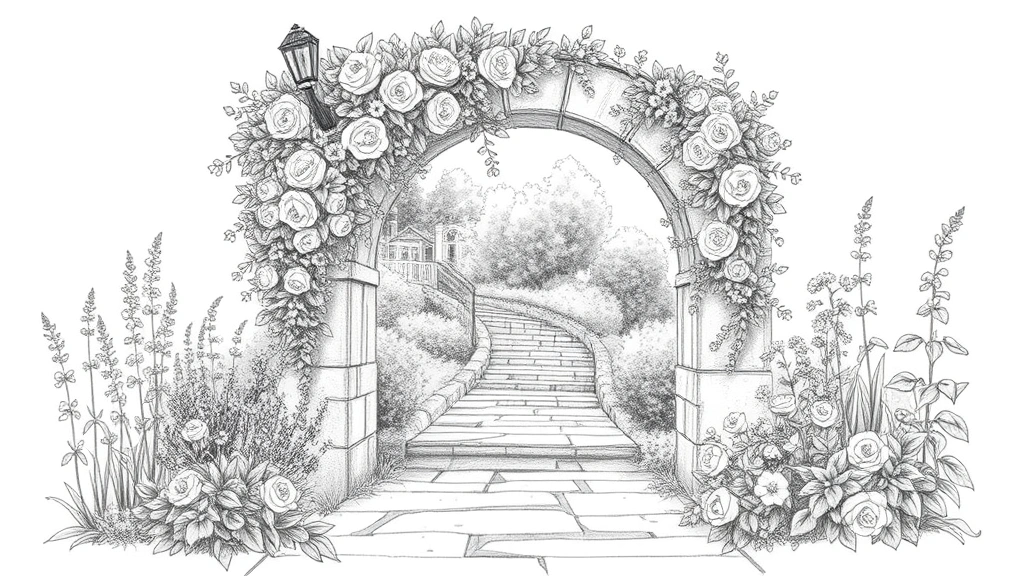
Perspective becomes crucial when drawing garden structures like arches and retaining walls. The garden arch requires understanding basic perspective principles to render convincingly. Begin with a light guideline establishing the arch’s center line and curve. Map the arch’s depth using parallel lines that recede toward vanishing points. Add structural details—decorative elements, climbing vines, shadow patterns—after establishing correct perspective.
Retaining walls present interesting drawing challenges combining geometry with natural textures. The garden wall retaining structure requires establishing correct perspective if viewing at an angle. Map individual stone or brick courses using receding parallel lines. Render each unit with individual character—mortar joints, weathering, lichen growth—creating visual interest while maintaining structural clarity.
Pathways and hardscape elements guide viewer attention through garden compositions. Draw pathways using perspective lines that recede toward vanishing points, suggesting depth and distance. Vary surface textures—gravel paths show scattered pebbles and footprints, while stone paths display individual unit patterns and weathering. Surrounding vegetation softens hardscape edges, creating natural transitions.
Fencing, gates, and other garden structures benefit from careful proportion studies. Establish basic grid structures first, then add decorative details and surface variations. Study how climbing vines interact with structural elements, weaving through lattice or draping over fences. These naturalistic details enhance architectural drawings.
Capturing Seasonal Garden Changes
Gardens transform dramatically across seasons, offering endless drawing inspiration. Spring gardens feature emerging growth, delicate flowers, and fresh green foliage. Capture this season’s character through lighter tones, delicate line work, and emphasis on flowering plants. Sketch budding branches, showing subtle growth stages and varied bud forms.
Summer gardens display full, lush foliage and abundant flowers. These dense compositions challenge artists to organize visual complexity through selective focus and varied mark-making. Draw detailed focal flowers while suggesting surrounding foliage through looser, more gestural techniques. This creates visual hierarchy and prevents overwhelming compositions.
Autumn gardens showcase dramatic color changes and harvest abundance. Sketch leaf form variations—some plants retain full foliage while others show bare branches. Capture textural variety in dried seed heads, ripening fruits, and changing leaf colors through varied pencil grades and tonal values. Consider creating colored drawings during this season, using warm earth tones and golden hues.
Winter gardens reveal structural forms hidden by summer growth. Bare branches display interesting patterns and architectural quality. Snow and frost create beautiful textural opportunities. Draw winter gardens emphasizing linear branch patterns, evergreen foliage contrast, and atmospheric effects. This season offers cleaner compositions with less visual competition.
A cottage garden displays particularly dramatic seasonal transformations, offering rich sketching subjects throughout the year. Spring brings emerging perennials, summer showcases abundant blooms, autumn provides seed heads and changing foliage, while winter reveals structural forms.
Advanced Botanical Illustration Methods
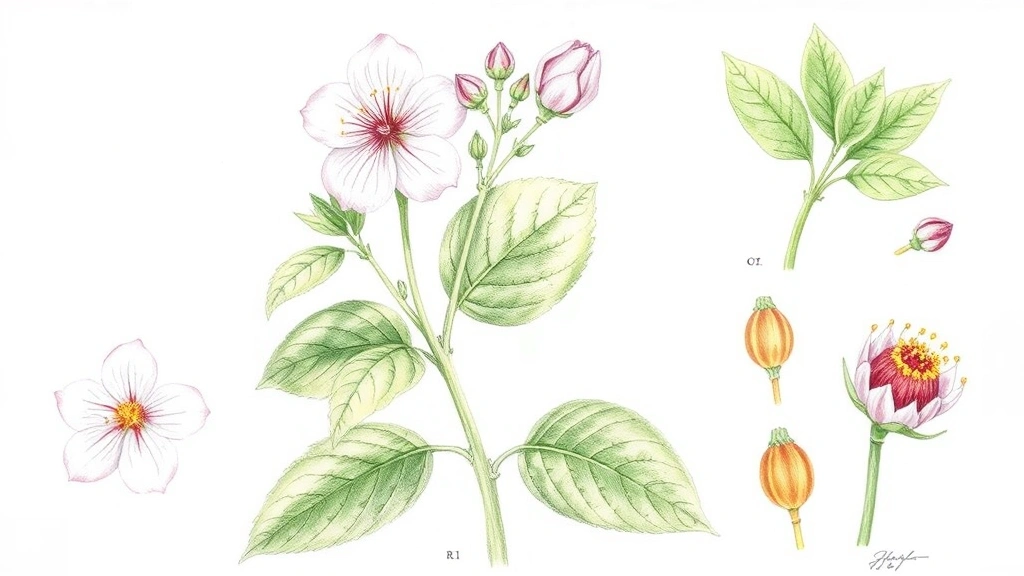
Detailed botanical illustration combines scientific accuracy with artistic technique. Professional botanical artists create highly detailed studies showing plant structures from multiple perspectives. Begin by selecting a single plant specimen and creating detailed studies of various parts: individual flowers, leaves, seed pods, and complete growth form.
Develop a consistent drawing scale, often using measured proportions for scientific accuracy. Create separate detailed studies of botanical components before assembling final compositions. Show flowers from front and side views, display leaf arrangement patterns, and illustrate distinctive features like seed pod structure or unusual stem characteristics.
Colored pencil work excels for detailed botanical illustration, allowing precise color rendering and layered effects. Build colors gradually through multiple transparent layers, creating luminous, naturalistic results. Study actual plant colors carefully, noting subtle variations and undertones. Create color samples on separate paper before applying them to finished artwork.
Watercolor offers another excellent medium for botanical illustration. Transparent washes create luminous backgrounds and soft color transitions. Combine watercolor with fine pen work for detailed structural elements. This technique allows rapid color application while maintaining precise detail work through pen linework.
Study specimens from various garden sources and reference materials. Photography provides excellent reference for color and detail study. Pressed specimens create permanent reference materials. Develop a reference library of botanical illustrations to study professional techniques and style approaches.
The American Society of Botanical Artists and similar organizations offer resources, exhibitions, and community for serious botanical illustrators. Exploring these professional networks elevates your skills and connects you with experienced practitioners.
Garden Layout and Design Drawing
Garden design drawing differs fundamentally from observational sketching, requiring different skills and approaches. Design drawings communicate spatial concepts and planting arrangements before implementation. Begin with accurate measurements of your garden space, creating scale drawings that maintain correct proportions.
Use graph paper or digital design software for layout drawings. Establish a consistent scale (1/8 inch = 1 foot works well for residential gardens) and draw garden boundaries accurately. Indicate existing structures, trees, and permanent features. This base map becomes your working document for design exploration.
Develop a symbol system for different plant types. Use circles of appropriate size to represent mature plant spread. Create a legend identifying each symbol with specific plants. Add notes indicating quantities and spacing requirements. This system communicates design intent clearly to yourself and others.
Create multiple design variations, exploring different planting arrangements and focal points. Sketch preliminary concepts rapidly without excessive detail. Evaluate compositions for balance, variety, and focal point placement. Refine promising designs through additional iterations.
Perspective drawings show three-dimensional garden views, helping visualize final results. Choose a viewpoint from a key garden vantage point, typically from a patio or seating area. Establish perspective lines receding toward vanishing points. Render plants at their mature size and form. Include hardscape elements, structures, and atmospheric effects.
Seasonal design drawings illustrate how gardens change throughout the year. Create spring, summer, autumn, and winter versions showing how different plants dominate each season. This approach helps ensure year-round garden interest through thoughtful plant selection and arrangement.
Color studies enhance design communication. Apply watercolor or colored pencil to design drawings, showing proposed color schemes and seasonal variations. This visualization helps evaluate color harmony and visual flow before implementing designs.
FAQ
What’s the best paper for garden drawing?
Medium-weight sketch paper (90-140 gsm) works well for general sketching, while cold-pressed watercolor paper suits wet media applications. Choose paper weight based on your medium—lighter papers for dry media, heavier papers for watercolor or mixed media work. Acid-free paper ensures longevity of finished artwork.
How do I improve my plant drawing accuracy?
Spend significant time observing living plants before drawing. Study botanical structure systematically—leaf arrangement, flower components, growth patterns. Create detailed studies of individual plant parts before combining them into complete compositions. Reference botanical illustrations and photography to understand how experienced artists render plants.
Can I draw garden designs digitally?
Absolutely. Digital design software like Procreate, Adobe Illustrator, or specialized landscape design programs offer advantages including easy scaling, layer organization, and color exploration. Tablet drawing combines digital convenience with hand-drawing feel. Many professional landscape designers combine hand sketches with digital refinement.
What’s the difference between botanical illustration and garden sketching?
Botanical illustration emphasizes scientific accuracy and detailed structural study, often showing multiple plant components and views. Garden sketching captures overall garden scenes, focusing on composition and atmosphere. Botanical work requires precision and often scientific knowledge, while garden sketching prioritizes artistic expression and creative interpretation.
How do I handle perspective in garden drawings?
Establish vanishing points for receding lines within your composition. Parallel lines receding into distance converge toward vanishing points on the horizon line. One-point perspective suits head-on views of paths or structures, while two-point perspective works for angular views of gardens or buildings. Practice perspective fundamentals through dedicated exercises before applying them to complex garden compositions.
What resources help develop botanical knowledge for drawing?
The USDA Plant Database provides detailed plant information and identification. Local extension services offer horticultural education and plant identification assistance. Visit botanical gardens to observe plant diversity and study forms. The American Society of Landscape Architects provides professional resources. Botanical artists’ organizations offer community, exhibitions, and educational opportunities for serious practitioners.


