Pont du Gard: Ancient Engineering Marvel and Its Connection to Historic Garden Water Systems
The Pont du Gard stands as one of the most impressive architectural achievements of the Roman Empire, a testament to engineering prowess that continues to inspire modern gardeners and water management enthusiasts. Located in southern France near the village of Vers-Pont-du-Gard, this ancient aqueduct represents far more than just a bridge—it embodies the sophisticated understanding of hydraulic engineering that allowed Roman civilizations to sustain thriving gardens, farms, and cities. The structure, built around 50 AD during the reign of Emperor Claudius, carried fresh water across the Gardon River valley for nearly 50 kilometers, delivering approximately 400 cubic meters of water daily to the Roman city of Nîmes.
Understanding the Pont du Gard provides valuable insights into historical water management practices that modern gardeners can appreciate and learn from. The precision engineering that allowed Romans to maintain consistent water flow without modern pumps or electricity demonstrates principles still relevant today for anyone interested in sustainable irrigation, raised bed gardening systems, and efficient water distribution. As climate change and water scarcity become increasingly important concerns for gardeners worldwide, examining how ancient civilizations solved similar challenges offers practical wisdom for contemporary growing practices.
Architectural Marvel: Structure and Design
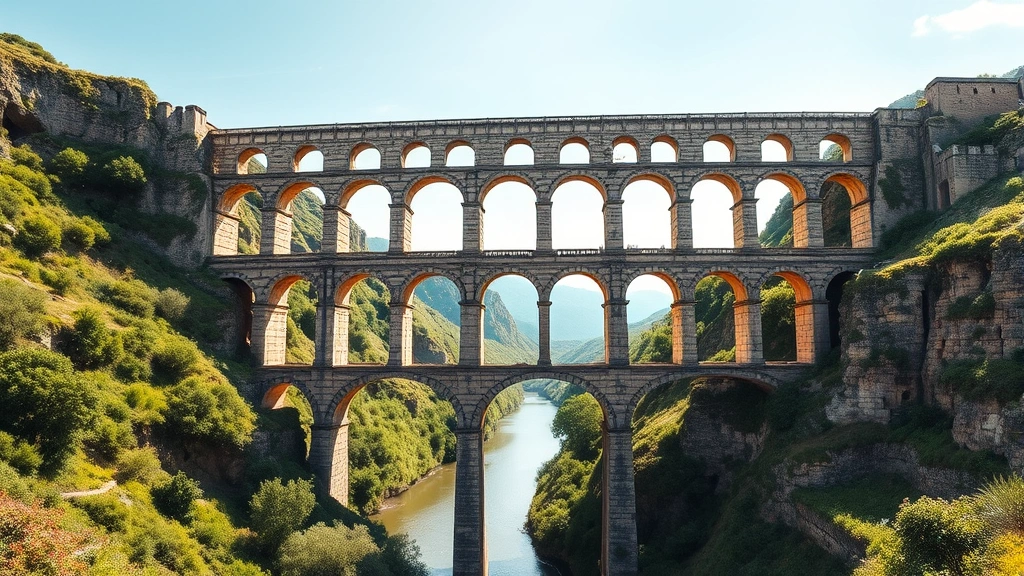
The Pont du Gard rises majestically above the Gardon River with three tiers of arches, creating a visual masterpiece that has captivated visitors for nearly two millennia. The structure spans 275 meters in length and reaches a height of 49 meters, making it the tallest aqueduct ever built by the Romans. The lowest level consists of six large arches designed to allow the river to flow unobstructed during times of flooding, demonstrating the builders’ understanding of natural water dynamics and environmental challenges.
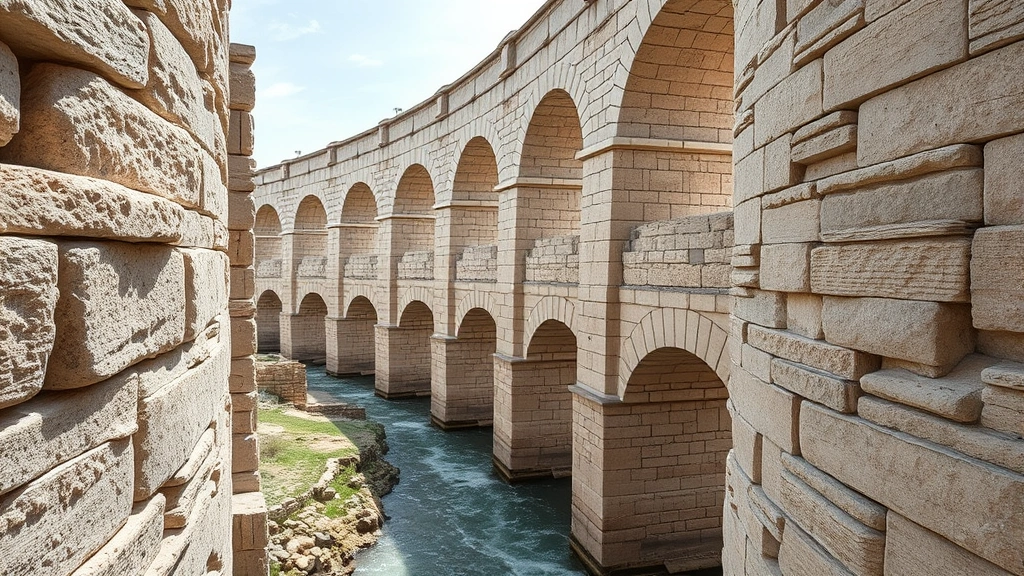
The middle tier features 11 arches that provide structural support and distribute the weight of the upper level evenly across the lower foundation. This mathematical precision in arch construction allowed the Romans to achieve remarkable structural integrity without mortar between many of the stone blocks. Instead, they relied on the careful cutting and fitting of limestone blocks, some weighing up to six tons, placed with such precision that a knife blade cannot fit between them. This construction method has allowed the Pont du Gard to withstand earthquakes, floods, and the passage of nearly 2,000 years.
The top tier, though less visually prominent, served the critical function of carrying the specus—the water channel itself. This narrow conduit, measuring only 1.2 meters wide and 1.8 meters tall, maintained a gentle gradient of just 30 centimeters per kilometer, allowing gravity to move water steadily from source to destination. This principle of maintaining proper slope while transporting water remains fundamental to modern garden irrigation systems and demonstrates timeless engineering wisdom.
The Engineering Genius Behind Water Flow
The Romans possessed an extraordinary understanding of hydraulic principles that allowed them to construct the Pont du Gard without the benefit of modern surveying equipment or computers. Engineers relied on simple tools—the chorobates (a water level device) and the groma (a surveying instrument)—to maintain precise gradients across vast distances. The fact that the aqueduct system successfully delivered water for over 400 years before requiring significant repairs speaks volumes about the accuracy of their measurements and calculations.
Water entered the system from springs near Uzès, located approximately 50 kilometers northwest of Nîmes. The entire route involved careful planning to navigate the challenging terrain while maintaining the critical gradient. When the aqueduct reached the Gardon River valley, engineers faced a significant obstacle that required innovative solution. Rather than detouring around the valley, they designed the Pont du Gard to span the gap while maintaining the consistent water flow essential for urban and agricultural purposes in Nîmes.
The specus itself was lined with a waterproof cement called opus caementicium, a Roman concrete that has proven remarkably durable. This material, composed of volcanic ash, lime, and seawater, created a chemical reaction that actually strengthened over time, allowing it to withstand constant water exposure for centuries. Modern gardeners studying ancient methods recognize that this same principle of using appropriate materials for water containment remains crucial for maintaining healthy growing systems.
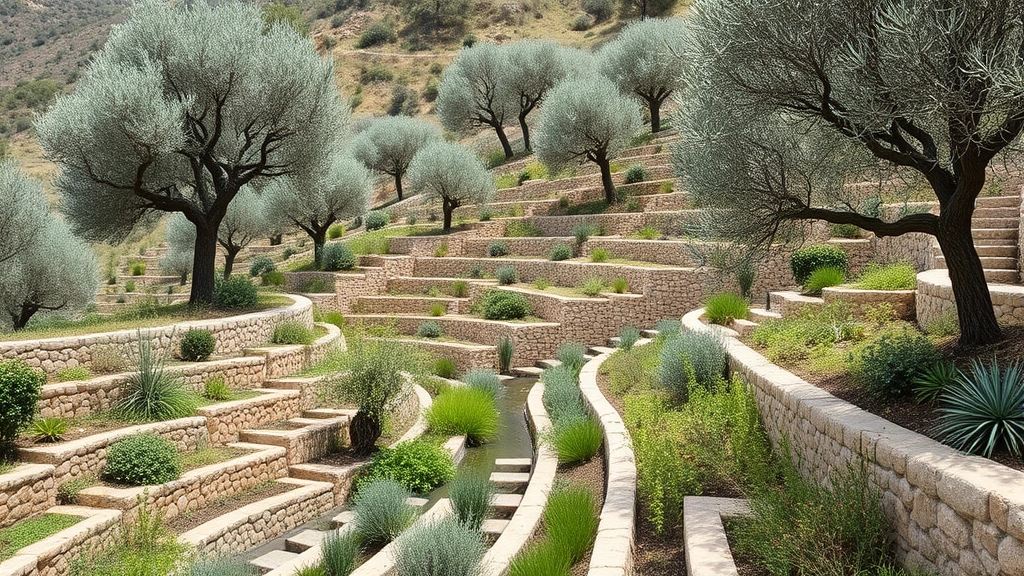
The gradient system employed at Pont du Gard demonstrates how gravity can serve as a reliable power source for water distribution. Modern gardeners can apply similar principles when designing drip irrigation systems or constructing terraced herb gardens on sloped land. By understanding how water naturally flows downhill and maintaining appropriate slopes, gardeners can create efficient systems that require minimal maintenance and no external power sources.
Historical Context and Roman Agriculture
The construction of the Pont du Gard occurred during a period of significant expansion for the Roman Empire under Emperor Claudius, a ruler known for his ambitious infrastructure projects. Nîmes, located in what is now Provence, served as an important administrative and commercial center, and its growing population demanded reliable water supplies for drinking, bathing, and irrigation of surrounding agricultural lands. The aqueduct system represented not merely a luxury but a necessity for sustaining the city’s prosperity and supporting the agricultural production that fed its inhabitants.
Roman agriculture depended heavily on reliable irrigation, particularly in regions like southern France where summer drought could devastate crops. The water delivered by the Pont du Gard system supported the cultivation of grain, vegetables, fruits, and the famous vineyards that continue to define the region today. Archaeological evidence suggests that Roman farmers employed sophisticated irrigation techniques, including channels, basins, and distribution systems that resembled modern methods more closely than many people realize.
The construction of such an ambitious aqueduct system required enormous resources, skilled labor, and years of sustained effort. Historians estimate that thousands of workers, including slaves, engineers, and stonemasons, labored on the project. The economic investment reflects the Roman understanding that reliable water access directly contributed to agricultural productivity and urban prosperity. This same principle remains valid today, as gardeners who invest in proper irrigation infrastructure typically achieve superior yields and healthier plants compared to those relying on irregular rainfall.
Beyond Nîmes, the Roman Empire constructed approximately 11 major aqueducts and countless smaller water systems, collectively delivering millions of cubic meters of water daily to cities throughout the empire. This extensive network supported not only urban populations but also the vast agricultural operations that sustained Roman civilization. The legacy of these systems influenced water management practices throughout medieval Europe and continues to inform modern engineering principles.
Water Systems for Modern Gardens
Contemporary gardeners can learn valuable lessons from the Roman approach to water management embodied in structures like the Pont du Gard. The fundamental principle—using gravity to move water efficiently across distances—remains as valid today as it was two millennia ago. While modern gardeners may not need to construct massive stone aqueducts, understanding how to work with natural topography and gravity can significantly improve irrigation efficiency and reduce water waste.
One practical application involves designing garden layouts that take advantage of existing slopes. By positioning water sources at higher elevations and allowing water to flow downhill through channels, drip lines, or swales, gardeners can create self-regulating systems that require minimal maintenance and no electrical power. This approach proves particularly valuable in areas prone to power outages or for gardeners interested in sustainable, low-impact growing practices.
The Romans also understood the importance of water storage and distribution networks. Rather than relying on single water sources, they created systems with multiple reservoirs, settling basins, and distribution points. Modern gardeners can apply this principle by installing rain barrels, cisterns, or small ponds that capture and store water for use during dry periods. These systems, combined with proper mulching and soil preparation, can significantly reduce irrigation requirements while improving plant health and productivity.
Consider implementing a garden design that incorporates multiple growing methods, each with water efficiency in mind. Drip irrigation systems deliver water directly to plant roots with minimal evaporation, much like the Pont du Gard system delivered water efficiently across long distances. Mulching reduces water loss from soil evaporation. Proper soil amendment improves water retention. Together, these practices create a comprehensive water management strategy inspired by ancient engineering principles.
Sustainable Irrigation Techniques Inspired by Ancient Methods
The Romans employed several irrigation techniques that modern sustainable agriculture has rediscovered and refined. Terracing, the practice of creating level steps on sloped land, reduces water runoff and allows soil to absorb moisture more effectively. This technique, still used throughout Mediterranean regions, prevents erosion while maximizing water availability to plants. Gardeners working with sloped terrain can implement terracing to improve both water retention and growing conditions.
Another Roman practice involved creating channels and swales to direct water from sources to fields. These systems allowed farmers to control water distribution precisely, applying water where needed and reducing waste. Modern gardeners can create similar systems using drip irrigation lines, soaker hoses, or even simple trenches filled with mulch that direct water toward plant roots. The key principle—deliberate, controlled water distribution rather than broad irrigation—remains effective for sustainable gardening.
The Romans also recognized the value of soil preparation in water management. Archaeological evidence suggests they amended soils with organic matter and minerals that improved water retention and plant nutrition. Modern gardeners following similar practices find that well-prepared soils require less frequent irrigation while supporting healthier, more productive plants. This connection between soil quality and water efficiency demonstrates how ancient wisdom and modern science converge on practical gardening principles.
Seasonal awareness, central to Roman agricultural practice, remains crucial for modern gardeners. The Romans understood that water needs varied throughout the growing season and adjusted their irrigation accordingly. Contemporary gardeners should similarly adjust watering practices based on rainfall, temperature, plant growth stage, and seasonal changes. This adaptive approach maximizes water efficiency while supporting optimal plant development.
Visiting and Preserving the Pont du Gard Today
Today, the Pont du Gard stands as a UNESCO World Heritage Site and one of France’s most visited monuments, attracting approximately one million visitors annually. The site includes a modern museum, visitor center, and extensive grounds that allow people to appreciate the structure from multiple perspectives. Whether viewing the aqueduct from the river below, crossing the walkway along its length, or examining the intricate stonework up close, visitors gain profound appreciation for Roman engineering achievement.
The preservation of the Pont du Gard required significant restoration work, particularly during the 18th and 19th centuries when the structure had suffered from centuries of weathering, warfare, and human modification. Modern conservation efforts continue to maintain the aqueduct while allowing public access and study. This balance between preservation and access reflects contemporary values regarding historical heritage and public education.
Visiting the Pont du Gard offers inspiration for anyone interested in sustainable water management and historical gardening practices. The site provides context for understanding how ancient civilizations approached infrastructure challenges and resource management. Many visitors find that seeing the structure in person—appreciating its scale, precision, and durability—profoundly influences their thinking about engineering, sustainability, and human achievement. For gardeners specifically, the Pont du Gard serves as a remarkable example of how thoughtful design and engineering can create systems that function effectively for centuries.
The surrounding region near Pont du Gard offers additional attractions related to Roman history and agriculture. The city of Nîmes itself contains numerous Roman monuments and museums. Local vineyards and farms continue agricultural traditions extending back to Roman times. Many of these agricultural operations employ irrigation techniques with roots in ancient practices, demonstrating the enduring validity of Roman engineering principles.
FAQ
When was the Pont du Gard constructed?
The Pont du Gard was built around 50 AD during the reign of Emperor Claudius, making it nearly 2,000 years old. Despite its age, the structure remains remarkably well-preserved and continues to impress visitors and engineers with its precision and durability.
How much water did the Pont du Gard aqueduct system deliver?
The complete aqueduct system delivered approximately 400 cubic meters of water daily to the Roman city of Nîmes. This substantial volume supported both urban consumption and agricultural irrigation for the surrounding region.
What materials were used to construct the Pont du Gard?
The Pont du Gard was constructed primarily from limestone blocks quarried locally. Roman engineers used opus caementicium, a specialized concrete, to seal the water channel and bind stones together. This durable material proved so effective that portions of it remain intact after nearly 2,000 years.
Can modern gardeners apply Roman irrigation principles?
Absolutely. The fundamental principles of Roman water management—using gravity for distribution, maintaining proper gradients, storing water in reservoirs, and matching water application to plant needs—remain directly applicable to modern gardening. Many sustainable gardeners consciously implement these ancient techniques in their designs.
Is the Pont du Gard still used to transport water?
No, the Pont du Gard ceased functioning as an aqueduct centuries ago. Today it stands as a historical monument and UNESCO World Heritage Site. However, the engineering principles it demonstrates continue to influence water management practices worldwide.
How does the Pont du Gard compare to other Roman aqueducts?
The Pont du Gard stands as the tallest and one of the best-preserved Roman aqueducts. While the Roman Empire constructed many impressive aqueduct systems, the Pont du Gard is notable for its three-tiered design, remarkable engineering precision, and exceptional durability. Its preservation allows modern visitors and engineers to study Roman hydraulic engineering in detail.


