
Garden decor transforms your outdoor space from a simple planting area into a personal sanctuary that reflects your style and enhances your gardening experience. Whether you’re cultivating vegetables, ornamental plants, or a mixed landscape, thoughtful decorative elements create visual interest, define spaces, and make your garden feel intentional and inviting. Designer insights reveal that the most stunning gardens balance functionality with aesthetics, combining practical gardening infrastructure with beautiful finishing touches.
Creating an attractive garden doesn’t require expensive purchases or professional landscaping services. By understanding fundamental design principles and learning how to layer different decorative elements, you can develop a cohesive outdoor environment that complements your home’s architecture while supporting healthy plant growth. This guide explores practical garden decor strategies that gardeners of all skill levels can implement, from selecting appropriate materials to arranging focal points that draw the eye and create visual flow throughout your space.
Understanding Garden Design Principles
Professional garden designers apply consistent principles that create harmonious outdoor spaces. The foundation of effective garden decor lies in understanding balance, proportion, repetition, and unity. These concepts ensure your decorative choices enhance rather than overwhelm your planting areas.
Balance refers to distributing visual weight evenly throughout your garden. Symmetrical balance uses matching elements on either side of a central axis, creating formal, structured gardens ideal for traditional home styles. Asymmetrical balance distributes different elements of varying sizes and colors to create equilibrium without perfect mirroring, offering a more relaxed, contemporary aesthetic. Most residential gardens benefit from asymmetrical approaches that feel natural while maintaining visual stability.
Proportion determines how garden elements relate to each other and to your overall space. A small garden overwhelmed with large structures feels cramped, while tiny accents disappear in expansive landscapes. When starting your green journey, measure your space and scale decorative elements accordingly. A garden bench should occupy roughly one-third of a small seating area, leaving room for planting and movement.
Repetition creates rhythm and coherence by repeating colors, materials, or plant forms throughout your space. Repeating the same stone material in pathways, edging, and seating areas unifies disparate elements. Choosing two or three complementary plant colors and repeating them across different areas creates visual flow and prevents the chaotic feeling of too many competing hues.
Unity ensures all decorative choices work together as a cohesive whole. Select a consistent design style—whether cottage garden, modern minimalist, Mediterranean, or eclectic—and make decorative selections that support this theme. Your garden bench style, pathway materials, and plant selections should reflect your chosen aesthetic.

Hardscape Elements and Materials
Hardscape refers to non-living garden elements including pathways, walls, patios, and structural features. These foundational elements provide the skeleton upon which you layer plants and decorative accents.
Pathways serve both practical and aesthetic functions. They guide visitors through your space while creating visual lines that lead the eye. Gravel paths offer budget-friendly, rustic appeal and work well in cottage gardens. Stone or brick pathways provide formal structure and durability, supporting heavy foot traffic. Mulch paths blend seamlessly with planting areas and work beautifully in woodland or naturalistic gardens. When designing pathways, consider width—at least three feet accommodates two people walking side by side, making your garden feel welcoming and accessible.
Edging materials define planting beds and prevent soil from spilling onto pathways. Metal edging creates clean, contemporary lines. Stone or brick edging provides traditional appeal. Living edging using low-growing plants like boxwood or lavender adds softness and integrates decoration with planting. Before preparing your garden soil, establish edging that defines your beds and creates visual structure.
Patio and seating areas anchor your garden and provide functional spaces for relaxation and entertaining. A patio doesn’t require enormous size—even a small seating area with a garden bench creates a destination within your landscape. Paving materials should coordinate with your home’s exterior. Warm-toned brick complements traditional architecture, while cool gray stone suits contemporary homes. Permeable paving options like gravel or pavers allow water drainage, supporting healthy soil and plant growth.
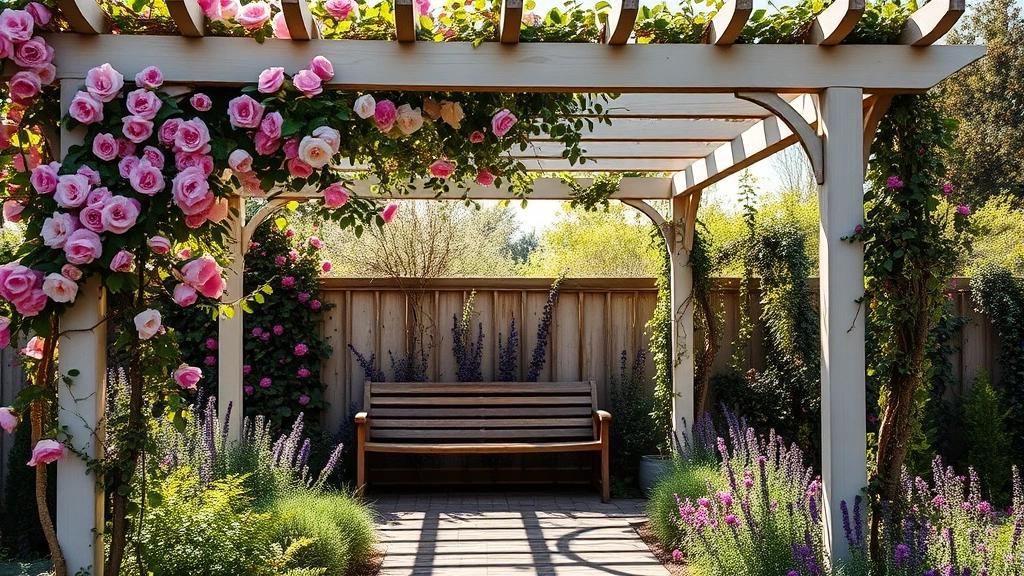
Vertical structures including pergolas, arbors, and trellises add height variation and visual interest. These elements frame views, provide climbing support for vines and vegetables like peas, and create partially shaded areas. A pergola over a seating area provides filtered shade while allowing climbing plants to soften its lines. Arbors positioned at garden entrances create welcoming gateways. Trellises against fences or walls maximize growing space for growing cucumbers in pots and other vining plants.
Creating Focal Points and Visual Interest
Focal points anchor garden spaces and provide destinations for the eye. A well-placed focal point makes your garden feel intentional and purposeful, whether it’s a beautiful garden bench, water feature, sculpture, or specimen plant.
A garden bench serves as both functional seating and decorative anchor. Position it where it frames a view or overlooks planted areas, creating a destination that encourages people to explore your garden. Material choices affect overall aesthetic—wooden benches suggest cottage or traditional gardens, while metal or stone benches suit contemporary designs.
Specimen plants with striking form, color, or texture create living focal points. Japanese maples with delicate, sculptural branching, ornamental grasses with flowing movement, or shrubs with unusual foliage colors draw attention and provide year-round interest. Position specimen plants where they’re visible from key vantage points, such as from your house or primary seating area.
Color plays a crucial role in creating visual interest. Warm colors—reds, oranges, and yellows—advance visually and create excitement, while cool colors—blues, purples, and greens—recede and promote calm. Designers often recommend limiting your palette to two or three dominant colors with accent colors for contrast. A garden dominated by soft pastels with bright red accents creates visual pop, while an all-blue and white garden feels serene and sophisticated.
Texture variety prevents monotony and creates tactile appeal. Combine fine-textured plants like asparagus fern with bold-textured plants like hostas. Smooth stone contrasts beautifully with rough bark mulch. Glossy foliage plays against matte surfaces. This layering of textures makes your garden visually complex and engaging.
Seasonal Decor Considerations
Outstanding gardens evolve throughout the year, offering fresh visual interest in every season. Thoughtful plant selection and seasonal decorating ensure your space remains attractive from spring through winter.
Spring brings renewal and fresh growth. Flowering bulbs, cherry blossoms, and emerging foliage create natural decoration. Consider adding decorative containers with spring annuals near seating areas. Refresh painted surfaces and repair winter damage to hardscape elements. This seasonal refresh signals new growth and invites outdoor enjoyment.
Summer offers peak growing season with lush foliage and abundant flowers. Hang planters filled with trailing flowers from pergolas. Add colorful cushions to seating areas. Install outdoor lighting for evening enjoyment. Summer is the season for maximum decorative enhancement, as plants reach mature size and flowering peaks.
Fall transitions to warmer tones with changing foliage colors. Ornamental grasses with golden plumes add movement and color. Mums and asters provide late-season flowers. Consider adding decorative gourds or pumpkins near entrances. Fall decorations celebrate the season’s natural color changes without requiring extensive effort.
Winter challenges decorators but offers unique opportunities. Evergreen plants provide year-round structure. Ornamental grasses left standing offer architectural interest. Colorful stems of dogwoods and willows brighten gray winter days. Consider adding bird feeders that provide both function and winter animation. Winter decorating emphasizes structure and form rather than color and bloom.
Budget-Friendly Decorating Strategies
Creating beautiful garden decor doesn’t require substantial financial investment. Strategic choices and creative approaches yield professional-looking results on modest budgets.
Reclaimed and repurposed materials add character while reducing costs. Old wooden pallets become planters or raised beds. Vintage metal buckets and watering cans serve decorative purposes. Reclaimed brick or stone from salvage yards costs less than new materials while adding authentic charm. Thrift stores offer inexpensive garden statuary, planters, and accessories.
DIY projects reduce labor costs while adding personal touches. Paint wooden planters in coordinating colors. Build simple raised beds from untreated wood. Create hypertufa planters using cement and peat moss. Construct a basic trellis from branches or bamboo. These projects develop your skills while keeping costs minimal.
Plant-based decoration leverages your gardening efforts. Grow flowers specifically for cutting to arrange indoors—learn flower arranging tips for beautiful bouquets to showcase your blooms. Use ornamental vegetables like colorful kale or Swiss chard as decorative elements in borders. Allow flowering herbs like lavender and sage to bloom for both utility and beauty.
Selective purchasing focuses budget on impact pieces. One quality garden bench provides more visual weight than multiple inexpensive accessories. A single well-chosen sculpture or water feature creates stronger focal points than scattered smaller items. Invest in durable materials that last years rather than seasonal decorations requiring annual replacement.
Lighting and Evening Garden Ambiance
Strategic lighting transforms gardens into magical evening spaces while extending usable hours. Lighting serves both practical and aesthetic purposes, illuminating pathways for safety while creating atmospheric effects.
Path lighting ensures safe navigation and guides visitors through your space. Low-level lights positioned along pathways create gentle illumination without harsh glare. Solar-powered options eliminate wiring costs and complexity. Spacing lights three to four feet apart provides adequate visibility while maintaining intimate atmosphere.
Accent lighting highlights focal points and specimen plants. Uplighting beneath trees creates dramatic silhouettes. Backlighting shrubs adds depth and dimension. Spotlighting architectural features or sculptures draws attention to key elements. Layer multiple light sources at varying intensities for sophisticated effects.
Ambient lighting creates overall garden atmosphere. String lights overhead create festive, intimate spaces perfect for evening entertaining. Lanterns positioned on tables or pedestals provide soft, localized light. Lanterns and candles offer flame-based alternatives that feel organic and romantic.
Color and temperature affect lighting mood. Warm white light (2700K) creates cozy, relaxing atmospheres ideal for seating areas. Cool white light (4000K) provides practical illumination for work areas. Colored lights create theatrical effects but should be used sparingly to avoid overwhelming your space. Consider dimmable fixtures that allow mood adjustment throughout the evening.
Water Features and Garden Sculptures
Water features and sculptures serve as powerful focal points that add sensory richness to gardens. The sound of moving water creates soothing background ambiance while attracting birds and wildlife.
Fountains range from simple basin designs to elaborate tiered structures. Small tabletop fountains work beautifully on patios or near seating areas. Wall-mounted fountains suit narrow spaces or small gardens. Larger fountain installations serve as garden centerpieces visible from multiple vantage points. Consider water volume and sound level—gentle trickling creates peaceful ambiance while splashing fountains provide more pronounced water sounds.
Birdbaths combine decoration with wildlife support. Positioned near planting areas, birdbaths attract birds that provide movement, sound, and natural pest control. Choose designs that coordinate with your garden style—traditional pedestal birdbaths suit formal gardens while rustic or modern designs complement contemporary spaces.
Ponds and water gardens create significant focal points while supporting aquatic plants and wildlife. Even small ponds measuring just three feet across transform garden spaces. Marginal plants, water lilies, and fish add layers of interest. Water gardens require maintenance but provide unmatched visual and ecological benefits.
Sculptures and statuary add artistic expression and personality. Stone or concrete sculptures provide lasting focal points that weather beautifully over time. Metal sculptures create contemporary or whimsical effects. Choose pieces that resonate with your aesthetic and garden style. Positioning matters—sculptures positioned at eye level at natural stopping points create maximum impact.
Decorative containers offer flexibility and seasonal variety. Large urns or planters positioned near entrances make grand statements. Grouping containers of varying heights creates visual interest. Seasonal plantings—spring bulbs, summer annuals, fall mums—refresh container displays throughout the year. Before growing peas in your garden, consider how decorative containers might frame vegetable growing areas and add ornamental appeal to productive spaces.
FAQ
How can I incorporate garden decor without overwhelming my planting space?
Apply the principle of proportion by limiting hardscape and decorative elements to roughly thirty percent of your garden area, reserving seventy percent for plants. Select one or two focal points rather than scattering numerous decorative items. Choose vertical elements like trellises and pergolas that add interest without consuming ground space.
What are the best low-maintenance decor options for busy gardeners?
Focus on permanent hardscape elements like pathways, edging, and structures that require minimal upkeep once installed. Choose durable materials that weather gracefully rather than requiring regular maintenance. Incorporate specimen plants with interesting form that provide year-round interest without demanding seasonal decoration changes. Solar lighting requires no wiring or regular bulb replacement.
How do I choose garden decor that complements my home’s architecture?
Observe your home’s style, materials, and color palette. Traditional homes suit classic garden elements like brick pathways and wooden benches. Contemporary homes pair beautifully with clean-lined structures and modern sculptures. Match primary materials—if your home features stone, incorporate stone in garden hardscape. Repeat your home’s color palette in garden accents and plantings for cohesive visual flow.
Can I update my garden decor seasonally on a budget?
Absolutely. Use inexpensive elements like seasonal plants, containers, and accessories that you swap throughout the year. Refresh painted surfaces seasonally. Add temporary elements like string lights for summer entertaining. Rotate sculptures and statuary between different garden areas. Grow seasonal flowers specifically for cutting and indoor arrangement to celebrate each season affordably.
What’s the best way to add privacy to my garden through decor?
Tall structures like fences, walls, and pergolas create physical privacy barriers. Fast-growing vines like clematis and climbing roses soften hardscape while adding coverage. Tall plantings including bamboo, ornamental grasses, and shrubs create green screens. Combine multiple privacy strategies—a fence with climbing vines provides both structure and living softness that looks more attractive than solid barriers alone.
How does lighting impact garden decor effectiveness?
Strategic lighting highlights focal points and extends garden usability into evening hours. Uplighting trees and sculptures creates dramatic effects. Path lighting ensures safety while guiding visitors through your space. Ambient lighting transforms gardens into intimate evening retreats. Even simple solar lights dramatically increase garden appeal and functionality after dark.


