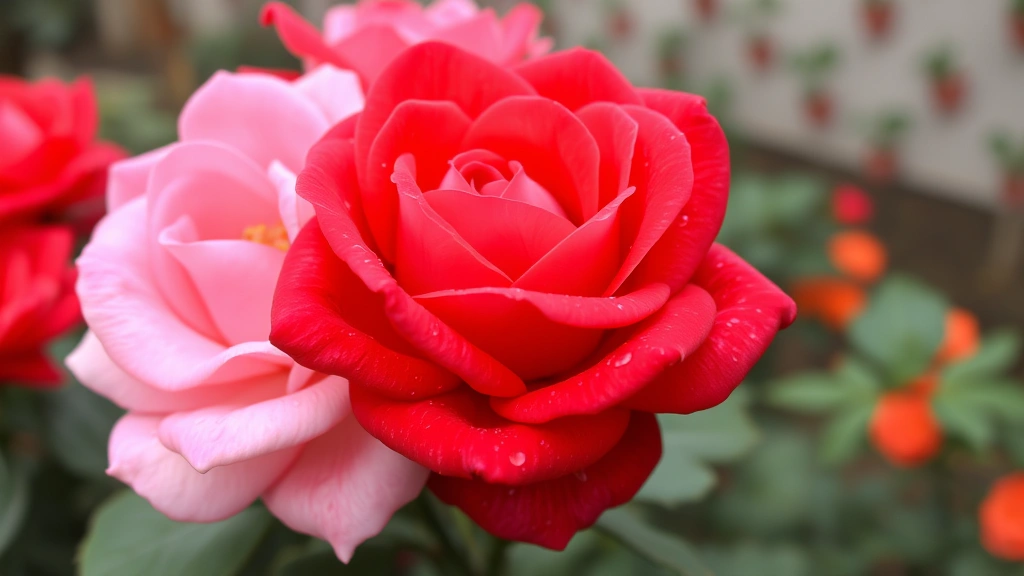
Grow Roses Like a Pro: Gardener’s Essentials
Roses have captivated gardeners for centuries, and for good reason. These magnificent flowers represent elegance, romance, and horticultural achievement. Whether you’re a seasoned gardener or just beginning your journey into rose cultivation, mastering the essentials of rose growing can transform your garden into a stunning showcase of blooms. The key to success lies not in complicated techniques, but in understanding the fundamental requirements that roses demand: proper sunlight, well-draining soil, consistent watering, and strategic pruning. This comprehensive guide will walk you through everything you need to know to cultivate roses that rival those you’d admire at a luxury resort—even if you’re gardening from home rather than staying at a hotel like the Hilton Garden Inn.
Growing roses successfully requires dedication and knowledge, but the rewards are immeasurable. Imagine stepping into your garden on a warm spring morning to discover perfectly formed blooms in your favorite colors, their fragrance filling the air. This experience is entirely within reach when you follow proven cultivation practices. From selecting the right varieties for your climate zone to implementing an effective pest management strategy, each decision you make contributes to your roses’ overall health and productivity. Throughout this guide, you’ll discover practical tips that professional rose growers use, adapted for home gardeners of all skill levels.
Selecting the Right Rose Varieties for Your Climate
The foundation of successful rose growing begins with choosing varieties suited to your specific climate zone. Roses vary dramatically in their cold hardiness, heat tolerance, and disease resistance. Before purchasing any roses, research your USDA hardiness zone and identify which rose types thrive in your region. The USDA Plant Hardiness Zone Map provides essential information for determining which roses will survive your winters.
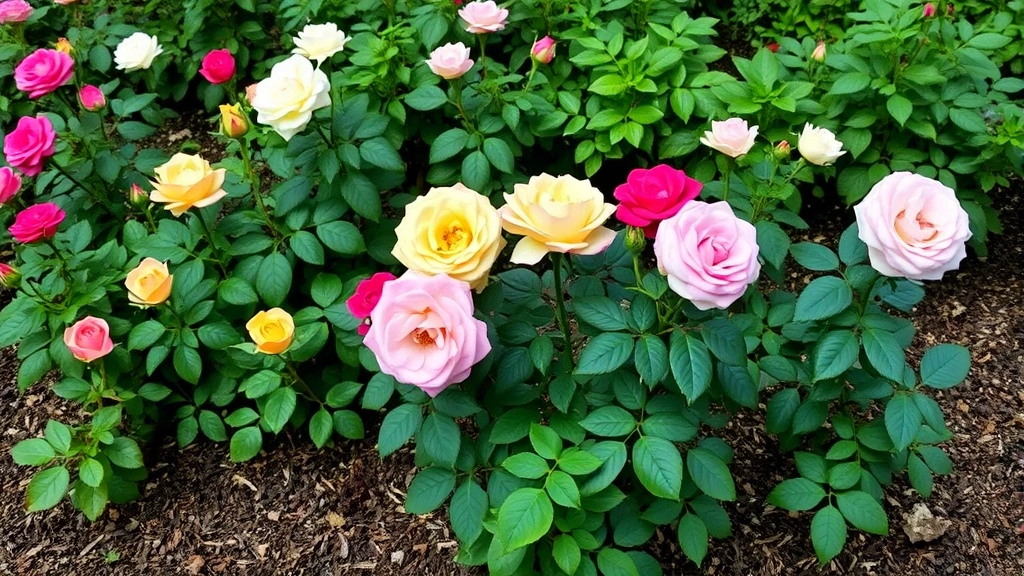
Hybrid tea roses, known for their large, exhibition-quality blooms, require excellent air circulation and meticulous care. Floribunda roses produce clusters of smaller flowers and generally prove more disease-resistant and forgiving. Shrub roses and English roses offer hardiness and disease resistance while producing abundant blooms. David Austin roses, a modern English rose variety, combine old-world charm with contemporary disease resistance—an excellent choice for gardeners seeking reliable performers. Climbing roses and landscape roses provide different growth habits suitable for various garden designs. Consider also the bloom time: some roses flower continuously throughout the season, while others bloom once annually but produce spectacular displays.
Visit local American Horticultural Society gardens and botanical institutions to observe roses performing in your climate. This firsthand observation proves invaluable for making informed selections. Consult with Master Gardener Programs in your area, which offer free expert advice based on local growing conditions. These volunteers possess extensive knowledge about which rose varieties succeed in your specific region.
Soil Preparation and Garden Bed Setup
Roses demand exceptional soil conditions to flourish. Unlike many garden plants that tolerate average soil, roses require well-draining, nutrient-rich, slightly acidic soil with a pH between 6.0 and 6.5. Poor drainage represents one of the primary reasons roses fail, as waterlogged soil promotes root rot and fungal diseases. Before planting, test your soil composition and amend accordingly.
If you’re starting from scratch, consider building a raised garden bed specifically for roses. Raised beds offer superior drainage control and allow you to fill them with premium soil blends. A well-constructed raised bed measures 3-4 feet wide and 12-18 inches deep, providing adequate root space while remaining accessible for maintenance. Prepare your soil mixture by combining equal parts high-quality topsoil, compost, and aged bark mulch. This blend provides excellent drainage while retaining essential moisture and nutrients.
Incorporate organic matter generously—roses respond exceptionally well to compost and well-aged manure. Work 3-4 inches of compost into the top 8-10 inches of existing soil, or create the raised bed mixture described above. Roses benefit from beneficial microorganisms present in quality compost, which enhance nutrient availability and disease suppression. If your native soil tends toward clay, amend with perlite or coarse sand to improve drainage. Sandy soils require additional compost to increase water and nutrient retention.
Location matters enormously. Roses require minimum six hours of direct sunlight daily, though eight or more hours produces superior blooms and reduces disease pressure. Air circulation prevents fungal diseases, so avoid planting roses in dense shade or against walls that restrict airflow. Space plants adequately—typically 3-4 feet apart depending on variety—to ensure good air movement between canes.
Planting Techniques for Maximum Success
Proper planting technique determines whether roses establish quickly and vigorously or struggle throughout their first season. The ideal planting window varies by region: in cold climates, spring planting allows roses to establish before winter; in mild regions, fall planting provides advantages. Purchase roses from reputable nurseries, selecting vigorous plants with green canes and healthy foliage.
Dig a planting hole slightly wider and as deep as the root ball. Create a cone of soil in the hole’s center, positioning the rose’s bud union (the swollen area where varieties are grafted onto rootstock) at the appropriate level. In cold climates where winter temperatures drop below -10°F, position the bud union 1-2 inches below soil surface for protection. In milder regions, keep it at or slightly above ground level. Gently spread the roots over the cone, ensuring no roots bend sharply or circle back on themselves.
Backfill with amended soil, gently firming as you fill to eliminate air pockets. Water thoroughly after planting to settle the soil and eliminate air gaps. Apply 2-3 inches of mulch around the base, keeping it several inches away from the canes to prevent rot and pest problems. Shredded bark or wood chips work well, though avoid fresh wood chips that consume nitrogen as they decompose.
Container roses require different considerations. Select pots at least 18 inches deep and wide, ensuring drainage holes. Use a high-quality potting mix rather than garden soil. Container roses dry quickly and need more frequent watering, making an automated irrigation system particularly valuable for consistent moisture management.
Watering and Irrigation Strategies
Consistent, deep watering ranks among the most critical rose care requirements. Roses need approximately one inch of water weekly, delivered through deep soaking rather than frequent shallow watering. Deep watering encourages strong root development, while shallow watering promotes surface roots vulnerable to stress and disease.
Water early in the morning to minimize fungal disease problems. Wet foliage creates conditions favoring powdery mildew and black spot, so direct water to the soil surface rather than overhead. Drip irrigation or soaker hoses deliver water directly to the root zone, keeping foliage dry while ensuring thorough soil penetration. If you must use overhead watering, do so early enough that foliage dries by mid-morning.
Monitor soil moisture regularly, especially during hot weather. Stick your finger into the soil—if it feels dry beyond the first inch, water thoroughly. During establishment (the first growing season), water more frequently to ensure roots don’t dry out. Mature established roses tolerate moderate drought better, though consistent moisture produces superior blooms. Mulch conserves soil moisture and moderates soil temperature, reducing watering frequency during hot periods.
Container roses require more frequent watering since pots dry quickly. Check moisture daily during hot weather; containers may need watering every 1-2 days. Apply water until it drains from the pot’s bottom, ensuring thorough saturation. Reduce watering frequency in fall and winter as growth slows.
Pruning and Deadheading for Continuous Blooms
Strategic pruning shapes roses, encourages vigorous growth, and promotes abundant flowering. Annual spring pruning—performed as forsythia blooms or buds begin breaking on the roses—removes dead wood, opens the plant’s center for air circulation, and reduces disease pressure. The timing varies by region; in cold climates, prune after the last frost date; in mild regions, prune in late winter.
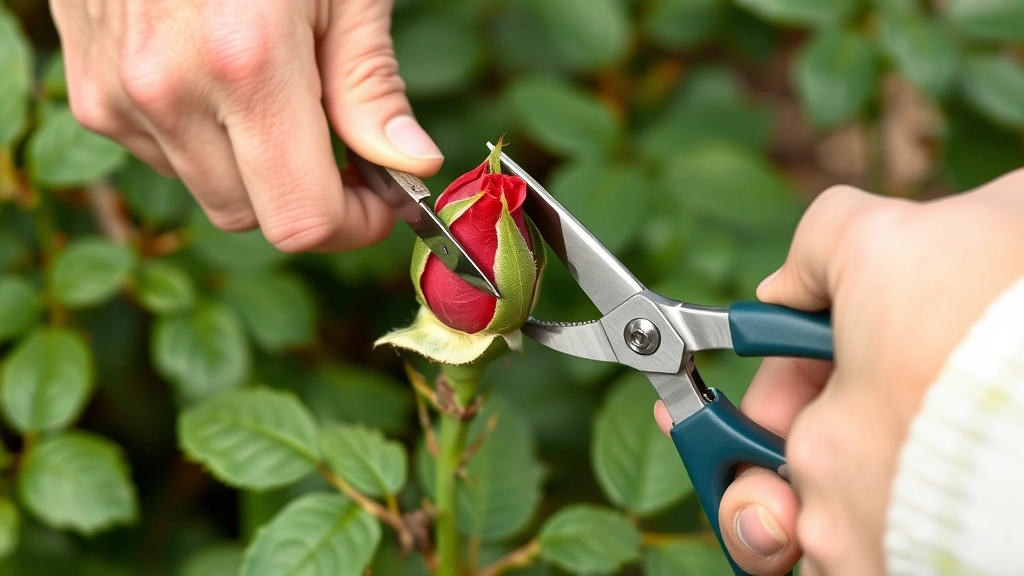
Remove all dead, diseased, or damaged wood first, cutting to healthy tissue. Make cuts at 45-degree angles, ¼ inch above outward-facing buds. Remove crossing canes and thin crowded growth to achieve an open vase-like structure. Reduce overall plant height by one-third to one-half, depending on variety and desired final size. Hybrid teas and floribundas require more aggressive pruning than shrub roses, which need lighter pruning to maintain their natural form.
Deadheading—removing spent flowers—extends blooming throughout the season. Cut just above the first five-leaflet leaf, angling the cut away from the remaining bud. This encourages branching and new flower production. Remove flowers promptly after they fade; allowing roses to set seed signals the plant to stop flowering and focus on fruit production instead.
Summer pruning maintains shape and encourages reblooming. Remove spent flowers consistently and cut back any leggy growth. Light summer pruning differs from spring pruning—make smaller cuts and remove less material, since you want to maintain blooming rather than drastically reshape the plant. In fall, avoid heavy pruning that stimulates tender new growth vulnerable to frost damage; simply deadhead and remove obviously diseased material.
Fertilizing Your Roses Throughout the Season
Roses are heavy feeders requiring regular fertilization to produce abundant, high-quality blooms. Begin fertilizing when new growth emerges in spring, and continue until late summer (typically 6-8 weeks before the first expected frost). Feeding too late in the season stimulates tender growth that winter cold will damage.
Select a rose-specific fertilizer formulated for these plants’ particular nutrient needs. These products typically contain higher phosphorus levels (the middle number) promoting flowering, and often include micronutrients roses require. Follow package directions carefully; over-fertilizing damages roots and creates excessive vegetative growth at the expense of flowers. Monthly applications of balanced fertilizer work well for most gardeners, though some prefer every-two-weeks applications of diluted liquid fertilizer for more consistent feeding.
Organic options include fish emulsion, compost tea, and alfalfa meal, which release nutrients slowly and improve soil structure simultaneously. Many gardeners combine approaches, using organic fertilizers as a base and supplementing with quick-release formulations during peak bloom season. Slow-release granular fertilizers offer convenience, requiring less frequent applications.
Foliar feeding—applying diluted liquid fertilizer directly to leaves—provides rapid nutrient availability and proves particularly helpful when roses show nutrient deficiency symptoms. Apply foliar sprays early morning or late evening when leaves are receptive and temperatures are cool.
Managing Pests and Diseases
Roses attract various pests and suffer from several fungal diseases, but integrated pest management (IPM) strategies minimize problems while reducing pesticide use. Start with disease prevention: provide excellent air circulation, water at soil level rather than wetting foliage, remove fallen leaves promptly, and select disease-resistant varieties.
Common rose pests include aphids, spider mites, and Japanese beetles. Inspect plants regularly, catching infestations early when control proves easier. Spray aphids with strong water pressure or insecticidal soap. Spider mites thrive in hot, dry conditions—improve humidity and water more frequently to discourage them. Japanese beetles require different strategies; hand-pick early in the season or use pheromone traps placed away from roses to avoid attracting more beetles.
Black spot, powdery mildew, and rose rosette virus represent common diseases. Black spot appears as dark spots with yellow halos on leaves; powdery mildew creates white coating on foliage. Remove affected leaves promptly and improve air circulation. Fungicide applications help when disease pressure is high—choose products labeled for rose use and follow directions carefully. Rose rosette virus causes distorted growth and mottled leaves; infected plants should be removed and destroyed to prevent spread.
Organic disease management includes sulfur dust for powdery mildew and copper fungicides for black spot. Neem oil addresses both pests and fungal diseases but requires repeated applications. Always spray in cool weather to avoid leaf burn, and test on a small area first to ensure plant tolerance.
Seasonal Care and Winter Protection
Roses require different care strategies throughout the year. Spring brings active growth and frequent watering needs. Summer demands consistent moisture and vigilant pest monitoring. Fall requires gradually reducing fertilizer and water as growth slows, though plants still need adequate moisture. Winter care varies dramatically by climate.
In cold climates, winter protection prevents damage from extreme cold and freeze-thaw cycles. After the first hard frost, mound soil 8-12 inches high around the base of each plant, covering the bud union completely. This protects the graft point from extreme cold. After the ground freezes solid, apply additional mulch or evergreen branches for insulation. Remove this winter mulch gradually as spring arrives, preventing premature growth that frost will damage.
In mild climates, winter protection may be unnecessary, though light mulching helps. Focus on fall cleanup—remove fallen leaves and debris where disease spores overwinter. Prune out any obviously dead wood, but save major pruning for spring.
Spring cleanup sets the stage for the growing season. Remove winter mulch gradually as temperatures warm. Rake away fallen leaves and debris. Check for winter damage and prune out any dead canes. Apply fresh mulch once soil warms and new growth begins. This is the ideal time to add decorative elements like trellises, arbors, or rose stakes to support climbing varieties or tall specimens.
As spring progresses, apply dormant oil spray if scale or other overwintering pests appeared previously. Begin fertilizing when new growth emerges. Increase watering frequency as temperatures rise and growth accelerates. This established routine, repeated annually, creates the consistency roses need to thrive.
FAQ
How often should I water my roses?
Roses require approximately one inch of water weekly, delivered through deep soaking. During hot weather or in sandy soil, watering twice weekly may be necessary. Container roses dry quickly and often need daily watering. Always check soil moisture before watering—if the top inch feels dry, water thoroughly.
What’s the best time to prune roses?
Spring pruning occurs as forsythia blooms or buds break on roses—timing varies by region. Remove dead wood any time, and deadhead spent flowers throughout the growing season to encourage continued blooming. Avoid heavy pruning in fall, which stimulates tender growth vulnerable to frost.
Can I grow roses in containers?
Yes, roses grow well in containers at least 18 inches deep and wide with drainage holes. Use quality potting mix, water frequently (often daily in hot weather), and fertilize regularly since containers drain quickly. Container roses often require winter protection in cold climates—move pots to sheltered locations or insulate heavily.
Why are my roses getting black spot?
Black spot thrives in wet conditions with poor air circulation. Water at soil level rather than overhead, improve air circulation by spacing plants adequately, remove fallen leaves promptly, and apply fungicide if infection persists. Selecting disease-resistant varieties prevents this problem from the start.
How do I encourage more roses to bloom?
Deadhead spent flowers consistently, provide at least six hours of direct sunlight daily, ensure consistent moisture, fertilize regularly during the growing season, and prune strategically to promote branching. Disease-resistant varieties naturally produce more blooms with less maintenance.
When should I fertilize my roses?
Begin fertilizing when new spring growth emerges and continue until six to eight weeks before the first expected frost. Monthly applications work well, though some gardeners prefer every-two-weeks feeding with diluted liquid fertilizer. Always follow package directions to avoid over-fertilizing.
What’s the difference between hybrid tea and floribunda roses?
Hybrid tea roses produce large, exhibition-quality individual blooms on long stems, requiring meticulous care. Floribunda roses produce clusters of smaller flowers and generally prove more disease-resistant and forgiving. Both can produce spectacular gardens when their specific needs are met.


