Best Apple Varieties for New Jersey: Local Expert Advice
New Jersey’s unique climate and soil conditions make it an excellent region for growing premium apple varieties. Whether you’re a home gardener looking to plant your first orchard or an experienced grower seeking to expand your collection, understanding which apple varieties thrive in the Garden State is essential for success. The state’s moderate growing season, variable winter temperatures, and humid summers create specific challenges and opportunities that differ significantly from other apple-growing regions.
Apple cultivation in New Jersey has deep historical roots, dating back to colonial times when settlers recognized the region’s potential for fruit production. Today, New Jersey remains a productive apple-growing state, with local orchards supplying fresh fruit to farmers markets, pick-your-own operations, and family tables throughout the region. By selecting the right varieties for your specific location within New Jersey, you can enjoy abundant harvests of crisp, flavorful apples tailored to your climate zone.
Understanding New Jersey’s Apple Growing Climate
New Jersey falls within USDA hardiness zones 6 and 7, which means winter temperatures can dip to -10°F in northern regions and rarely fall below 0°F in southern areas. This temperature range is crucial when selecting apple varieties, as you need cultivars with sufficient cold hardiness to survive winter dormancy while also possessing adequate chilling hours—the number of hours between 32°F and 45°F needed for proper flowering.
The state experiences average annual chilling hours ranging from 800 to 1,200 hours depending on location, with northern New Jersey receiving more cold hours than the southern portions. This is important because different apple varieties require different chilling hour requirements to break dormancy properly. Additionally, New Jersey’s humid subtropical summers create conditions favorable for certain fungal diseases, making disease resistance a key consideration when choosing varieties.
Spring frosts present another challenge, as late freezes can damage apple blossoms during their vulnerable flowering stage. Selecting varieties with later bloom times can help mitigate frost damage risks. Elevation also plays a role—higher elevations experience cooler temperatures and better air drainage, which reduces frost pocket formation and improves overall growing conditions.
Early Season Apple Varieties
Gala apples are outstanding performers in New Jersey gardens and commercial orchards. These medium-sized apples develop beautiful golden-red coloring and offer excellent sweet flavor with balanced acidity. Gala apples typically mature in late August to early September, making them perfect for early-season harvest. They require approximately 800-900 chilling hours, well within New Jersey’s range, and demonstrate good disease resistance when properly maintained.
The Honeycrisp apple has become increasingly popular among New Jersey growers despite its reputation for being finicky. This variety produces exceptionally crisp, juicy fruit with a perfect balance of sweetness and tartness. Honeycrisp requires 800-900 chilling hours and needs excellent site selection with good air drainage to prevent frost damage to early blossoms. While more challenging than some alternatives, the premium quality of Honeycrisp fruit justifies the extra care for many growers.
Yellow Transparent represents an heirloom variety that performs admirably in New Jersey. This early-season apple has a soft yellow appearance and tender flesh, making it ideal for fresh eating and cooking. Yellow Transparent has lower chilling hour requirements (600-700 hours) and demonstrates excellent cold hardiness, making it suitable for northern New Jersey locations. The main limitation is its shorter storage life, necessitating prompt consumption or processing.
Consider also Akane apples, a Japanese variety that ripens in late August. Akane produces medium-sized, dark red fruit with crisp, juicy flesh and good flavor. This variety requires only 600-700 chilling hours and shows excellent disease resistance, particularly to powdery mildew, a common problem in humid New Jersey summers.
Mid-Season Apple Varieties
Fuji apples are among the most widely grown and beloved varieties in New Jersey. These large, dense apples develop deep red coloring over a golden background and offer exceptional sweetness with firm, crispy flesh. Fuji requires 800-1,000 chilling hours, making it well-suited to all of New Jersey. The variety stores exceptionally well, maintaining quality for months in cool storage, and demonstrates good resistance to common New Jersey apple diseases.
Jonagold apples represent a hybrid cross between Jonathan and Golden Delicious, inheriting the best traits of both parents. These medium to large apples offer excellent flavor balance and attractive red-over-gold coloring. Jonagold requires approximately 900-1,000 chilling hours and performs particularly well in central and northern New Jersey. The variety is an excellent pollinator for many other cultivars, making it valuable in multi-variety plantings.
The Braeburn apple produces firm, crispy fruit with complex flavor and deep red coloring. This variety requires 800-1,000 chilling hours and demonstrates excellent storage potential. Braeburn shows good disease resistance and adapts well to New Jersey’s climate, though it prefers slightly warmer sites within the state. The apples mature in late September and maintain quality through winter storage.
Pink Lady (Cripps Pink) apples have gained significant popularity for their distinctive pink blush coloring and excellent flavor profile. These medium to large apples offer good storage life and disease resistance. Pink Lady requires approximately 800-900 chilling hours and performs well throughout New Jersey, particularly in locations with good air circulation to minimize fungal pressure.
Late Season and Storage Apples
Granny Smith apples are the quintessential late-season variety, typically maturing in October. These large, bright green apples are known for their tart flavor and exceptional firmness, making them perfect for storage and cooking. Granny Smith requires 900-1,050 chilling hours and performs well in most of New Jersey, though it may struggle in the southernmost zones. The variety stores exceptionally well, lasting six months or longer in proper cold storage conditions.
Golden Delicious apples represent a classic late-season variety with wide adaptation. These large, golden-yellow apples offer excellent flavor and versatility for fresh eating, cooking, and storage. Golden Delicious requires 900-1,050 chilling hours and performs particularly well in northern and central New Jersey. The variety is an exceptional pollinator for many other cultivars, making it valuable in diverse plantings.
Red Delicious apples, while less fashionable than in previous decades, still have merit for New Jersey growers. These large, deep red apples require 900-1,050 chilling hours and store well. However, select improved strains like Chambers or Fireside rather than older bloodlines, as these perform better in modern orchards and offer superior flavor.
The Cortland apple is an excellent heirloom variety developed in New York that thrives in New Jersey. These medium to large apples have deep red coloring and excellent flavor, resisting browning when cut, making them ideal for fresh preparations. Cortland requires 900-1,000 chilling hours and demonstrates good disease resistance, particularly to cedar-apple rust.
Pollination and Companion Planting
Most apple varieties require cross-pollination from a different compatible variety to set fruit properly. When selecting varieties for your New Jersey garden, plan on planting at least two different cultivars that bloom during overlapping periods. Understanding bloom timing is critical—early-blooming varieties must pair with other early bloomers, while late-blooming types need compatible late-blooming companions.
Excellent pollinator combinations for New Jersey include pairing Gala with Honeycrisp for early season, combining Fuji with Jonagold for mid-season, and matching Granny Smith with Golden Delicious for late season harvests. Some varieties, such as Jonagold and Golden Delicious, are exceptional pollinators and work well with many other cultivars.
When planning your orchard layout, space standard trees 25-30 feet apart, dwarf varieties 12-15 feet apart, and semi-dwarf types 15-20 feet apart. This spacing ensures adequate light penetration, air circulation for disease management, and accessibility for pruning and harvesting. Consider incorporating nitrogen-fixing plants like legumes in orchard understory areas to improve soil fertility naturally.
Native pollinator attraction is essential for reliable fruit set. Plant flowering groundcovers and perennials that bloom during apple flowering season to attract bees and other pollinators. Avoid using broad-spectrum pesticides that harm beneficial insects, and consider installing bee houses or leaving areas of undisturbed soil for ground-nesting bee species.
Pest and Disease Management
New Jersey’s humid climate creates ideal conditions for several apple diseases, including apple scab, powdery mildew, and cedar-apple rust. When selecting varieties, prioritize disease-resistant cultivars whenever possible. Gala, Fuji, and Akane offer good resistance to multiple diseases, while varieties like Honeycrisp require more active management.
Implement an integrated pest management approach combining cultural practices, resistant varieties, and targeted treatments. Proper pruning to improve air circulation is fundamental—remove crossing branches, thin dense canopy areas, and eliminate dead wood. This single practice significantly reduces fungal disease pressure without chemical intervention.
Monitor for common pests including codling moths, apple maggots, and spider mites. Codling moths represent the most problematic insect pest in New Jersey apple orchards. Use pheromone traps to monitor populations, and consider applying organic controls like spinosad or kaolin clay during vulnerable periods. Bagging individual fruit clusters with mesh bags provides excellent protection for small home orchards.
Cedar-apple rust, a fungal disease requiring both apple and eastern red cedar as alternate hosts, can be managed by removing nearby cedar trees or selecting resistant apple varieties. If cedars cannot be removed, apply sulfur-based fungicides during early spring when spores are released.
Soil Preparation and Site Selection
Apple trees prefer well-draining soil with pH between 6.0 and 7.0. Before planting, conduct a soil test through your local Rutgers Cooperative Extension office to determine pH, nutrient levels, and organic matter content. New Jersey soils vary significantly by region, from sandy soils in coastal areas to clay-heavy soils in northern regions.
If soil pH exceeds 7.5, incorporate sulfur to lower it gradually. If pH is below 6.0, add lime to raise it. Regardless of current pH, incorporate 2-3 inches of compost or aged manure into the planting area to improve soil structure, water retention, and microbial activity. This organic matter amendment is particularly important in sandy soils common to southern New Jersey.
Select planting sites with full sun exposure—at least six hours of direct sunlight daily, though eight or more hours is preferable. Avoid low-lying areas prone to frost pockets or poor drainage, as these conditions promote root diseases and frost damage to blossoms. Good air circulation is essential for disease management, so avoid planting in sheltered valleys or against buildings that block airflow.
Ensure adequate drainage by either selecting naturally well-draining sites or creating raised planting mounds if your soil tends to stay waterlogged. Poor drainage kills apple roots within a single season, so this consideration cannot be overlooked. If your property has significant drainage challenges, consider installing a drainage system before planting.
Pruning and Maintenance Schedule
Establish a consistent pruning schedule beginning in the first year after planting. During the dormant season (late winter to early spring), when trees are leafless and disease pressure is minimal, perform major structural pruning. Train young trees to an open center or central leader form depending on variety and personal preference.
Remove any crossing branches, inward-growing shoots, and dead or diseased wood. Thin the canopy to allow light penetration throughout the tree, aiming for approximately 30-40% light penetration at the base of the canopy. This improves fruit color development, reduces disease pressure, and facilitates pest monitoring and harvesting.
Summer pruning (June to July) helps manage vigorous growth and can be performed selectively to remove competing vertical shoots or improve light penetration in dense areas. However, avoid heavy summer pruning, which can stress trees and reduce fruit production.
Implement a regular fertilization program based on soil test recommendations and tree performance. Most New Jersey soils require nitrogen supplementation, but excessive nitrogen promotes excessive vegetative growth at the expense of fruiting. Apply fertilizer in early spring as trees break dormancy, using balanced formulations or those slightly higher in phosphorus and potassium to promote flowering and fruit development.
Water management is critical, especially during establishment years and dry periods. Young trees require consistent moisture during their first two to three seasons, approximately one inch per week from rainfall or irrigation. Established trees are more drought-tolerant but benefit from supplemental water during extended dry periods, particularly when fruit is developing.
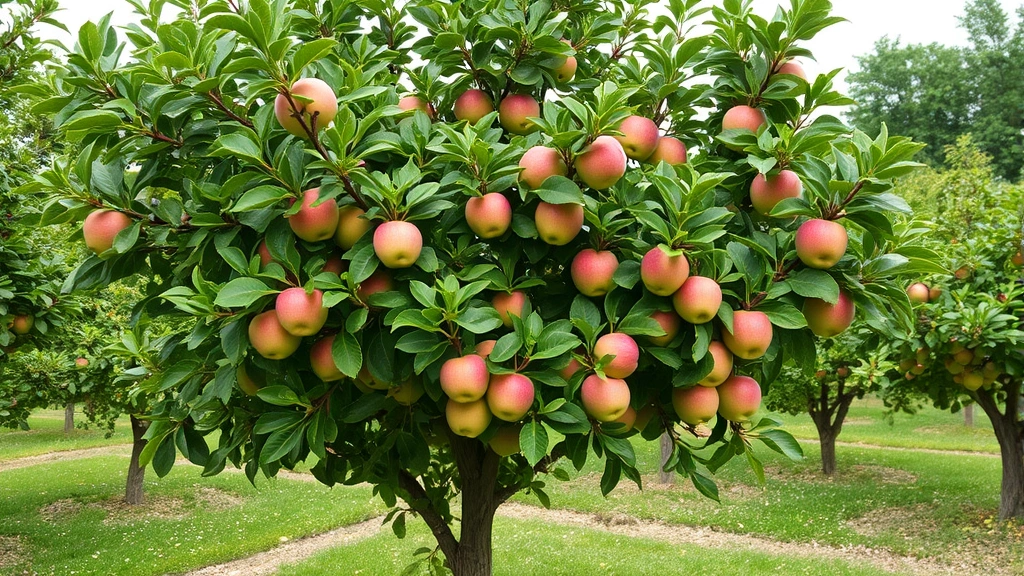
Thin fruit in early June when apples reach the size of walnuts. Remove diseased, damaged, or misshapen fruit, leaving one apple per cluster spaced four to six inches apart along branches. This practice dramatically improves the size and quality of remaining fruit and reduces branch breakage from excessive crop loads.
Apply mulch around the base of trees, extending from the trunk to slightly beyond the drip line, using two to three inches of wood chips or shredded bark. This conserves soil moisture, moderates soil temperature, suppresses weeds that compete with trees, and gradually improves soil structure as it decomposes. Keep mulch a few inches away from the trunk to prevent rot and pest damage.
When designing your overall garden space, consider incorporating complementary plantings that enhance the landscape while providing beneficial functions. Flowering shrubs and perennials can attract pollinators and beneficial insects while adding ornamental value.
Monitor trees regularly for pest and disease symptoms, inspecting both upper and lower leaf surfaces for damage, discoloration, or pest presence. Early detection allows for prompt intervention before problems become severe. Keep detailed records of pest and disease occurrences, treatments applied, and outcomes to refine your management approach over time.
FAQ
What’s the best time to plant apple trees in New Jersey?
Plant bare-root trees in early spring as soon as soil can be worked, typically March to April. Container-grown trees can be planted anytime during the growing season, though spring and fall are preferable to avoid summer transplant stress. Spring planting gives trees the entire growing season to establish before winter dormancy.
How many years until newly planted trees produce fruit?
Most apple varieties begin producing fruit in three to four years after planting. Precocious varieties like Gala and Fuji may produce earlier, while some late-maturing types take five years or longer. Dwarf and semi-dwarf rootstocks typically produce earlier than standard trees.
Can I grow apples in containers in New Jersey?
Yes, dwarf apple varieties can be successfully grown in large containers (20+ gallons) in New Jersey. Select containers with drainage holes, use quality potting soil amended with compost, and provide consistent watering. Container trees may require winter protection in northern New Jersey, as roots are more exposed to extreme cold than in-ground trees.
Which apple varieties are best for fresh eating versus cooking?
Fresh eating: Gala, Fuji, Honeycrisp, Pink Lady, and Braeburn. Cooking: Granny Smith, Cortland, and Golden Delicious. Many varieties like Jonagold work well for both purposes, offering good flavor fresh and maintaining structure when cooked.
How do I prevent apple scab in New Jersey’s humid climate?
Select disease-resistant varieties, ensure proper air circulation through pruning, avoid overhead watering that keeps foliage wet, and maintain clean orchard floors by removing fallen leaves and fruit. Copper or sulfur-based fungicides can be applied preventatively during wet spring periods when spores are active.
What’s the difference between standard, semi-dwarf, and dwarf apple trees?
Standard trees reach 25-35 feet tall and live 50+ years, semi-dwarf trees reach 15-20 feet and live 30-40 years, and dwarf trees reach 8-12 feet and live 15-25 years. Dwarf trees produce earlier but require more intensive management, while standard trees are more vigorous and longer-lived but take longer to establish production.
Can I grow apples organically in New Jersey?
Yes, organic apple production is feasible in New Jersey with careful variety selection, excellent cultural practices, and appropriate organic-approved inputs. Focus on disease-resistant varieties, proper pruning, and biological pest controls. Consult your local agricultural extension office for organic certification requirements and approved treatment options.
What should I do with my apple harvest?
Enjoy fresh apples immediately for best flavor, store in refrigeration for extended enjoyment, or process into cider, applesauce, jams, or baked goods. Different varieties have different storage capabilities—Fuji and Granny Smith store for months, while earlier varieties like Gala should be consumed within weeks.


