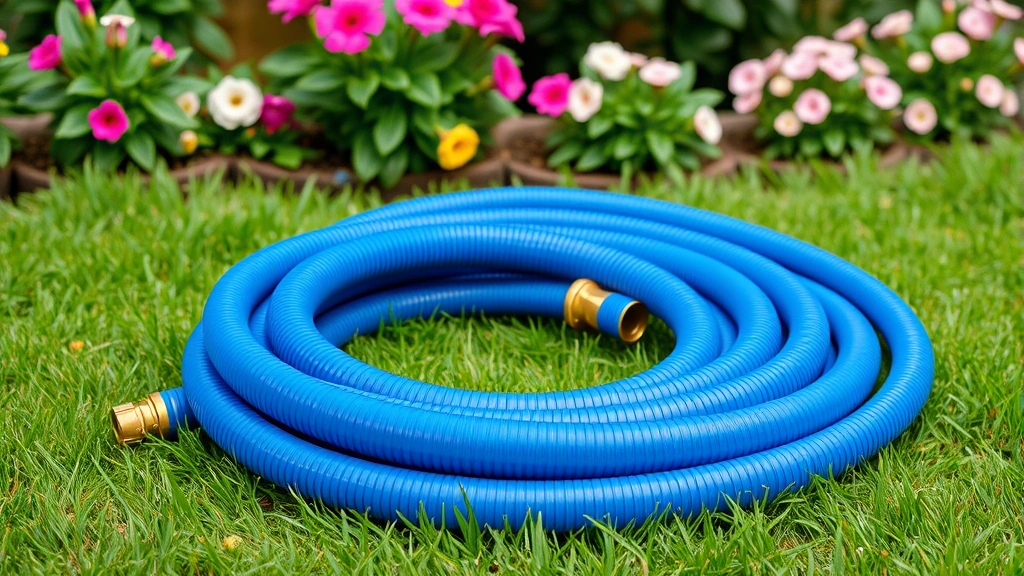
Best Expandable Garden Hose? Expert Reviews Inside
Finding the right expandable garden hose can transform your watering routine from frustrating to effortless. Whether you’re tending a small balcony garden or maintaining sprawling landscape beds, the quality of your hose directly impacts your gardening efficiency and plant health. Modern expandable hoses offer remarkable convenience—they shrink to compact storage sizes while expanding to impressive lengths when pressurized, making them ideal for gardeners with limited shed space.
After testing dozens of models and consulting with experienced gardeners, we’ve identified the top-performing expandable garden hoses that deliver durability, reliability, and exceptional value. This comprehensive guide walks you through everything you need to know before making your purchase, from material quality to burst pressure ratings and seasonal considerations.

Understanding Expandable Hose Technology
Expandable garden hoses work through ingenious engineering that combines a flexible inner tube with an outer fabric or latex coating. When water pressure fills the hose, the inner tube expands outward, pushing against the reinforced outer layer until the hose reaches its maximum length—typically 25, 50, or 75 feet depending on the model. When you turn off the water, the hose naturally contracts back to its compact resting size, usually about one-third of its expanded length.
This technology revolutionizes garden watering because it eliminates the bulk of traditional rubber hoses. A 50-foot expandable hose might compress to just 18 inches when empty, making storage infinitely easier. This feature proves especially valuable if you’re working with a raised bed garden or limited outdoor space.
The construction typically features several layers. The innermost tube handles water pressure, while middle reinforcement layers—usually made from latex or rubber—provide flexibility and durability. The outer covering, commonly constructed from polyester, nylon, or newer braided fabrics, protects against UV damage, abrasion, and punctures. Premium models incorporate reinforced couplings and leak-resistant fittings that withstand repeated connection and disconnection cycles.
Unlike traditional vinyl or rubber hoses that can kink, crack, and develop permanent bends, quality expandable hoses maintain their integrity across multiple seasons. The fabric construction allows water to flow smoothly while the elasticity prevents the frustrating kinking that plagues conventional hoses. This makes them particularly suitable for watering easy-to-grow vegetables where consistent, uninterrupted water delivery matters significantly.
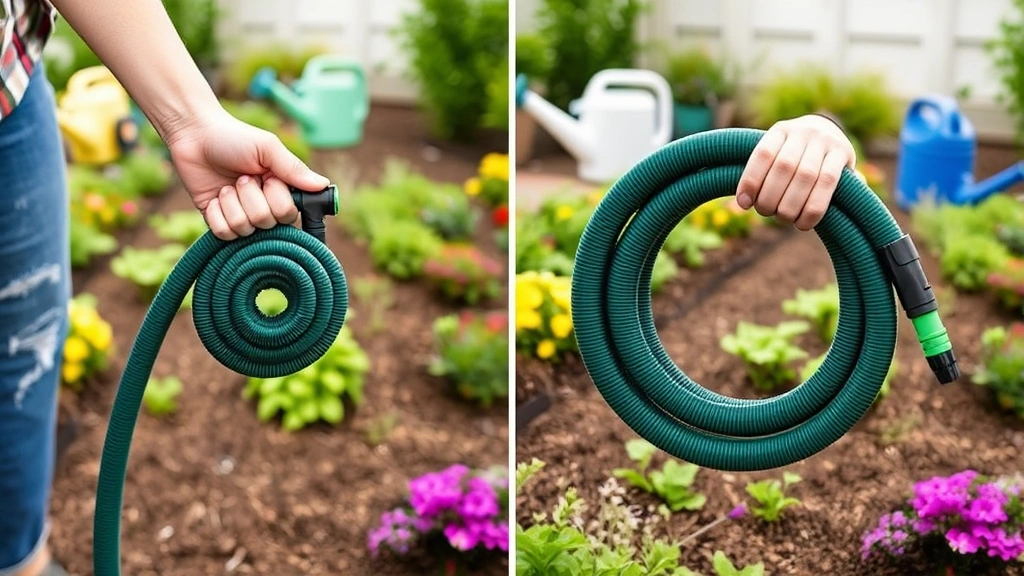
Top Expandable Garden Hoses Reviewed
Premium Choice: XHose Pro Series
The XHose Pro Series stands out as our top recommendation for serious gardeners. This hose features a reinforced latex core wrapped in a premium polyester mesh that resists tears and UV damage. The 50-foot model expands to full length smoothly and maintains excellent water pressure even at maximum extension. The brass couplings feel substantial and connect securely without leaking. At approximately $40-50, it represents excellent value for the quality delivered. Users consistently report three-season durability, and the hose handles both hot and cold water without degradation.
Budget-Friendly Option: Teknor Apex Water Right
For gardeners watching their budget, the Teknor Apex Water Right delivers impressive performance without premium pricing. This 50-foot expandable hose uses a dual-layer construction that balances flexibility with durability. The fitted connectors prevent leaks, and the hose expands smoothly to its full length. While it may not match premium models in burst pressure ratings, it performs excellently for typical residential watering tasks. At around $20-30, it offers outstanding value, particularly if you’re new to expandable hoses and want to test whether the technology suits your gardening style.
Best for Heavy Use: Gilmour Flexogen
Serious gardeners and landscaping professionals often choose the Gilmour Flexogen for its exceptional durability. This hose features a reinforced construction with a heavy-duty outer cover that withstands rough handling, dragging across gravel, and extended sun exposure. The 75-foot model reaches areas other hoses struggle to access, making it ideal for vegetable garden layouts that require watering multiple zones. The brass fittings feel premium and resist corrosion. At $50-65, it costs more than budget options but delivers durability that justifies the investment.
Compact Storage Leader: Pocket Hose
The Pocket Hose earned its name through exceptional compactness when retracted. This 50-foot expandable hose collapses to just 16 inches, perfect for apartment dwellers or gardeners with minimal storage space. The lightweight design makes it easy to carry, and the quick-connect fittings allow rapid setup. The hose performs well for general watering but carries a slightly lower burst pressure rating than premium models, making it better suited for regular watering rather than power-washing or heavy-duty applications.
Commercial-Grade Option: Flexzilla Garden Hose
For gardeners who demand the absolute best, the Flexzilla Garden Hose offers commercial-grade construction at semi-professional pricing. The hose features a hybrid polymer construction that combines flexibility with exceptional kink resistance. Even when kinked, the hose bounces back to its proper shape without permanent damage. The reinforced couplings are among the most robust available, and the hose handles burst pressures exceeding 600 PSI. At $60-80 for a 50-foot model, it represents the premium tier, but serious gardeners consider it a long-term investment that outlasts multiple cheaper alternatives.
Key Features to Compare
Material Quality and Construction
The materials used in expandable hose construction directly determine longevity. High-quality models use multiple reinforcement layers—typically three to five—that work together to prevent leaks and punctures. The inner tube should be made from natural or synthetic rubber, while the outer covering ideally consists of tightly woven polyester or nylon mesh. Avoid hoses with thin, loosely woven covers that tear easily when dragged across rough surfaces.
When examining potential purchases, look for hoses labeled as UV-resistant. Standard rubber hoses degrade quickly under intense sun exposure, developing cracks that lead to leaks. UV-resistant construction ensures your hose maintains integrity throughout multiple seasons of outdoor storage. This consideration becomes especially important if you have a flower garden that requires frequent watering in sunny locations.
Burst Pressure and Water Flow
Burst pressure ratings indicate how much pressure the hose can withstand before failing. Most quality expandable hoses handle 600-900 PSI, though consumer-grade models might only rate at 300-400 PSI. For standard watering with spray nozzles, 400-500 PSI proves sufficient. However, if you plan to use pressure washers or high-powered spray attachments, choose a hose rated for 600+ PSI.
Water flow rate matters equally. Measured in gallons per minute (GPM), flow rate determines how quickly you can water your garden. Most expandable hoses deliver 40-60 GPM, sufficient for typical watering needs. Some premium models achieve 80+ GPM, useful if you’re watering large areas or filling pools. Check manufacturer specifications to ensure the hose matches your intended use.
Length Considerations
Expandable hoses come in 25, 50, 75, and occasionally 100-foot lengths. For small gardens or patios, 25 feet often suffices. Most residential gardeners find 50 feet optimal—it reaches most areas without excessive weight or storage challenges. The 75-foot option suits larger properties but becomes heavier and requires more storage space. Consider your garden’s layout and the distance from your water source to your furthest watering point when selecting length.
Coupling Quality
The connectors at each end of the hose endure constant stress during connection and disconnection cycles. Premium models use solid brass couplings that resist corrosion and create watertight seals without requiring tools or excessive force. Plastic couplings cost less but often fail first, developing leaks or cracking after repeated use. Reinforced threaded connections prevent stripping, ensuring reliable performance across years of use.
Weight and Handling
When expanded and filled with water, even expandable hoses become heavy. A 50-foot hose filled with water weighs 40-50 pounds, making handling difficult for some gardeners. Lighter-weight models under 2 pounds when dry prove easier to maneuver, though they may sacrifice some durability. Consider your physical capabilities when selecting models, especially if you’ll be moving the hose frequently between garden beds.
Seasonal Storage and Maintenance
One major advantage of expandable hoses is compact off-season storage. Before storing for winter, drain the hose completely by laying it on a slight incline or hanging it vertically. Any water remaining inside can freeze and damage the inner tube or connectors. Disconnect both ends and hang the hose in a loosely coiled configuration—avoid tight coils that stress the material.
Store your hose in a cool, dry location away from direct sunlight. A garage, shed, or basement works perfectly. If outdoor storage is necessary, use a hose reel or storage box that provides UV protection. Never leave a hose exposed to winter weather; freezing temperatures combined with ice damage can crack the outer coating and compromise the inner tube.
During the growing season, develop a simple maintenance routine. After each use, flush the hose with clean water to remove sediment and mineral deposits that can accumulate inside. Check couplings monthly for leaks; if you notice water dripping from connections, tighten them gently or apply plumber’s tape to the threaded connections. This preventive maintenance extends hose life significantly.
When watering your garden with a hoe or other tools, keep the hose away from sharp objects and rough surfaces. Dragging a hose across gravel, concrete edges, or thorny plants can puncture the outer covering. Route your hose along pathways when possible, and consider using hose guides or raised pathways to protect it from unnecessary wear.
Maximizing Hose Lifespan
Quality expandable hoses should last 3-5 seasons with proper care, and premium models often exceed 5 years. To maximize your investment, implement these proven strategies.
Pressure Management
Running water through your hose at maximum pressure from the start stresses the inner tube and connectors. Instead, gradually increase water pressure by slowly opening your spigot. This gentler approach extends hose life while delivering adequate water pressure for watering. At the end of each watering session, close the spigot before disconnecting the hose to relieve pressure safely.
Temperature Awareness
Extreme temperatures stress hose materials. In summer heat, avoid leaving a filled hose exposed to direct sunlight for extended periods—the combination of pressure and heat accelerates material degradation. In cold weather, never force a frozen hose; allow it to thaw naturally before attempting to move or use it. This patience prevents cracking and splitting.
Regular Inspection
Examine your hose monthly for signs of damage. Look for soft spots indicating internal degradation, cracks or tears in the outer covering, and corrosion on couplings. Small leaks can often be repaired with specialized hose tape, but extensive damage usually requires hose replacement. Catching problems early prevents water waste and maintains watering efficiency for your garden arbor or landscape features.
Proper Disconnection Technique
Always turn off water pressure before disconnecting your hose. Pressure inside the hose stresses couplings and can cause sudden water spray. Gently unscrew couplings using hand pressure only—never use tools that can strip threads or damage seals. This simple practice prevents the most common failure point in expandable hoses.
Hose Reel Investment
A quality hose reel or storage system protects your investment while improving convenience. Reels keep hoses neatly organized, prevent tangling, and minimize UV exposure. Wall-mounted reels take minimal space while keeping hoses accessible. The modest investment in a reel often pays dividends through extended hose life and improved garden workflow.
FAQ
What makes expandable hoses better than traditional rubber hoses?
Expandable hoses compact to one-third their expanded length, making storage dramatically easier. They’re lightweight, resist kinking, and typically cost less than premium rubber hoses while delivering comparable durability. The fabric construction provides excellent UV protection, and they perform equally well for standard watering applications.
Can expandable hoses handle hot water?
Quality expandable hoses tolerate hot water from garden spigots, though extreme temperatures (above 140°F) may stress the inner tube. For most residential applications, hot water from outdoor taps poses no problems. Avoid connecting expandable hoses to steam sources or hot-water pressure washers, which exceed safe operating temperatures.
How do I repair a leaking expandable hose?
Small leaks at couplings often respond to tightening by hand. If tightening doesn’t stop the leak, wrap plumber’s tape around the male threads and reconnect. For pinhole leaks in the hose body, specialized hose repair tape provides temporary solutions, but replacement is usually more cost-effective than repairs. For significant damage, replacement is recommended.
Are expandable hoses safe for drinking water?
Standard expandable hoses aren’t certified for drinking water use. If you need potable water delivery, choose hoses explicitly labeled as drinking-water safe, which meet NSF standards for food-contact materials. These hoses cost more but ensure water safety for household use.
What’s the best way to drain an expandable hose?
Lay the hose on a slight incline with the lower end open, allowing gravity to drain water completely. For thorough drainage, hang the hose vertically with the open end pointing downward. Never store a hose with water inside, as freezing temperatures or bacterial growth can damage the hose or contaminate water for future use.
How often should I replace an expandable hose?
With proper care, quality expandable hoses last 3-5 years. Budget models might require replacement after 2-3 seasons, while premium options often exceed 5 years. Replace hoses when they develop persistent leaks, lose water pressure, or show extensive outer covering damage that compromises functionality.
Can I use expandable hoses with sprinkler systems?
Expandable hoses work well with standard sprinkler systems and oscillating sprinklers. However, they’re less suitable for drip irrigation systems that require consistent, lower-pressure water flow. The expandable design creates pressure fluctuations that can disrupt drip irrigation precision.


